Description
Book description:
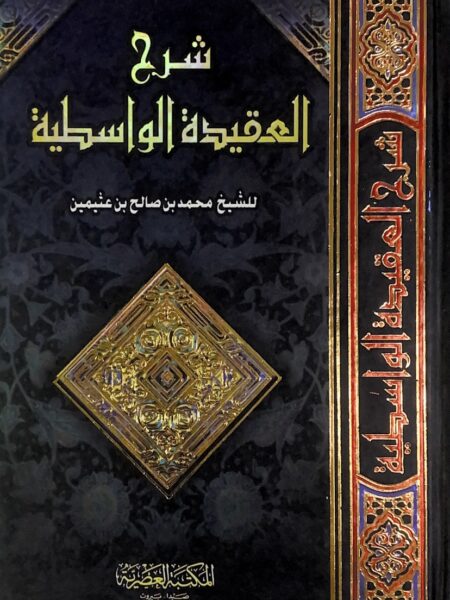
- Author's name: Sheikh Muhammad bin Saleh bin Uthaymeen
- Number of pages: 481 pages
- The subject of the book: Explanation of the Wastiya Creed
The contents of the book:
- Introduction
- Author's translation
- Introduction to the second edition
- Explainer's introduction
- Divisions of monotheism
- First section: Tawhid al-Rububiyyah
- Second section: Monotheism of divinity
- Third section: Unification of Names and Attributes
- Explanation of Ibn Taymiyyah's Introduction
- Talking about the Bismillah
- Interpretation of praise
- Meaning of the messenger
- The meaning of guidance and the religion of truth
- What is meant by the appearance
- Suffice it to Allah as a witness, for He says: "To show it over all religion
- The meaning of the certificate of no god but God
- The meaning of the testimony of Muhammad's servant and messenger
- Meaning of a healthy machine
- saying: «And peace be upon him»
- Pronunciation of the word after
- The meaning of belief in language and terminology
- Defining the Survival Squad
- Meaning of Ahl al-Sunnah wal-Jama'ah
- Pillars of faith
- Belief in God involves four things
- Belief and Evidence of God's Existence
- Significance of the mind
- Sensory connotation
- Innate connotation
- Significance of the law
- Belief in angels
- Definition of angels: Language and terminology
- Belief in books
- Belief in messengers
- Noah is the first prophet
- Adam is the first of the prophets
- Muhammad (peace be upon him) is the last of them
- The descent of Jesus and his rule of Muhammad's law
- The answer to those who questioned Abu Bakr's preference for Jesus, son of Maryam
- Belief in and evidence for resurrection after death
- Believing in good and bad fate
- Calling fate evil and the answer to it
- Believing in what God has described Himself in His Book and what His Messenger has described Himself as
- Exhibit I: Believing in what he described himself as
- Second article: God's attributes are unseen
- Third article: We do not describe God as something He has not described Himself as
- Fourth article: The texts must be taken at face value
- Fifth article: Speech includes both subjective and objective attributes
- Intrinsic qualities are of two types, moral and informational
- Why scholars call it subjective and objective
- Exhibit VI: The mind has no role in names and attributes
- The mind recognizes what God Almighty is obligated to do and prohibited from doing.
- Outline rather than detail
- Not every perfection of the creature is a perfection of the Creator
- His saying: And what he described his messenger is divided into three sections
- Saying
- verb
- Declaration
- saying: Without misrepresentation or disruption
- Misrepresentation is either verbal or semantic
- Why the author chose the word misrepresentation over interpretation
- Meanings of hermeneutics
- The difference between disruption and distortion
- Delegation is one of the most evil of the heresy
- False statement - The way of the predecessors is the safest and the way of the successors is the most knowledgeable and one of the
- Said by some idiot
- The Confusion and Doubt of the People of Kalam
- The meaning of adaptation
- Ahl al-Sunnah wal-Jama'ah do not adapt God's attributes and their evidence for this
- Meaning of representation
- Representation is denied by hearing, reason, and instinct
- Why the Creator and the created are not the same from the mind
- Fungal guide
- Are these hadiths representative?
- Hadith: You will see your Lord as you see the moon
- The answer to this hadith can be summarized in two ways
- Hadith: God created Adam in his own image
- The answer to this hadith can be summarized in two ways
- Representation is more important than simile
- saying: Rather, they believe that Allah is not like anything
- He says: "There is nothing like him.
- saying: They do not deny him what he has described himself as
- saying: and do not distort
- He says, "They don't play games.
- Types of atheism
- Types of Name Semantics
- Atheism in God's Verses
- Signs are better than miracles in a number of ways
- God's verses are divided into two parts
- Section I: Cosmic
- The Meaning of Atheism in God's Cosmic Verses
- Section II: Legitimate
- The meaning of blasphemy in God's verses
- saying: They do not adapt and do not act
- saying: Because Almighty
- His words: There is no name, no equal, and no equal
- saying: He is not compared to his creation
- Measurement sections
- saying: «He knows himself»
- It is obligatory to accept what the news indicates, if it meets four descriptions and the evidence for this
- saying: Then his messengers are truthful
- God's verbal and physical validation of the message
- saying: Unlike those who say
- His words: That is why the Almighty said: Glory be to your Lord, the Lord of Glory
- saying: He praised himself for what the offenders described him as
- His words: The Almighty has combined what he has described
- Adjectives are twofold: Positive attributes and negative attributes
- The fallacy of those who claim that proven attributes require representation
- Adjectives fall into three categories
- The Way to Prove Attributes
- The negation of God's attributes can only be general or specific for a reason
- Saying: There is no deviation of the Sunnis and Jama'ah from what the messengers came with.
- The meaning of adulthood
- All that the messengers reported about God Almighty is acceptable and truthful and must be believed.
- The rulings of previous prophets on which scholars differ
- The Way of Knowledge The Laws of the Former Prophets
- saying: It is the Straight Path
- saying: The path of those on whom God has bestowed His blessings
- God's blessings are public and private
- Those on whom God has bestowed blessings are of four kinds
- Definition of a friend
- Definition of martyrs
- Definition of the righteous
- saying: Included in this sentence
- Talking about Surat al-Ikhlas
- The reason it is equal to one-third of the Qur'an
- The reason for its descent
- The meaning of God
- The meaning of Samad
- Meaning of Unborn and Born
- Surat al-Ikhlas includes both positive and negative attributes
- saying: What he described himself as in the greatest verse
- Evidence that the Verse of the Chair is the greatest verse
- Interpretation of the Kursi verse
- Conditions and benefits of intercession
- The chair is the seat of God's feet.
- The ayah al-Kursi includes five names of God and twenty-six attributes
- God's self-exaltation
- Responding to those who disagree with the Sunnis on God's transcendence
- Interpretation of the saying "He is the first and the last
- Say: "And put your trust in the Living One who does not die.
- Anyone who relies on someone other than God can be divided into three categories
- And his saying: He is the All-Knowing, All-Wise
- God's judgment is either cosmic or legal
- Verses about the attributes of forgiveness, pardon, mercy, glory, and power
- First verse: Saying: If you show a good deed, hide it, or forgive
- The second verse: Saying: And let them pardon and forgive
- The third verse: Saying: God, His Messenger, and the believers are the ones who have the greatest glory.
- Fourth verse: He says: "By your power, I will seduce all of them." What it means from a behavioral point of view
- Proof of the name of God: "Blessed is the name of your Lord, the Majestic
- The verses about the negated attributes of Allah and the negation of His likeness
- First verse: Saying: Worship Him and be patient to worship Him.
- The second verse: Saying: He did not have a single equal.
- The third verse: Saying: So do not make God your equals.
- Fourth verse: Saying: And among the people is one who takes from God an idol
- What you can take away from the verses from a behavioral point of view
- Fifth verse: Say: "Praise be to God, who has not taken a son.
- What we take away from the behavioral aspect of this verse
- The sixth verse: Saying: Praise be to Allah for what is in the heavens.
- The seventh and eighth verses: Blessed is the One who revealed the Furqan
- What you can take away from these verses in terms of behavior
- The ninth and tenth verses: Saying: God did not take a son
- Proving that the Qur'an is the word of God
- The plight of Ahmad ibn Hanbal
- First verse: Saying: If any of the polytheists take refuge with you
- Ahl al-Sunnah wa al-Jama'ah's belief in the Qur'an and their evidence for it Hearing evidence
- Mental evidence
- Their words: The Mu'tazilites' opposition to the Ahl al-Sunnah wa al-Jama'ah, their evidence, and their response.
- The second verse: Saying: And it was a group of them who heard the words of God
- Third verse : Saying: They want to change the words of Allah
- Fourth verse: Saying: Recite what has been revealed to you
- Fifth verse: Saying: This is the Qur'an
- Proving that the Qur'an is a house
- First verse: Saying: And this is a book that we have sent down with blessings
- The second verse: Saying: And if we had sent down this Qur'an
- Responding to the metaphorists
- The third, fourth, and fifth verse: Saying: And if we substitute a verse for a verse
- What we can take away from these verses in terms of behavior
- Proof that believers will see their Lord on the Day of Judgment
- The first verse reads: Faces on that day are looking at their Lord.
- The second verse: Saying: On the sofas they are looking
- The third verse: Saying: For those who have done well.
- Fourth verse: Saying: And they have whatever they want therein, and we have more.
- The commentator's addition of a fifth verse cited by al-Shafi'i
- The opponents of Ahl al-Sunnah wa al-Jama'ah and their evidence
- The first evidence and response to it is as follows
- Second Evidence and Response
- The Evidence and Response of the Deniers of Mental Vision
- What we can take away from these verses in terms of behavior
- Author's saying: This section in the Book of Allah is very common
Also browse:
- A special collection of books Beliefs and Worship
- Afterlife Conditions