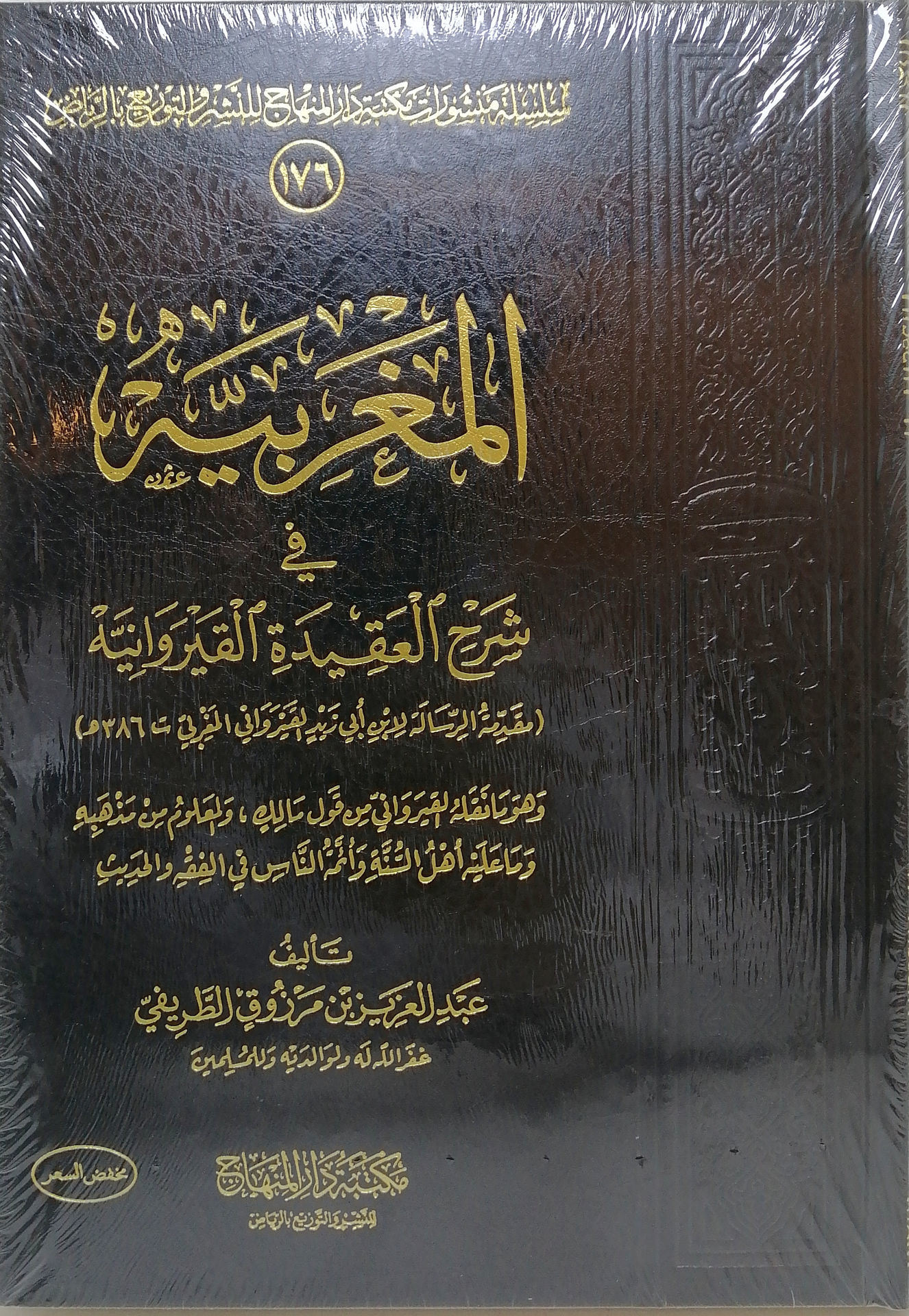
Description
Book description:
-
Author: Abdulaziz bin Marzooq Al-Turaifi
-
Number of pages: 386 pages
-
The subject of the book: Explanation of the Qiruniya Creed
The contents of the book:
-
Nodal Introduction to the Jurisprudential Treatise (by al-Qayrawani)
-
Introduction to the commentary
-
The virtues and preferences of science
-
Preserving the mind and the heart
-
The virtues of proximity to the first place and time
-
Morocco in the time of the companions and followers
-
Sunnah, Athar, and Kalam in Morocco
-
The influence of the East on the West
-
Greek Philosophy and its Impact on Talkers
-
The Belief of the Maghreb People
-
The Existence of Etzalism in Morocco and the Scholars' Attitude Toward It
-
The beginning of the Moroccans' response to the Easterners in the branches, not in the origins
-
Why Kalamology in Morocco has taken so long to catch on in Morocco
-
Reasons for the spread of Kalam in Morocco
-
The Impact of Izazal on the Acceptance of Kalam in the Ash'arite Way
-
The ranking of violators requires praising the closest and being kind to them
-
The Maghreb's writing on doctrines
-
The origins of Malik and his branches, and the conditions of his companions in Morocco
-
Hadith and speech and their impact on disagreement
-
The Persistence of the People of the Maghreb and the Test of Kalam
-
Interpretation and Delegation in the Words of Some Ahl al-Sunnah
-
Kalam and Imam Malik ibn Anas
-
Opinion and Kalamology
-
Malik's prohibition on the science of speech and what he means
-
The impact of going off on a tangent
-
Recognizing God through the science of speech leads to loneliness
-
The Salaf's Belief in Attributes
-
Language, Kalam, and the spread of heresy
-
Speaker error in the use of language
-
The breadth of halal and the narrowness of haram
-
Author's statement of authorship
-
The virtues of praying for the Prophet (peace be upon him), and where he should be prayed for
-
Ruling on praying for someone other than the Prophet (peace be upon him)
-
The Sunnis' Belief in Allah
-
Ruling on contemplating God's self
-
Types of Phenomena
-
Knowing God by His cosmic signs
-
Causes of Shirk
-
The doctrine of delegation
-
The History of the Delegation Doctrine
-
Authorization rate for predecessors
-
Exaggeration in tanzeem leads to the illusion of exaltation in tawfeeq and ta'zil
-
The Imams' narration of the hadiths of the attributes, and their caution against misunderstanding them
-
Imagining false implications leads to delegation, interpretation, and disruption
-
Top and bottom
-
Negation of some attributes due to the perception that the creatures are surrounded by the Creator
-
Seating on the Throne
-
The chair
-
God's omniscience
-
Back to God on the Throne
-
Caution against similes, and the rule of expressing attributes in ways that are not prescribed by the Shari'ah, such as signs and words
-
Nouns and adjectives
-
The Names and Attributes of the Companions and Followers
-
Names of God
-
The truth about qualities
-
Acknowledgment of an attribute invalidates the authorization
-
God's word
-
The severity of Malik and his companions' opposition to the creation of the Qur'an
-
The emergence of Creationism in Morocco
-
The Origin of the Qur'anic Creation Controversy
-
Character and sound
-
Arguments of those who deny the sound and letter of God
-
Standing on the Creation of the Qur'an, and why they are emphasized
-
Evidence of the Creationists
-
The Transfiguration of God
-
The Descent of God
-
The Qur'an is the uncreated word of God
-
Belief in fate
-
Appreciating the good and the bad
-
Do not attribute evil to God
-
Arguing about fate
-
The actions of the servants and their creation
-
God's command, prohibition, and destiny, and the perception of injustice by some souls
-
Knowing the causes does not take you out of God's destiny
-
God's omniscience
-
God's will and ability to create the actions of servants
-
Controversies in Fate
-
Causal determinism
-
To deny fate is to deny helplessness
-
The Prophet's message and his book
-
The conclusion of the Prophet's message
-
Ruling on following a religion other than Islam
-
The disbelief then came from a number of directions, the greatest of which were
-
Islam and freedom of religion
-
Doubts about the freedom to leave Islam
-
Belief in heavenly books and the wisdom of sending messengers
-
Source of Quranic interpretation
-
Belief in the Resurrection and what's in it
-
Blowing on images
-
Resurrection and Rewards
-
Hourly stipulations
-
Realizing the signs of the times
-
Calculation and punishment
-
Ruling on those who die and do not repent
-
The fate of Muslim disobedient people who enter Hell
-
The Khawarij, Mu'tazilah, and Marja'iyah disagreed with this.
-
Intercession and its provisions
-
Seeing God in the afterlife
-
Paradise and Hell, and to whom God has prepared them
-
Creating Heaven and Hell
-
Eternity of Heaven and Hell
-
The Coming of God
-
Balance and weight
-
Worksheets and how to receive them on the Day of Judgment
-
The Path and the condition of the people on it
-
Supplied pelvis
-
The truth of faith
-
The dissenting sects in this section are generally of two types
-
Causes of Infatuation with the Kharijites
-
The universal characteristic of the Kharijites
-
What to do when things go awry
-
Balancing the Marjah and the Kharijites
-
Increasing and Decreasing Faith
-
The Transience and Perfection of Faith
-
Malik's lack of faith
-
Exceptionalism in faith
-
Faith, words and deeds
-
Ruling on those who leave all work
-
The effect of taking work out of faith
-
Atonement and the conditions of sects
-
The spirits of the dead and their conditions
-
The grave and its temptation
-
Writing work for taxpayers
-
Spirits and their capture
-
The Best of the Best
-
The meaning of the century
-
The virtue of the Companions and their differentiation
-
Falling in love with the companions
-
Differentiation among the Companions
-
The expansion of preference among the Companions
-
The emergence of Islamophobia in Morocco
-
What happened between the Companions
-
Examining the people of the Maghreb with the Sahaba
-
Radicalization if they are empowered
-
Obedience to the Imams of the Muslims
-
Challenging the Imams and its conditions
-
Advise the imams
-
Mistaking Hearing and Obedience Texts
-
The plight of the repairman
-
The impartiality of the repairman
-
The virtues of the Salaf and following them
-
Reason for favoring the predecessors
-
Maximizing the jurisprudence of the Companions
-
Referencing a hadith that contradicts the Companions
-
The truth about the work that goes before the talk
-
Letting go of arguing and disputing
-
Ways to Know God's Truth
-
Mujtahid with heresy
-
Warning against arguing and disputing in religion
-
Good and bad intentions and their impact on understanding the Qur'an
-
Abandoning Argumentation and Argumentative People
The Two Industries of Writing and Poetry
The invalidity of metaphor and its impact on perception and disruption of the Book and Sunnah