

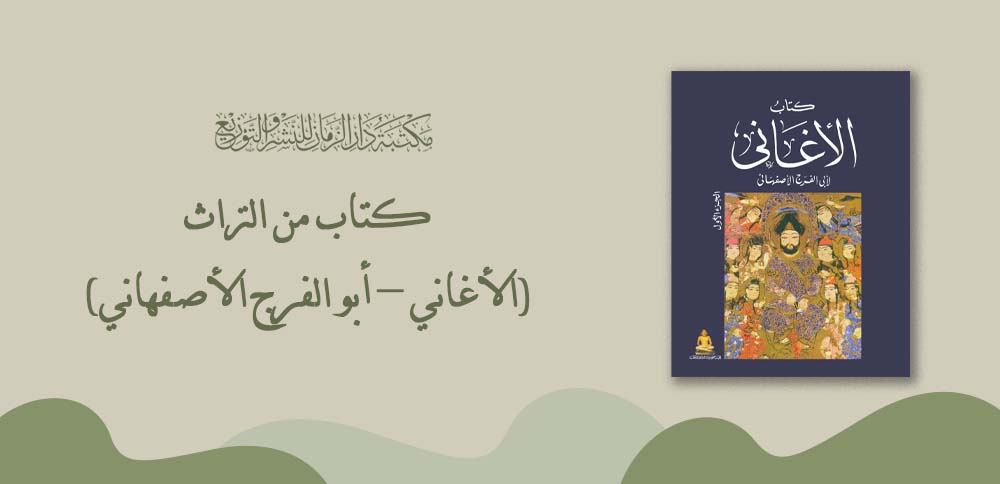
Al-Aghani - Abu al-Faraj al-Isfahani is one of the greatest works immortalized in Arab history. It is a unique literary encyclopedia that tells the story of poetry and music from the Jahiliyah to the Abbasid era, and documents the lives of Arabs through their poems, melodies, and tales. This monumental travelogue combines wit and knowledge, presenting an integrated picture of the development of literary and musical taste in Arab civilization, revealing the depth of the interconnection between art and words in our ancient culture.
This article aims to review the Book of Songs as one of the most important sources that preserved the memory of Arabic literature, with its news of poets, singers, kings and narrators, and its great role in documenting the social and intellectual life of those eras.
Why did al-Isfahani write a book from tradition (Al-Aghani - Abu al-Faraj al-Isfahani)?
Abu al-Faraj al-Isfahani wrote al-Aghani in response to a request from one of the Abbasid caliphs to collect a hundred songs that were among the most popular songs of their time. However, the project soon went beyond this limited goal, turning into a major encyclopedia that combined poetry, songs, and the literary and social news that accompanied each song. Al-Isfahani wanted to present a work that documented the Arab artistic heritage in its purest form, combining aural pleasure with historical knowledge.
Abu al-Faraj al-Isfahani's Al-Aghani was a book that not only collected lyrical texts, but also provided a comprehensive picture of the development of literary and musical taste in the Islamic society at the time. Each song was a gateway to the story of its poet or singer and a way to discover the features of the cultural, political and social life of those times.
What are the book's main goals?
Al-Isfahani sought to preserve the literary and lyrical heritage of the Arab nation and to chronicle the biographies of the poets and singers who enriched the cultural scene. He also wanted to provide a record of the development of literature and music throughout the early Islamic ages, so that it would become a comprehensive reference that combines literary history and artistic conscience for future generations.
How were the songs and material chosen?
Al-Isfahani relied on songs and poems that were associated with prominent historical events and personalities, so his selection was careful to reflect the diversity of Arab life in the Umayyad and Abbasid eras. He collected news from reliable oral and written sources, and was keen to document the traditions and ensure the authenticity of the narrative. This approach was the basis that made Al-Aghani a unique model in combining literature, history, and documented narratives.
What are the main features of the Book of Songs?
Al-Aghani - Abu al-Faraj al-Isfahani - is one of the most prominent Arabic heritage books that combines literature, history and music. It is a huge encyclopedia full of knowledge and documents various stages of ancient Arab life. This book was characterized by several features that made it an indispensable source for researchers and those interested in heritage:
- Content encyclopedic Al-Isfahani collected news of poets and singers and their poetry, along with stories and anecdotes about them, making the book a comprehensive mirror of ancient Arabic literature.
- Accurate attribution of narratives Al-Isfahani relied on the method of documentation by attribution, preserving the sequence of narrations and their sources, reflecting his accuracy in transmitting news and poetry.
- Enjoyable narrative style It combines literary analysis and storytelling, making the reader live the events and characters warmly and realistically, far from historical dryness.
How did al-Isfahani document literary heritage?
In his book, al-Isfahani relied on documented accounts from narrators, scribes, and literary scholars, so he was careful to mention the attribution and the source of the story or poem. This meticulous methodology made Al-Aghani a living record of the production of poets and singers, and a reference for literary criticism and understanding of poetic style in the early ages. He also included his critical insights in commenting on the poems, giving the book a rich analytical dimension in addition to its documentary value.
What is the role of the book in music history?
Abu al-Faraj al-Isfahani plays a pivotal role in documenting the history of Arabic music, covering the development of melodies, musical instruments, and famous singers in the Jahiliyya, Umayyad, and Abbasid eras. Through his stories, Al-Isfahani shows how singing and poetry contributed to shaping public taste, and how art influenced society, values, and meanings. Thus, Al-Aghani has become an invaluable reference for understanding the artistic structure and aesthetic sense in Arab civilization.
What images of Arab life does it reflect?
The book reflects the intricate details of Arab social life, from the councils of literature and samaras to the roles of women in singing and music. It also paints vivid pictures of life in the desert and palaces, illustrating the diversity of environments, natures, and customs. Through his news and stories, we discover how culture and art were an essential part of the fabric of daily life, making Kitab al-Aghani a vivid portrait of Arab society in its time.
What is the style of narration in the Book of Songs?
Abu al-Faraj al-Isfahani adopts a narrative style that combines fun and knowledge. He usually begins by mentioning the song or sound that is the focus of the story, and then moves on to recount the poets and singers whose names are associated with it, explaining the circumstances of the chanting and the occasions in which it was performed. It does not follow a strict chronological order, but rather organizes its material according to themes, melodies, and related narratives, which gives the text a flexibility and vitality that brings the reader closer to the atmosphere of the old samar and majalis.
What are the characteristics of language and literature in the book?
Al-Isfahani's language is characterized by elegance and clarity. He employs sophisticated literary expressions without complexity and is careful to provide accurate descriptions of characters and events. He uses attribution to give his narratives credibility and accompanies the news with critical analysis that emphasizes his literary taste and his deep understanding of poetry and music. His style varies between anecdotal narrative and artistic criticism, combining the spirit of a historian and the taste of a writer.
How was cultural and social life reflected?
The book (Al-Aghani - Abu al-Faraj al-Isfahani) reflects a vivid picture of cultural and social life in Islamic times, especially the Abbasid and earlier Jahiliyya and the Bedouin environment. Al-Isfahani provides a thorough translation of the characters, explaining their lineage, qualities, behavior, and actions, allowing the reader to understand the structure of society and the diversity of its classes. Through descriptions of customs, arts, and councils, Arab society is shown in its authenticity, rich in its arts and traditions and its interest in poetry and music as part of its daily life.
Are there abridged versions of the Book of Songs?
Yes, there are abridged versions of a heritage book (Al-Aghani - Abu al-Faraj al-Isfahani), designed to provide selective and focused content from this monumental work. They are designed to make the book, which is characterized by its large size and richness of material, more accessible to students and researchers, making it easier to find the most important texts and passages.
Why are shortened versions important for students?
Abridged versions are an effective way for students to understand the essence of a heritage book (Al-Aghani - Abu al-Faraj al-Isfahani) without having to read all of its lengthy parts. They condense complex literary and historical material into selected texts that are easy to study and analyze. It also enables students of Arabic literature to trace the most important themes, stories, and characters that shaped the Arabic heritage in a practical and clear way.
How are the shortened texts selected?
The selection of texts in the abridged versions is subject to strict criteria that take into account the literary and historical importance of the text. The material is sometimes rearranged to suit the objectives of academic study, allowing for a focus on the topics that are of most interest to learners and researchers. Care is taken to preserve the spirit of the original book, while presenting the content in an organized and concise manner that highlights the essence of Abu al-Faraj al-Isfahani's thought.
What is the scientific value of abridged versions?
The abridged versions preserve the original scientific and linguistic value of the Book of Songs, presenting reliable texts and narrations in a simplified style that is easy to read and understand. They are considered an authoritative reference in the study of literature and criticism, and contribute to making the Arabic heritage more accessible to new generations. Thanks to these editions, access to this great heritage work has become more flexible, promoting the democratization of knowledge and making heritage accessible to all.
What are the best songbook releases?
Tully Dar Al-Zaman Publishing and Distribution Library A prominent interest in the revival of Arabic literature and heritage books, most notably a heritage book (Al-Aghani - Abu al-Faraj al-Isfahani), which is available as part of the All categories. It is characterized by providing carefully edited and revised editions, allowing researchers and students to rely on accurate and error-free texts. Dar Al-Zaman's library facilitates the study of classical Arabic literature and promotes a deep understanding of its original sources.
Selections from the book Al-Aghani C2 by Abul Faraj Al-Isfahani / The Jahiliyya Era
is Selections from the Book of Songs S2 Abu al-Faraj al-Isfahani is a distinctive edition edited by Ihsan al-Nas, focusing on texts related to the Jahiliyya era and earlier periods of Arabic literature. This volume features a practical hardcover and an affordable price, making it a practical choice for students of literature and history.
Al-Aghani edition 27 parts
Al-Aghani Edition - 27 parts In 15 volumes, it is a huge encyclopedic edition that faithfully collects the entire content of the original book. This edition is characterized by the sequence and richness of the texts, making it suitable for specialists in Arabic literature and researchers wishing to familiarize themselves with all the details of the literary heritage collected by Al-Isfahani.
Who is the Book of Songs for?
Abu al-Faraj al-Isfahani's Al-Aghani is one of the most important references for specialists and researchers in the fields of Arabic literature, history, and music. It combines a meticulous literary narrative with rich historical documentation, making it a reliable source for tracing the development of poetry, singing, and social relations in early Islamic times. The book provides researchers with original primary material that can be relied upon to study literary texts and understand the cultural contexts in which they arose.
How useful is it for students of literature and history?
This book offers students of literature and history the opportunity to learn about the characteristics and styles of Arabic poetry, as well as the literary and artistic personalities who contributed to shaping Arab taste throughout the ages. Through it, they trace the emergence and development of Arabic music and learn about the nature of the cultural and social life that accompanied that rich historical period.
Does the average reader benefit from the book?
Despite the encyclopedic nature of The Book of Songs, the average reader will find the stories and anecdotes that abound in its pages a unique pleasure to read. It is characterized by its interesting narrative style and a variety of artistic and social characters that reflect the spirit of the ancient Arab heritage. The abridged versions of the book allow non-specialists to easily explore the content of the book and recognize the aesthetics of Arabic literature without the need for academic depth.
Frequently Asked Questions about a Heritage Book (Al-Aghani - Abu al-Faraj al-Isfahani)
What is the Book of Songs about?
The book (Al-Aghani - Abu al-Faraj al-Isfahani) deals with the news, genealogy, days, and ancient literature of the Arabs, relying mainly on a collection of songs that were popular during the time of the caliphs, especially those chosen by the singers for the Caliph al-Rashid. The book combines poets' biographies, texts, and news, and presents rich scenes of Arab life through the ages, forming an integrated picture of ancient Arab literature and society.
How many parts of the Book of Songs?
The book (Al-Aghani - Abu al-Faraj al-Isfahani) consists of 24 or 27 parts, depending on the edition adopted, and these parts have been grouped into multiple volumes to facilitate memorization and reference. This division helps readers and researchers to deal with the book according to its themes or the sequence of its narratives, allowing for a careful study of the literary and historical heritage it contains.
Is the Book of Songs a reliable historical reference?
One of the most authoritative sources in Arabic literature and history is the book Al-Aghani (Al-Aghani - Abu al-Faraj al-Isfahani), on which leading historians and scholars such as Taha Hussein and Ibn Khaldun have based their studies and analysis of ancient texts. The book accurately reflects the details of cultural and social life in the early Islamic period, making it an essential reference for understanding the development of Arabic poetry, song, and thought.
Abu al-Faraj al-Isfahani's Al-Aghani is a unique reference in Arabic literature and music, as its author collected biographies of poets, stories of singers, and news of society in a rich encyclopedic style. The book represents a wide window into the cultural and social life of past eras, and remains one of the most prominent sources that researchers rely on to understand Arab history and artistic creativity throughout the ages.
Read more: