

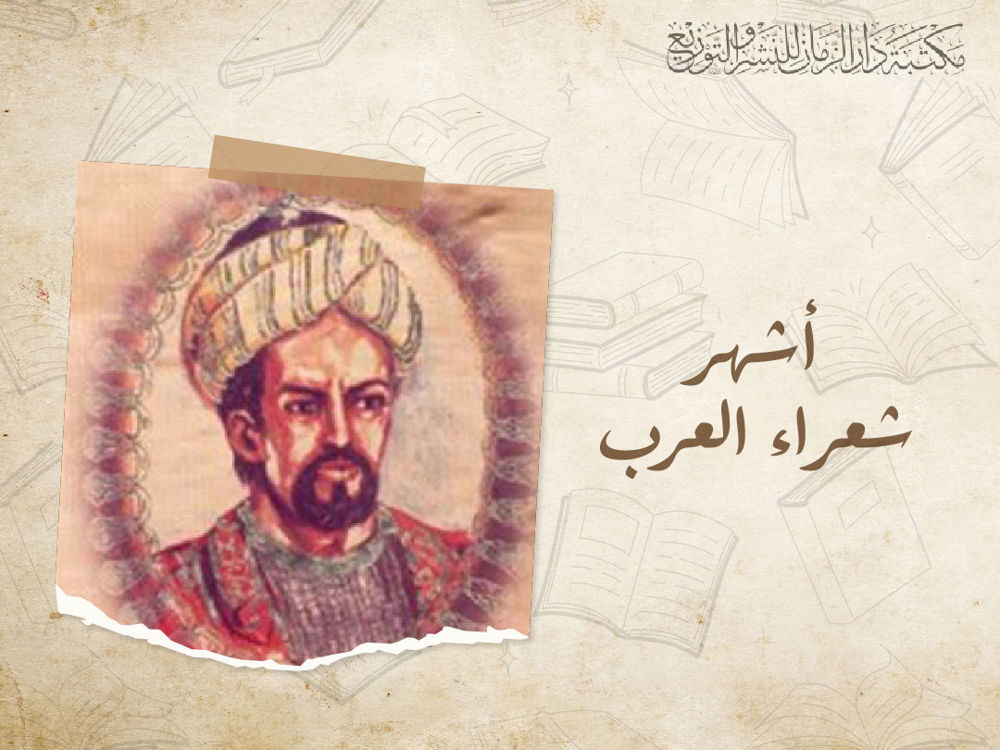
Arab poets have excelled in the art of poetry throughout the ages, and poetry has occupied a special place in their culture from the Jahiliyya era to the present day. Poetry was not only a means of artistic expression, but also carried important social and cultural dimensions. Through this article, we will learn about the most famous Arab poets.
The most famous Arab poets
In ancient times, poets recited their poems in their homes and cultural councils to demonstrate their poetic abilities and compete to recite poems that glorified their tribes and intimidated their enemies. The poet was of great importance in raising the status of his tribe, as he was considered a source of pride and identity.
Poets had a sacred place in society and were revered by the people. They had the power to determine the destinies of tribes through the power of their words and poetry. A single verse carried great weight, as it could tip the balance of power between tribes and affect relations between them.
In addition, poets wrote poems to immortalize important events and express human emotions. Thanks to this important cultural pillar, poetry has continued to be an integral part of Arab heritage and a prominent manifestation of art and cultural expression.
Amr al-Qays
One of the most prominent poets in Arab history, Amr al-Qays, was of Yemeni origin, but moved to Najd after the collapse of the Marib Dam. He lived a life of luxury and opulence in Najd, where his father was the head of his people and lived in an atmosphere of luxury. He was influenced by his father's lifestyle, engaging in drinking, gambling, and chasing women.
Despite his dramatic lifestyle, Amr al-Qays was a great poet, who excelled in poetry with his great words and expressions. On a tragic day, his father was killed, which led him to investigate and search for his father's killer for many years. He lived his life preparing to take revenge, and his journey ended in Turkey, specifically in the city of Ankara.
He was also known as “Father of Wounds” due to the many wounds he sustained during his travels and travels. One of his most famous achievements is the poems Al-Mu'alaqaqat, which are considered one of the most important creations of the Jahiliyya poets.
Al-Farazdak
He was born in 830 AH in Basra, and was the grandson of Sa'saa bin Najia al-Tamimi, famous for “redeeming females from infanticide”. He was called al-Faris Sadiq because of the enormity of his face. The meaning of al-Farazdak is a loaf and its unit is Farazdaqa.
Al-Farzadq is considered a first-class poet, and he and his father were ministers in the nobility of their people, and their relationship with the Banu Tamimah extends to other noblemen. It is said that Al-Farazdak never sat down to a meal alone, and was prepared at the grave of his ancestors from Bani Tamimah.
Al-Farzadq was a prolific satirist, famous for his exchanges with the poet Jarir. This exchange continued for almost half a century until his death, and was inherited by Jarir. He traveled between princes and governors, attacking them with satire and then praising them in different aspects.
Abu al-Tayyib al-Mutanabbi
Ahmad ibn al-Hussein, also known as al-Mutanabbi, is one of the most prominent Arab poets, born in 303 AH in Kufa. His lineage goes back to the Kinda tribe as a result of his birth in an area belonging to it in Kufa. He was considered Abu al-Tayyib and al-Kindi, and was distinguished by his high position and excellence in the world of poetry and literature.
Al-Mutanabbi lived the best days of his life at the court of Saif al-Dawla al-Hamdani in Aleppo, where his name was associated with the Hamadanis, and he lived during this period of cultural and literary revitalization. Al-Mutanabbi is considered one of the greatest poets of the Arabic language and one of the most knowledgeable about its rules and vocabulary. He was nicknamed “Al-Mutanabbi” because the time of his birth predicted some of the events that took place in his life.
At first, his name is associated with the praise of kings and rulers, as he wrote many poems that praised rulers and highlighted their majesty and power. Although al-Mutanabbi is best known for these poems, he also showed a lot of philosophy and wisdom in his poetry, and wrote about suffering, pessimism, and self-esteem.
Al-Mutanabbi's personality was characterized by pride, courage, and ambition. He was a lover of adventures, and he was proud of his Arabness and expressed his pride in his poems. Al-Mutanabbi's poetry was strong, clear, and powerful, characterized by wisdom and philosophy in describing battles and expressing the concepts of life.
Al-Mutanabbi's poetry is not based on pretentiousness or excessive artifice, but is characterized by his ability to communicate his feelings and open up in terms of language and statement. He left a great legacy of Arabic poetry, and his poems remain a source of inspiration for poets and writers to this day.
Antara al-Absi
Antara al-Absi, a brave hero from the Abs tribe in Najd, was a black slave, born to Zubaybah, who was part of the captives of a battle with the Arabs. Despite his bravery and dedication to defending his tribe, his father did not recognize him because of his black color, which gave his life a sense of suffering.
He was not recognized by his father and could not marry his cousin Abla as long as he was a slave. However, Antara was characterized by his courage and bravery in battle, participating in the defense of his tribe bravely but without looking for personal gain.
Antara's poems show many emotions, as love and loneliness dominate his poems, and internal conflicts between his love for Abla and his reality as a slave appear in his poems. Despite his great challenges, Antara emerged as a brave knight who was not afraid of any challenge, and his poems reflected the depth of his struggles and feelings in the face of difficult circumstances and life challenges.
Nabugha al-Dhubyani
Al-Nabagha Abu Umama Ziyad ibn Muawiya, the most famous Arab poet, a member of the Qays tribe, his nickname was “Al-Nabagha” which means “the intelligent and skillful poet”, he won this title because he did not start saying poetry when he was young, but began to formulate and say it when he grew up. He belonged to the Dhubyan family, and was one of the most honorable and noble of his people.
He was very interested in boasting about money and wealth, and sought to be the center of attention of kings and princes to receive gifts from them. He expressed his love of money and attributed it to his upbringing and environment.
In his poems, al-Nabagha was characterized by directing many praises to King al-Numan ibn al-Mundhir, whom he specialized in many poems and hymns. He reflected in his poetry the prosperous life and well-being that he seeks to achieve by achieving the satisfaction of kings.
Some believe that Nabugha's devotion to praising kings has negatively affected his poetic legacy, as poetry is often considered a means of expressing reality and feelings artistically, but it appears that his keen interest in money and kings has contributed to highlighting a certain aspect of his life and the society in which he lived.
Zuhair bin Abi Salma
The son of Zuhair Ibn Abi Salma, he grew up in a house rich in poetry, as his father and family were interested in it. He developed a love of poetry from a young age, which made him master it linguistically and grammatically. He was a very famous veteran poet, especially in the Islamic era.
Ibn Zuhair is considered one of the most prominent poets in the Jahiliyya and the Islamic era, and is famous for his famous poem “Pant Souad,” which he recited in front of the Prophet (peace be upon him). He inherited the art of poetry from his father, and shone exceptionally in it, making him one of the greatest poets of that historical period.
Thanks to his talent and creativity, Ibn Zuhair left a remarkable literary legacy that spans from the Jahiliyya to the Islamic era, and greatly influenced the development of Arabic poetry through the ages.
Amr ibn Kalthoum
Amr ibn Kalthoum, a brave knight from the Taghlib tribe, was famous for his conflicts with the Bakr tribe, especially in the years-long War of Bassous. He was chosen to represent his tribe in these conflicts because of his extraordinary courage and bravery.
In one location, Amr ibn Kulthum recited his poem, which led to a great outburst and anger on the part of Amr ibn al-Manzir, who was ruling the region at the time. This act was considered a transgression of respectable boundaries and an angry outburst on the part of Amr ibn al-Mundhir, who was running things during this war.
This story shows the intense tensions between tribes and individuals at that time, where courage and daring were valued but within a specific framework of morals and etiquette that Arab societies adhered to.
Asha
Maimun ibn Qais, also known as Al-Asha, was a poet from the Bakr ibn Wael tribe in the Jahiliyah. He became famous for his nickname because of his poor eyesight, yet he was considered one of the most prominent poets of the era with his prolific poetry. Al-Asha is one of the poets who did not reach the volume of his production of poems and poems of any other poet of his time.
He was characterized by his singing with his poetry, which earned him the title of “the Sanaja of the Arabs”. He was known for his skill in praise, especially in praising kings and princes, which made them honor him and give him money. Thanks to his brilliance and creativity in the art of poetry, Al-Asha achieved great fame and influence in the field of Arabic literature.
Tarfa ibn al-Abd
He lived as an orphan after the death of his father from the Bakr ibn Wael tribe that resided in Bahrain. Despite his orphaned life, he lived in luxury and opulence, and was characterized by boldness and courage. Despite this, he contributed greatly to Arabic Jahiliyya poetry, and he excelled in crafting great poems.
He was famous for his satire, attacking his uncles for their injustice to his mother. He inflicted sharp satire on King Amr ibn Hind of Al-Hira, and he was only 26 years old despite his great creativity. He is considered one of the best poets of the Jahiliyah, and his short history did not prevent him from leaving a great literary legacy, as he is considered the author of the seven poems that remain witness to his skills and creativity in the world of poetry.
Zuhair bin Abi Salma
Zuhair ibn Abi Salma, from the Ghutfan tribe in Najd, grew up as an orphan after the death of his father, and his upbringing was influenced by poetry, as his father, uncle, and stepfather were all poets, and his uncle raised him. Zuhair was characterized by poetry, politeness, and morals, and his poems covered various purposes of poetry, such as praise and ghazal. He was famous for praising Herm Ibn Sinan and the generosity he showed towards him. Zuhair ibn Abi Salma is one of the authors of the seven poems that are considered one of the greatest works of poetry in the Jahiliyya era.
We say Arab poets form a rich and diverse heritage that reflects different aspects of Arab life and culture. From Jahiliyya times to the modern era, poets have written in their own unique style, raising their issues and feelings in their beautiful poetic language.
The poets of the Jahiliyya, such as Antara ibn Shaddad and Tarfa ibn al-Abd, offered inspiring poems expressing love, courage, and the details of desert life. In later eras, other great poets such as al-Farazdak and al-Mutanabbi emerged, who added new dimensions and depth to Arabic poetry.
The issues of poetry varied between praise and satire, and were influenced by social and political events. Arabic poetry remains present even today, as modern poets continue to document their experiences and express their opinions in an artistic language that blends beauty and depth.
In short, Arab poets form an integral part of their cultural heritage and have greatly influenced Arabic literature and the overall cultural landscape.