

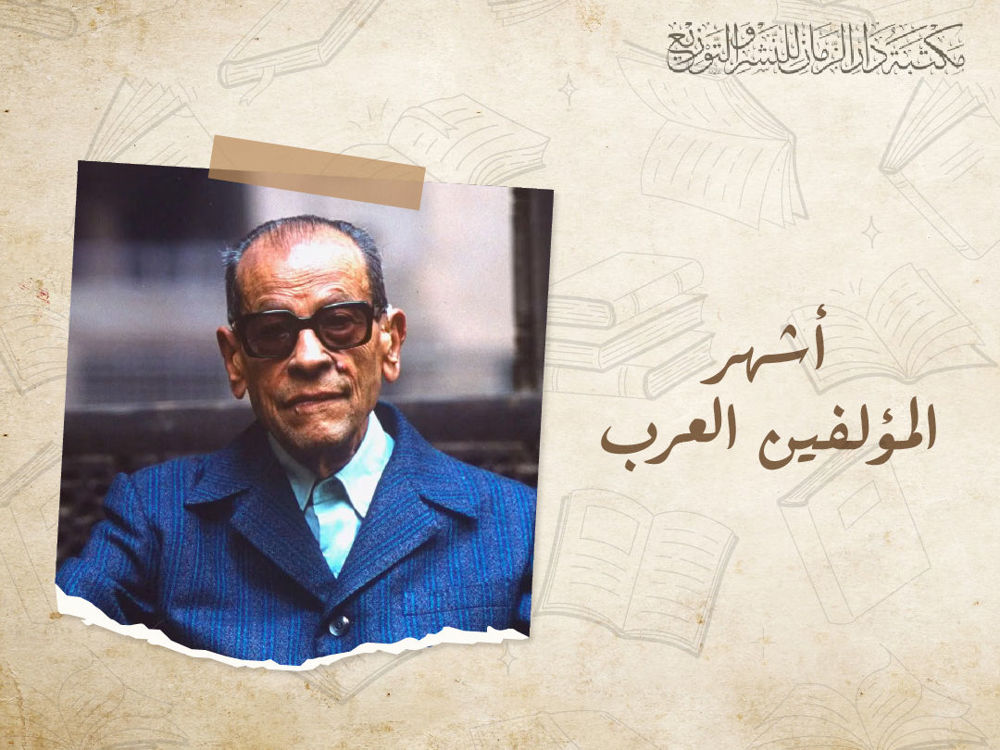
The sidewalks of the history of Arabic literature are filled with names that have transcended time and space. Their names shine like the sun in the sky of Arabic literature, and their works still stand on the throne of creativity and rise to the peaks of excellence. They are the most famous authors, novelists, poets and thinkers whose pens have immortalized poignant stories, beautiful poetry, and deep thought that is manifested in their diverse works. From Gibran Khalil Gibran, who created “The Prophet” as a guide for humanity, to Naguib Mahfouz, who conveyed the events and experiences of Egyptian society with exceptional artistic skill, to Ghassan Kanafani, who left a prominent mark in Palestinian literature with his influential novels. In this article, we will briefly review the most famous authors whose pens illuminated the literary sky with incomparable brilliance, so that we can feel the fragrance and timeless beauty of the Arab literary heritage.
Famous Arab authors
One of the most famous Arab authors:
Gibran Khalil Gibran and his book “The Prophet”
The Prophet, by the famous Lebanese writer Gibran Khalil Gibran, is one of the most important literary works that shaped the genius of modern Arabic literature. It is a profound and enjoyable journey into the world of wisdom and spirituality, telling the story of a prophet who is his guide and mentor, and who interacts with a variety of people on his journey towards spiritual and cultural depth.
The book is a literary masterpiece that combines smooth prose and elegant poetry, and ranges from everyday life to deep spiritual and philosophical issues. The book presents a collection of attitudes and wisdoms that carry many aspects of life, such as love, friendship, freedom, and justice.
The beauty of “The Prophet” is evident in Gibran's unique style, which weaves together expressive words and deep thoughts to create a literary work that expresses a distinct vision of life and humanity. It is a book that opens new horizons for reflection and contemplation, and raises interest in moral and spiritual issues.
“The Prophet” has won the favor of readers from different cultures and intellectual currents, and has become one of the most prominent books circulated and translated into several languages around the world. It is a book that leaves a deep impact on readers and provokes thought and reflection in all those who are touched by its literary elegance.
Naguib Mahfouz and his trilogy
Naguib Mahfouz's trilogy is considered one of the most prominent literary works in contemporary Arabic literature, consisting of three major novels that deal with the lives of Egyptians and the transformation of Egyptian society over different periods of time. These novels have had a major impact on Arabic literature and popular culture, and Naguib Mahfouz was honored with the Nobel Prize in Literature in 1988 for his great influence on Arab and international literature. Let's take a deeper look at each novel in the trilogy:
“Between Two Kasserines”
This novel deals with middle-class life in Egypt during the period of British rule, focusing on the story of Farag and his family and their experiences in dealing with the social and political changes in the country. Naguib Mahfouz presents a realistic portrayal of daily life in Egypt and the impact of the British occupation on the Egyptian people.
“Palace of Longing”
This novel tells the story of a young man named Kamal Abdel Gawad, and follows his experiences and struggles in Egyptian society during and after the independence period. Through Kamal's character, the author reflects the transformations of society and their impact on the individual and his social and emotional relationships.
“Sugar”
This novel is a thrilling conclusion to the trilogy, as it revolves around the fate of the trilogy's main characters in light of the successive political and social changes in Egypt. In this novel, Naguib Mahfouz continues his deep analysis of the characters and provides his readers with an in-depth view of Egyptian society and its transformations through the ages.
Characterized by meticulous narration and beautiful literary expression, Naguib Mahfouz's trilogy provides the reader with a deep understanding of Egyptian history and culture. These novels are considered literary masterpieces and remain an important legacy in contemporary Arabic literature.
Ghassan Kanafani and his book “Men in the Sun”
“Men in the Sun is a novel by the Palestinian writer Ghassan Kanafani, considered one of the most important literary works in contemporary Arabic literature. Published in 1963, the novel is a story that deals with the lives of Palestinians in the post-Nakba period, and their experience in searching for dignity, freedom, and identity under the difficult circumstances in which they live.
The novel follows the lives of a group of Palestinian refugees who seek to survive in a reality of poverty, oppression, and injustice. The characters are diverse in terms of background and aspirations, with each character reflecting a different aspect of the challenges faced by the Palestinian people.
The novel is characterized by a realistic and profound description of the social and political conditions experienced by the Palestinian people, and highlights the sacrifices made by Palestinians in order to survive and preserve their identity and dignity.
“Men in the Sun is an influential literary work that reflects the reality of life in Palestine and the challenges faced by the Palestinian people, and remains an important legacy in Arabic literature and Palestinian culture.
To conclude today's article on the most famous Arab authors, we reviewed the most famous authors' names and their distinctive writing.
Read more: