

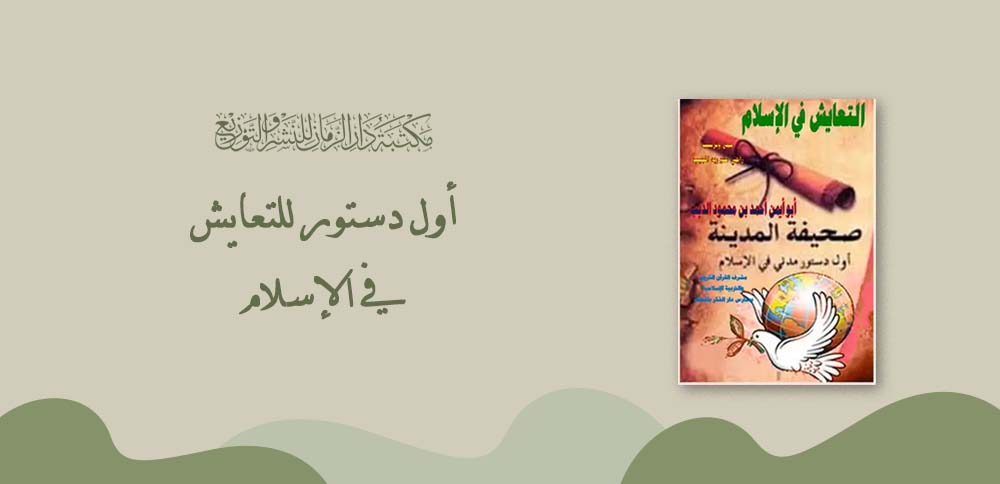
Since ancient times, generations have been searching for the roots of justice and the foundations of coexistence among people, and Muslims always return to Islam's first constitution of coexistence, known as the Madinah newspaper, as a pivotal moment in the history of Islamic legislation. This document was not just a political agreement, but a declaration of the principles of equality and mutual respect between social groups at a time when religious and tribal conflicts ruled the world.
This article takes you on a journey to discover the first constitution of coexistence in Islam, its main features and the major principles established by this unique document in Islamic history.
What was the first constitution of coexistence in Islam?
The first constitution for coexistence in Islam was the Madinah Gazette, drawn up by the Prophet Muhammad after the migration to Medina in 623 AD. The newspaper came to regulate the relationship between Muslims, Jews, and other factions of the city, with the aim of building a cohesive society in which justice and religious freedom prevailed. This document was characterized by establishing a unique model of peaceful coexistence between the different components of society under the umbrella of a single state.
The paper contained 52 different clauses, 25 of which were dedicated to regulating internal relations among Muslims, while 27 clauses dealt with how to deal with non-Muslims. This division represented a practical step towards establishing a social order that balances rights and duties and emphasizes the principle of cooperation in defending the city and protecting the interests of all its inhabitants.
How did the constitution come about?
This constitution arose at a pivotal moment in the history of Islam, after the Muslims moved to a new community in Medina with great tribal and religious diversity. There was an urgent need for a document that defines the foundations of interaction and prevents disputes, so the Prophet (peace be upon him) drafted the City newspaper To serve as a social contract that unites everyone on the basis of respect, justice and shared citizenship.
Who are the parties to the constitution?
The parties to the first constitution of coexistence in Islam included the immigrants from Mecca, the Ansar from Medina, as well as the Jews and other inhabitants of the city from different tribes. Under the Prophet's leadership, everyone abided by the terms of the newspaper, which ensured a fair sharing of rights and duties and contributed to establishing the idea of a single community that cooperates in maintaining security, defending the city, and supporting internal peace.
What were the main principles of the first Islamic constitution?
Islam's first constitution for coexistence enshrined the principle of religious freedom as a fundamental right for every member of society. It recognized the rights of Jews and people of other religions to practice their rituals in complete freedom, without interference or coercion. It emphasized that faith is a personal matter that cannot be forced, making the city a model of tolerance and coexistence between followers of different religions under a single system of mutual respect.
What are the guarantees of justice and equality?
The constitution stipulates that everyone has equal rights and duties, regardless of religion, race or origin. Justice and equality were among the pillars on which the new society was built. Injustice and discrimination were prohibited, and respect for human dignity was emphasized. The constitution also made the Prophet's leadership and Islamic law the supreme authority in arbitration and adjudication between people, to ensure fairness and redress grievances. It also called for cooperation among members of society to achieve security and goodness and to deter aggression in all its forms.
What is the concept of one nation?
The constitution emphasized that the people of Medina are one nation, despite their different religions and ethnicities. Citizenship in this framework is not based on blood or lineage, but on belonging to the land and common interest. It stipulates that this nation unites to protect the city and defend it against any external threat, creating a real political and social unity that made the city a center of security and stability.
How did he confront tribalism?
The first Islamic constitution strictly confronted tribalism, abolishing it completely and shifting affiliation from the bond of blood and tribe to that of the Ummah. Loyalty became loyalty to religion, nation and community instead of tribe and sect. This radical shift contributed to building a cohesive and cooperative society, characterized by respect and solidarity, and based on the values of justice and citizenship rather than on ties of descent and tribal affiliation.
How did Al Madinah newspaper change the concept of coexistence?
The first constitution of coexistence in Islam established the principle of equality between members of society, regardless of their different religions, and considered religious minorities as part of the community. The Madinah Gazette stipulated that Jews and others within the city would be protected as long as they were committed to peace and mutual respect. Thus, the multi-religious presence was transformed from a source of contention to an element of strength and unity under the umbrella of the law.
What impact does the Constitution have on civil rights?
The constitution grants everyone the freedom to believe and practice their rituals without coercion, and makes human dignity and the right to work among the basic rights that are inviolable. Religious affiliation is no longer a criterion for discrimination or privilege, but rather cooperation for the good has become the unifying principle. Thus, the concept of collective justice was enshrined, where everyone has equal rights and duties before the system that protects them.
What does the new society look like?
Al-Madinah newspaper painted the features of a cohesive yet diverse society in which religious, cultural and social components interact in a spirit of cooperation rather than disharmony. People lived in an environment of security and civil peace, with each party participating in its maintenance and protection. This was a practical model of coexistence that combined the freedom of the individual with the responsibility of the group in building a society that values and preserves diversity.
What are the best books to understand Islam's first constitution of coexistence?
Provides Dar Al-Zaman Publishing and Distribution Library A collection of the most important books that help to understand the first constitution of coexistence in Islam, with its scientific works that combine legal depth and civilizational vision. The library is characterized by the diversity of its publications that serve students and researchers in the fields of Islamic thought, law and history.
The Code of Ethics in the Qur'an
The book is a“The Code of Ethics in the Qur'an” From Book collections Dr. Muhammad Abdullah Draz - published by Al-Risala Foundation - is one of the most prominent references through which the spirit of coexistence in Islam can be understood from a Quranic perspective.
The book presents an integrated vision of the Qur'anic moral philosophy as a reference point for establishing a comprehensive justice system that preserves human dignity. It also presents a comparative study between the Qur'anic conception of morality and modern Western philosophies, revealing the consistency between religious and general human values. The cover has a formal decorative character, and the high quality of printing makes the book suitable for continuous reading and scientific reflection.
Positive Laws in the Balance of Islamic Law
As for the book “Positive Laws in the Balance of Islamic Law”From the Languages By Ahmed Abdulaziz Al-Hussein - published by Dar Al-Zaman Library - provides a comparative analytical perspective linking positive laws with Islamic legislation, presenting real-life examples of tests of the application of these laws in light of the philosophy of the Islamic constitution.
The book shows how to build legal and social relations within a framework of coexistence and justice derived from Sharia, making it a practical reference for students and researchers in jurisprudence and jurisprudence.
How did the classics interpret the first constitution of coexistence?
The Constitution of Ethics in the Qur'an explains how Islam's ethical system is not just a set of abstract values, but a practical constitution for coexistence. According to the author, Qur'anic ethics is based on a balance between innate and divine obligation, which makes it capable of guiding human behavior towards justice and mercy at the same time. The book shows that the first constitution of coexistence in Islam is the system that integrates individual moral duty and collective interest to achieve balanced citizenship among all individuals.
How have positive laws addressed the Islamic constitution?
In Positive Laws in the Balance of Shari'ah, Shari'ah is placed in a careful comparison with modern constitutions. The author explained that the Islamic system is characterized by legislative integration that places justice at the center of relations between the ruler and the ruled. He also pointed out that the Islamic constitution is not a rigid document, but a living system based on mercy and justice that recognizes and protects the rights of minorities within the framework of citizenship. Through this comparison, it emerged that the sharia offers an advanced model of a just civil state in which spiritual and legal values are integrated.
What are the ethical foundations of coexistence?
Both schools agree that the ethical foundations of coexistence stem from the Qur'anic principles that regulate man's relationship with God and others. Three central values have emerged that represent the essence of this constitution:
- Tolerance that allows for diversity and understanding between individuals and groups.
- Justice that guarantees equality in rights and duties without discrimination.
- Human freedom is a prerequisite for building a society that respects human dignity.
These principles, when put into practice, constitute the practical framework for the first constitution of coexistence in Islam, where a harmonious society is a direct result of their application in legislation and in people's daily lives.
FAQs about Islam's first coexistence constitution
What was the first written constitution in Islam?
The first written constitution in Islam is the Charter of Medina, the words of which begin, “In the name of Allah, the Merciful, the Compassionate. This is a book from Muhammad, the Ummi Prophet, between the believers and the Muslims from the Quraysh and the people of Yathrib and those who follow them and strive with them.” This document is the de facto basis for regulating relations between Muslims, Jews, and others in the city, laying down the rules for coexistence and cooperation in a diverse society.
What was the first constitution in Islam?
The first constitution in Islam is the Madinah newspaper, also known as the “Document,” which was adopted after the Prophet Muhammad's migration to Medina in 622 AD. Scholars and thinkers considered it the constitution of the first Islamic state, as it regulated the rights and duties between different groups of society and established the principles of justice and common citizenship.
What was the first peace document in Islam?
The City Charter is considered the first peace document in Islam. It laid the foundations for coexistence between Muslims and other inhabitants of the city, based on solidarity and cooperation in defending the city, maintaining security, and respecting freedom of belief, ensuring civil peace and community unity despite religious diversity.
The first constitution of coexistence in Islam is considered a pioneering model of balanced social organization, as it embodied the principles of justice and equality and guaranteed the rights and freedoms of all segments of society. This constitution formed a solid base for building a cohesive society whose members live peacefully despite their different religions and cultures, making it a cornerstone in establishing the values of human coexistence in Islamic and global history.
Read more: