

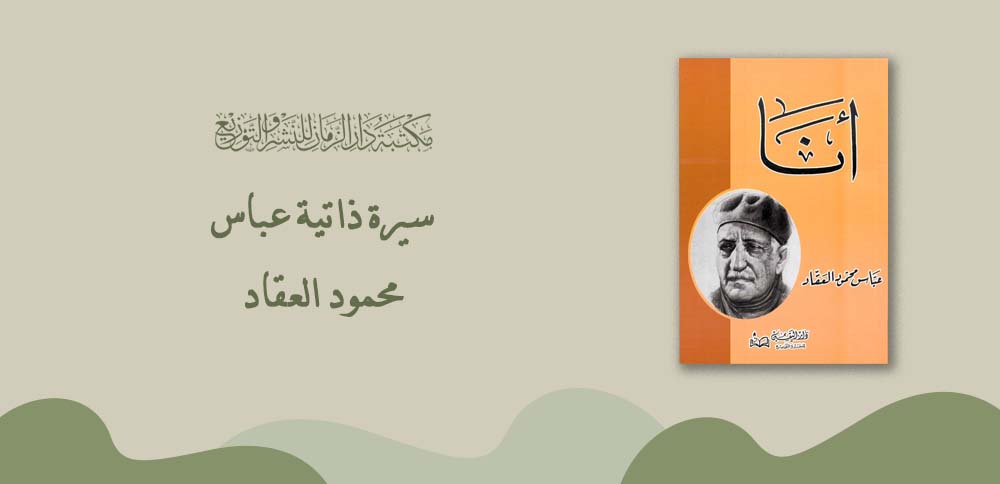
Abbas Mahmoud al-Aqqad's biography is of interest to anyone interested in modern Arabic literature and thought. Al-Aqqad was not just a writer or poet who wrote down his thoughts, but a rebellious mind in search of the truth in a time of intellectual and political constraints. In his personality, boldness meets free thought, and his defense of individual independence and intellectual dignity in the face of the prevailing currents is clearly visible.
If you are looking for a reliable source to understand the biography of Abbas Mahmoud al-Aqkad, you will find in this article the milestones that shaped his career, the development of his ideas, his contributions to modern Arabic literature, and how his philosophy is reflected in everything he wrote. It is a journey that allows you to discover Akkad's world up close and paves the way for a deeper understanding of his status as one of the most prominent figures of Arab culture in the twentieth century.
What is Abbas Mahmoud Akkad's biography?
Abbas Mahmoud Al Akkad's biography is the story of an exceptional writer and thinker who forged his own path with individual determination and vast knowledge. Al Akkad lived a rich intellectual experience that began in southern Egypt and ended in a high position in modern Arabic literature, where he left a prominent imprint in the fields of thought, criticism, and poetry.
Where was Akkad born?
Abbas Mahmoud al-Aqkad was born in Aswan in 1889, in a quiet and isolated environment, which allowed him to meditate deeply from a young age. The nature of the place helped solidify his tendencies towards intellectual independence and self-reflection, and these beginnings were the nucleus of his thinking and research personality.
How did his talent come about?
Akkad's literary talent emerged at an early age, as he found in free reading and self-education his way to science and knowledge. Although he did not attend university, his voracious appetite for reading enabled him to form an encyclopedic culture, reading in literature, philosophy, history, and the humanities, which later made him one of the most prominent thinkers in the Arab world.
What is the nature of his education?
Akkad did not receive a formal academic education after elementary school, but he compensated for this with a great self-effort in learning. He relied on wide reading and continuous research, opening the doors of knowledge for himself through books and intellectual discussions, until he became a model of the self-made, self-made intellectual.
Major life milestones?
- Growing up in Aswan formed the basis of his independent intellectual experience.
- The journey of self-formation through free reading and continuous education.
- Entering the world of journalism and establishing his position in the intellectual arena.
- Playing politics and expressing his opinions boldly and clearly.
- Confronting multiple intellectual currents and engaging in heated debates with them.
- Forming a network of influential intellectual friendships of his time.
- He left a rich literary and intellectual legacy that varied between criticism, poetry, biography and thought.
How did Akkad's literary and philosophical thought take shape?
- In his intellectual formation, Akkad relied on free reading. He read extensively in both Arabic and Western literature, taking advantage of the diversity of schools and intellectual trends.
- He expanded his study of philosophy, psychology, sociology, and history, which gave him a comprehensive vision for understanding man and society far from closed-mindedness or intellectual dependence.
- He viewed knowledge as a field of continuous exploration, combining the culture of Arab originality with the spirit of modern research, thus forming a balanced critical mind.
What are Akkad's philosophical issues?
In his philosophical thought, Akkad was interested in the issue of reason and faith, seeking to bridge the relationship between rational thinking and religious belief. He used rational analysis as a method to defend the human soul and its dignity, and believed that true faith does not contradict reason but is based on it.
He also focused on the value of the human being and the meaning of individual freedom, considering that the essence of philosophy is self-awareness and the ability to choose. He criticized the fascination with Western or Eastern trends without scrutiny, stressing the importance of independent critical thinking. He believed that literature is not a luxury or a linguistic decoration, but a vital means of analyzing human existence and understanding life.
How does he see freedom and individuality?
Akkad passionately defended individual freedom as the basis of human dignity and the source of creativity. He believed that intellectual independence can only be achieved when a person is freed from the pressure of the group and political and social authority.
In his writings, he emphasized that a free individual capable of independent thinking is what makes real progress for a nation, believing that freedom is not a political slogan, but a state of intellectual and spiritual maturity. This position was a constant focus of his thought from his beginnings to his last writings, making the defense of freedom of thought a cornerstone of Abbas Mahmoud al-Aqkad's intellectual and literary biography.
What is Akkad's impact on literature, religion and politics?
Abbas Mahmoud al-Aqkad renewed the concept of literature and criticism in the Arab world by blending idea with emotion, reason with human experience. For him, literature was not just a linguistic luxury, but a means of awareness and analysis of social and intellectual reality. He was known for his intellectual rigor and boldness in addressing literary issues, making his literary biography a milestone in the development of modern critical thought.
His most prominent works in this field include the Genius series, in which he dealt with Islamic and historical figures with a deep analytical outlook that combines biography and thought, such as the genius of Muhammad and the genius of Omar. He also wrote encyclopedic works in literary criticism in which he reviewed schools of literature and writing methods in a spirit of research based on reason and logic, thus laying the foundations of rational and analytical criticism in Arabic literature.
How did Akkad approach religion?
Akkad approached religion from a rational, philosophical perspective, avoiding indoctrination and moving towards a deep understanding of the meaning of faith in human life. In books such as “God” and ”Qur'anic Philosophy,” he analyzed issues of existence and the unseen in a way that combines intellect and science, trying to explain the relationship between man and the Creator with an open and honest mind.
He argued that Islam does not contradict science or logical thinking, but rather promotes freedom of thought and encourages research and knowledge. He defended Islam in a critical and scientific manner, focusing on the compatibility between faith and reason, and showing how religion contributed to the formation of Arab thought and the renaissance of Islamic civilization.
What is his political stance?
Al-Aqkad was a bold political figure who confronted authority with clarity and firmness, opposing repression and dictatorship in all its forms. He advocated for individual freedom, considered democracy the basis of social and political progress, and rejected totalitarian regimes such as communism, Nazism, and fascism. His boldness cost him imprisonment and exclusion from official positions, but he remained a defender of truth and human dignity, believing that thought cannot be imprisoned.
Where do I read Abbas Mahmoud Akkad's autobiographical works?
is a Dar Al-Zaman Publishing and Distribution Library One of the most prominent Arab cultural institutions that is concerned with providing Arab literary and intellectual production in a comprehensive manner. The library combines originality and modern knowledge, providing readers with a wide range of books and studies by the most important Arab writers and thinkers. Thanks to its careful organization and the diversity of its publications, it has become a permanent destination for anyone looking for cultural enrichment and access to classic and contemporary works in various fields of literature and thought.
What is the complete collection of El Akkad?
Dar al-Zaman Library offers the complete collection of Abbas Mahmoud al-Aqkad's works, including his books on literature, philosophy, religion, politics, and biography. This collection brings together everything that Al-Aqkad wrote in an encyclopedic and organized manner, giving readers the opportunity to explore the great thinker's career in depth. The series is characterized by presenting Al-Aqkad's thought in a comprehensive manner, making it an important reference for anyone who seeks to understand the features of his biography and his diverse intellectual career.
What are the best versions of Abbas Mahmoud Akkad's biography?
Dar Alzaman Bookstore for Publishing and Distribution presents the most comprehensive collection of the works of the great writer and thinker Abbas Mahmoud Al Akkad. Languagesin a distinctive edition that combines diversity and accuracy in documentation.
The Complete Collection of Abbas Mahmoud Al Akkad
Include The Complete Collection of Al Akkad - 26 volumes of his works in the fields of literature, biography, philosophy, and religious and political thought, allowing readers to dive deep into his personality and learn about his rich intellectual career.
This collection is organized and easy to memorize, and includes all of Al-Aqkad's writings in his eloquent style that flows smoothly between analysis and literary expression. It is an indispensable reference for researchers and those interested in the biography of Abbas Mahmoud al-Aqkad, and for those who wish to trace the development of his thought and writings.
Frequently asked questions about Abbas Mahmoud Al Akkad's biography
Why is Abbas Mahmoud Akkad's autobiography so popular?
Abbas Mahmoud al-Aqkad's autobiography is known for its intellectual diversity and humanistic depth, combining literary and philosophical analysis, as well as addressing issues of individual freedom and independent thought. Al-Aqkad also stood out in his constant defense of the values of rationalism, making his biography reflect the personality of a free thinker who did not succumb to the prevailing currents.
Did Akkad write his own autobiography?
Yes, Akkad wrote his own autobiography in a series of books that are considered some of the truest accounts of his life, such as I Am and Hayat Qalam. In these books, he recounts his personal experiences and his intellectual and social attitudes, enabling readers to understand the stages of his development and his relationship with the society and culture of his time.
What topics did Akkad address?
Akkad's writings covered a wide range of intellectual issues, including literature and criticism, philosophy, religion, psychoanalysis and sociology, as well as issues of freedom, politics and autobiography. These intellectual diversities made his literary output rich, reflecting his comprehensive interest in man, the mind, and contemporary thought.
Abbas Mahmoud Al Akkad's biography reveals a path that embodies free thought and a deep belief in the values of reason, freedom, and creativity. This biography is a reference that illuminates the path of researchers and readers in understanding the development of modern Arabic literature, and highlights how independent thought can create an impact that extends across generations.
Read more: