

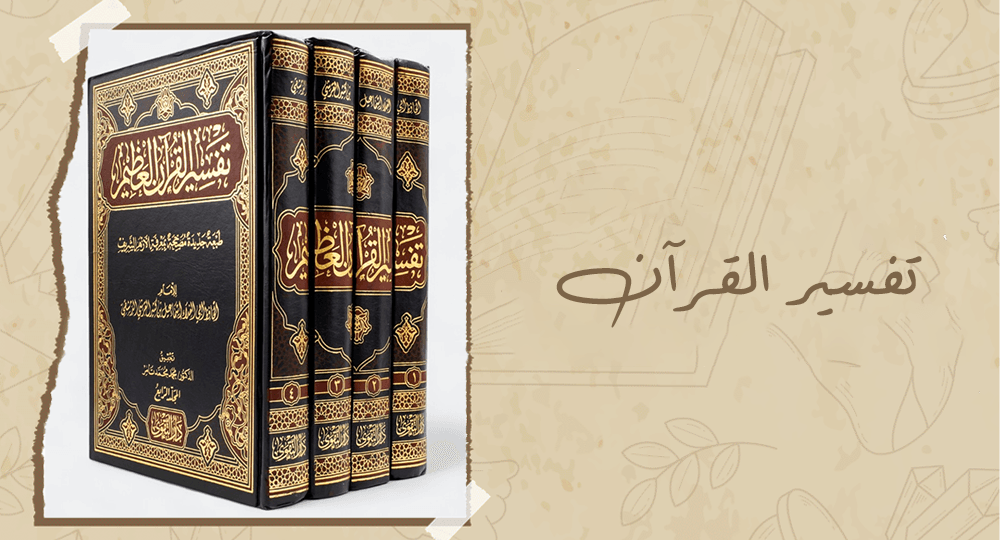
Have you ever wondered why there is so much interest in the interpretation of the Qur'an? Since the revelation of the Holy Qur'an until today, the interpretation of the Qur'an has been a cornerstone for anyone who wishes to truly understand the message of Islam, and scholars and exegetes throughout the ages have been busy deciphering verses and revealing their deep meanings. Today, you have before you the result of the efforts of successive generations, and methods of interpretation that have evolved to serve as bridges from text to reality, allowing you to explore the depths of divine wisdom.
These pages are designed to open your eyes to the proper interpretation of the Qur'an. Here you will find an overview of the methodology of Qur'anic exegesis, the most prominent historical approaches, as well as tips and reliable resources to help you gain a deeper and more relevant understanding of the context and meaning of the verses.
What is Tafsir al-Quran?
Qur'anic exegesis is the science of explaining and clarifying the meanings of the verses of the Holy Qur'an, identifying the reasons for their revelation and the temporal and spatial context of each text. Through this science, Muslims strive to understand the rulings, adjust the doctrine, and discover the stories, legislation, and ethical principles that Islam conveyed in its verses.
Qur'anic exegesis plays an essential role in removing ambiguities that may surround certain texts, refuting false interpretations, and helping the reader to apply divine guidance in the details of their daily lives. From the time of the Companions until today, Qur'anic exegesis has been the primary entry point for understanding religion and the basis for deriving Muslim law.
Why do we need an explanation?
Have you ever wondered why it is not enough to read the text of the Qur'an without referring to the tafsir? The reason is obvious: Because tafsir clarifies ambiguous meanings, reveals the reasons for the revelation and the context of each verse, and clarifies subtle rulings that are not apparent from the text alone. By doing so, a Muslim is better able to grasp the message of the Qur'an and absorb its profound guidance.
What does exegesis have to do with understanding religion?
No Muslim can fully understand his or her religion without consulting the Qur'an. Tafsir is the key to understanding the fundamentals of the faith, deriving legal rulings, and internalizing the moral values that Islam advocates. The deeper you go into interpreting the Qur'an, the more you will be able to derive jurisprudence and build correct perceptions of the religion's teachings.
What are the approaches to interpreting the Quran?
What is exegesis?
When you're wondering about the origin of Quranic exegesis, you'll find that tafsir is at the top of the list of basic approaches. This approach relies on the Quran itself, the commentary of the Prophet Muhammad, and the traditions of the companions and followers, with attribution documented for accuracy. For example, Tabari's Tafsir al-Tabari is careful to transmit each narration with its attribution, keeping the tafsir connected to the closest and most reliable sources.
How does heuristic interpretation work?
As for interpretation by opinion, it is the path that combines transmitted evidence with rational and linguistic analysis of the verses. This approach emerged clearly with the expansion of the Islamic state and the overlap of philosophical thought; exegetes relied on the tools of ijtihad and mental reflection in addition to transmission, which allowed them to present new visions that were adapted to the changes of thought and time.
Why is the linguistic approach important?
You cannot understand the Qur'an's meaning and intentions without diving into the linguistic and rhetorical approach. This approach focuses on clarifying the meanings of ambiguous words and interpreting grammar and rhetoric, which helps the reader realize the intended depth of the texts. We note the work of imams such as Qatada and others, who provided careful explanations of the meanings of difficult words, which helped to demystify many verses.
How did jurisprudential interpretation originate?
Jurisprudential exegesis arose from the need for an accurate understanding of legislative verses and practical rulings. This approach is concerned with clarifying the meanings of verses related to halal and haram and the divergence of jurists in them. It relies on evidence from the Sunnah and the sayings of the Companions to build the foundations of jurisprudential rulings on a firm Qur'anic foundation.
What is an objective interpretation?
Thematic exegesis deals with specific topics, such as justice, rights, or the concept of mercy in the Qur'an. Interpreters gather verses related to a single topic and reflect on them together with the aim of highlighting the holistic message of the topic, so that the overall goals of the Qur'an become clearer.
Were the Israelites introduced?
Israelism did indeed enter some interpretations of the Quran, especially to explain the historical backgrounds of the incidents mentioned. Over time, however, they were not accepted unquestioningly; they were criticized and severely restricted by scholars, until their use became limited and cautious.
How have philosophical and sectarian comparisons influenced you?
Philosophical and sectarian comparisons have had their share of influence, as some scholars have used them either to confirm their beliefs or to confront current intellectual challenges. This led to the emergence of interpretations of a comparative nature, whether with philosophy or between sects, to highlight different perspectives on certain Quranic verses and texts.
How have approaches to Quranic interpretation evolved historically?
The interpretation of the Qur'an began during the life of the Prophet Muhammad (peace be upon him) in an oral manner, as the Prophet would clarify verses when they were confusing to his companions and direct them to the meanings of the Qur'an depending on the context and situation. After the Prophet's death, the Companions were eager to explain and interpret the Quran, relying mainly on their knowledge of the context of the revelation, the circumstances of events and their accurate understanding of the Arabic language at the time.
What is the role of the companions and followers?
The Companions' exegesis was characterized by the transmission of the direct explanation they received from the Prophet and the storytelling of events and incidents related to the revelation of the verses. The followers influenced these approaches by introducing rigorous linguistic analysis, expanding the use of narratives, and an increased interest in investigating the authenticity of the news, especially with regard to Israelites, and even those who investigated and criticized these narratives instead of automatically adopting them.
How did encyclopedic interpretations develop?
With the advent of the classical era, encyclopedic tafsirs flourished. Huge works emerged, such as al-Tabari's tafsir, which combined narrative transmission, linguistic analysis, and jurisprudential commentaries on a large scale. This was followed by specialized tafsirs that delved into philosophy, mysticism, or the rhetoric of the Qur'anic text, and various schools of thought were formed that left their mark on the methodology of interpretation. Later, a new trend emerged that focused on summarization and critical investigation, where scholars were keen to simplify the science of tafsir and present it in a way that is accessible to a wide audience of readers, with attention to distinguishing hadiths and stories in circulation and ensuring accuracy in transmission.
How do I choose the best Quranic exegesis books?
Choosing the best Quranic exegesis books requires you to consider several aspects to ensure a correct and accurate understanding of the meanings of the verses. You need to strike a balance between soundness of approach and clarity of style, especially in light of the number of books and their different approaches. Do you want to find a commentary that is authentic, clear, and documented? These are the criteria that cannot be compromised.
What are the criteria for selecting an interpretation?
It is important that you rely on strict criteria when selecting tafsir books, to avoid ambiguity and bizarre ideas. Keep an eye out for the following points in each exegesis book:
- The book must be based on the authentic scientific method of interpretation and strongly committed to the authenticity of transmission.
- It is important that the interpretation avoids linguistic errors and that its presentation of meanings is clear and sound.
- Strength of documentation is a prerequisite, so that the author goes back to authoritative sayings in interpreting the Qur'an.
- Make sure that the author follows the methods adopted by the majority of scholars, such as tafsir al-ma'thur, explaining the Qur'an by the Qur'an, and taking care of jurisprudential and thematic tafsir.
- Avoid books that tend to ramble on about controversies or recount oddities without scientific editing.
Does a beginner need a special explanation?
Without a doubt, a beginner needs Quranic commentaries that are concise and easy to understand. Looking for contemporary and simplified commentaries gives you a chance to focus on understanding the main messages of the Qur'an without getting bogged down in nuances or controversial ramifications. For this reason, it is recommended to choose a concise Tafsir by Ibn Kathir or Omdat al-Tafsir as a first step, as they present the most important meanings in a beginner-friendly style.
What are the best Quran exegesis books available?
If you are looking for reliable Qur'anic exegesis books that combine modernity and diversity, thenDar Al-Zaman Publishing and Distribution Library We offer you a range of books that cover different curricula and appeal to a wide range of readers, both in Arabic and English. Here's a look at some of these well-regarded titles from the Islamic Books which combines accuracy and ease in dealing with the meanings of the Quran.
Interpreting the meanings of the Quran in English
Do you want a deeper understanding of the meanings of the Quran but face language challenges? Interpreting the meanings of the Quran in English for non-Arabic speakers provides an accurate and easy-to-understand translation of the meanings of the Quran, allowing more people to learn about the teachings and values of Islam. Thanks to the clarity of style and reliability of the interpretation, non-Arabic readers can understand the key elements of the Qur'an and apply them to their lives.
Abridged Tafsir of the Great Qur'an called Omdat al-Tafsir
For those seeking to simplify without compromising meaning, this shortcut brings together Summary of Ibn Kathir's Tafsir in a concise and accessible format. Students, beginners, and researchers will find this book a systematic guide to understanding tafsir in a focused and clear manner.
Why is it important to interpret the meanings of the Quran in English?
Have you ever wondered how the Qur'an can be close to the hearts of millions of people who do not know Arabic? For those living in multilingual and multicultural societies, interpreting the meanings of the Qur'an in English opens wide doors to understanding the message of Islam and applying the principles of the Qur'an to everyday life.
- The English interpretation of the Quran allows non-Arabic speakers to understand the values and teachings of Islam first-hand.
- Accessing the texts of the Quran and engaging with its teachings becomes easier in multilingual and multicultural environments.
- Learning the meanings of the Qur'an in English deepens the understanding of the spiritual and legislative purposes and concepts associated with the Qur'anic text.
- This interpretation contributes to building cognitive and ethical bridges between Muslims and non-Muslims around the world, promoting dialog and mutual understanding.
- Reliable English translations are careful to distinguish between the original text and the approximate meaning, and always remember to refer to the Arabic language when there is a need for verification or specialized depth.
- Dar al-Zaman's library provides authorized exegetical translations that meet the scholarly and spiritual needs of a large segment of Muslims scattered around the world.
Frequently Asked Questions About Quranic Interpretation
What is the best interpretation of the Quran?
When looking for the best explanation of the Quran, you'll find that Ibn Kathir's explanation tops the list thanks to its accuracy of transmission and its sobriety in presenting the linguistic context of the verses. If you're a specialist or want to go more in-depth, the works of al-Tabari and al-Qurtubi will appeal to you because of their thoroughness and thoroughness in the meanings of the Qur'an and rulings.
What is the easiest explanation for beginners?
If you feel that lengthy tafsirs are a hindrance, you can start with abbreviated books such as “Omdat al-Tafsir” or “Abbreviated Tafsir Ibn Kathir”. These abbreviations provide you with a smooth and clear explanation of the verses, away from the complex details that may distract the beginner and burden him or her with a quick understanding.
What is the correct interpretation of the Quran?
The question often arises as to what is the correct interpretation of the Holy Quran, and the answer lies in the fact that it is the interpretation that takes into account the reliable transmission of the Hadith and Sunnah, takes into account accurate linguistic analysis, and employs scientific methodology away from fanaticism or interpretation away from the text.
Tafsir of the Qur'an is the cornerstone of any Muslim who is keen to be inspired by the teachings of the revelation in the details of daily life. Choosing reliable references in Qur'anic exegesis promotes moderation, maximizes your scientific and practical benefits, and helps you build a solid and balanced understanding of the religion.
Read more: