

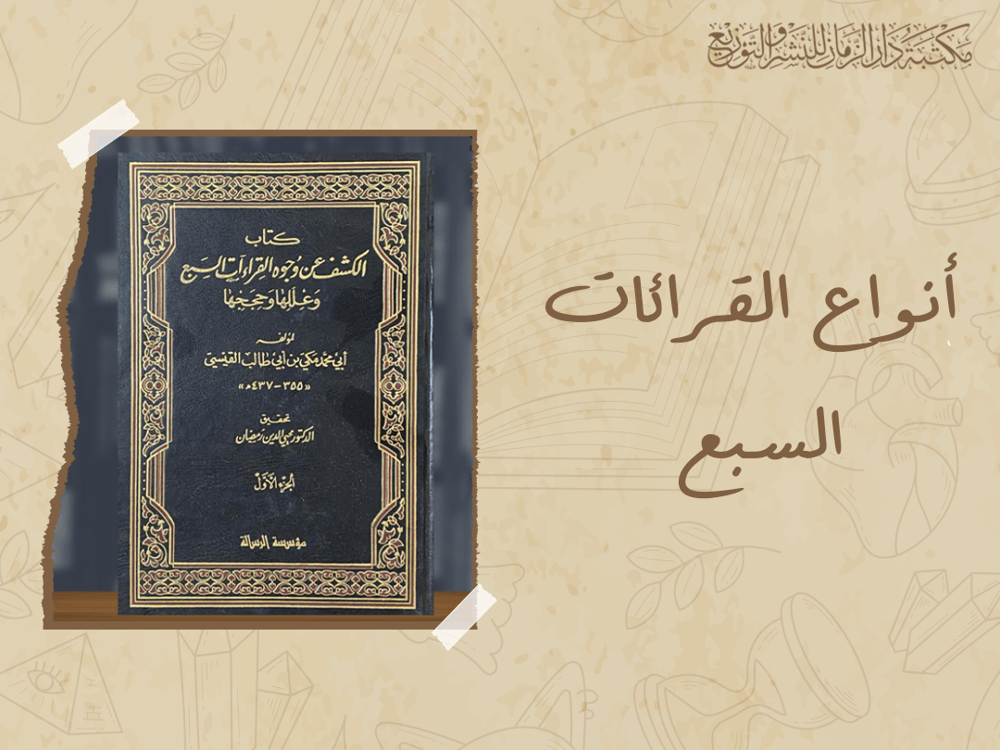
The seven types of Qur'anic readings are the readings adopted by scholars in the early centuries of Islam to recite the Qur'an. The types of readings came from strong oral traditions and were transmitted with great accuracy from generation to generation. Each reading represents a school of Quranic recitation attributed to one of the seven famous reciters who lived in the early centuries of Islam. These readings differ in some phonetic and grammatical aspects, but do not affect the general meaning of the Qur'anic text.
The seven types of readings
Definition of the seven readings
The seven types of Qur'anic readings are the different ways of pronouncing the verses of the Holy Qur'an, and they include slight variations in syntax, pronunciation, and pronunciation. These differences do not affect the overall meaning of the verses, but provide multiple ways of reciting the Quranic text, which contributes to enriching understanding and reflection.
Seven readers
1. Nafi al-Madani
Nafi ibn Abd al-Rahman ibn Abi Naim al-Laithi is considered one of the most prominent reciters in Medina. He has two famous narrators, Qaloon and Warsh. Nafi's reading is characterized by medium-sized mudh and mudgham, and Rush's reading from Nafi is one of the most common readings in the Maghreb and Africa.
2. Ibn Kathir al-Makki
Abdullah ibn Kathir al-Dari al-Makki is one of the seven famous reciters in Mecca. Two narrators, al-Bazi and Qunbul, transmitted his reading. Ibn Kathir's reading is characterized by continuous stretching and good stopping.
3. Abu Amr Al-Basri
Abu Amr ibn al-Ala' al-Basri, one of the scholars of Basra, has two narrators, al-Douri and al-Susi. Abu Amr's reading is characterized by the softening of the hummazat and the tad, and is considered one of the readings that emphasize phonetic beauty.
4. Ibn Amer al-Shami
Abdullah ibn Amer al-Yahsabi al-Shami, Damascus reader, had two narrators, Hisham and Ibn Zakhwan. Ibn Amer's reading is characterized by a long stretch and tilt in some words.
5. Asim al-Kufi
Asim ibn Abi al-Najud is one of the most prominent reciters in Kufa. He has two narrators, Shu'ba and Hafs. Hafs's reading of Asim is the most common in the Muslim world today, characterized by clarity and accuracy in pronunciation.
6. Hamza al-Kufi
Hamza ibn Habib al-Zayyat, a Kufi scholar, has two narrators, Khalaf and Khalad. Hamza's reading is characterized by tilting and lightening the humzas.
7. Kufi Al-Kisa'i
Ali ibn Hamza al-Kisa'i from Kufi, with two narrators, Abu al-Harith and al-Duri. Al-Kisa'i's reading is characterized by full tilt and some unique phonetic features.
The importance of the seven readings
1. Simplify memorization and recitation
The seven readings provide a variety of options for reciting the Quran, making it easier for Muslims of different dialects and languages to memorize the Quran. Each reading offers a different pronunciation and pronunciation, which helps to commit the text to memory.
2. Realization of frequency
The seven readings are considered mutawatir, which means that they were transmitted by consensus from the Prophet Muhammad. This reinforces the strength of the tradition and ensures the authenticity of the Quranic text across generations.
3. Enriching understanding and reflection
The seven readings open up a wide horizon for understanding Quranic texts. These readings differ in some phonetic and grammatical aspects, which provides multiple dimensions for contemplating the verses and grasping their meanings.
4. Cultural and linguistic diversity
The seven readings represent the cultural and linguistic diversity of the Muslim world. Each reading reflects the linguistic and cultural environment of the region in which it originated, contributing to the preservation of this rich diversity.
Characteristics of the seven readings
1. Difference of accents
The seven readings differ in how they pronounce the hums. Some readings tend to soften or replace the humzas with other letters, which makes them easier to recite.
2. Tides and tides
The readings also differ in the rules of mudh and mudgham. Some readings rely on long tad, while others favor short or medium tad. They also differ in the rules of ingestion and projection.
3. Tilting and telescoping
Some readings are characterized by tilting in some words, where the alef is pronounced like a yah. Others favor vocalization, where the letters are pronounced more clearly and forcefully.
4. Stopping and starting
Readings differ in the rules of stopping and starting. Some readings favor stopping on certain words, while others favor stopping on different words. This enhances the diversity of recitation and adds new dimensions to understanding the text.
The role of the seven readings in teaching and learning
The seven readings play a huge role in teaching and learning. These readings are taught in schools and religious institutes, helping students understand the linguistic and cultural diversity of the Quranic text. The seven readings also help motivate students to memorize and recite in different ways, which helps to commit the text to memory.
The seven readings and the memorization of the Qur'anic text:
1. Variety of vocal styles
The diversity of the seven readings in phonetic styles helps to commit the text to memory. Thanks to the different shaping, stretching, slurring, and tilting, the learner can recall the text by reviewing the different styles, which enhances its stabilization.
2. Repetition in multiple ways
When a learner reviews a Qur'anic text with different readings, they are repeating the text over and over again in a variety of ways. Repetition is one of the most effective learning methods, and multiple readings provide multidimensional repetition.
3. Facilitate memorization
Some readings may be easier to memorize for some people based on their accent or pronunciation. This facilitation can be a factor in helping the text stick in memory better.
4. Strengthening understanding
Different readings offer multiple ways of understanding the text, which helps the learner internalize the meanings more deeply. A good understanding of the text contributes to better memory retention.
5. Cultural and linguistic diversity
Different readings reflect linguistic and cultural diversity, which helps learners from different backgrounds feel connected to the text. This sense of connection enhances the learner's ability to memorize and retain.
6. Motivation and attention
Having multiple options for reciting the Quranic text can be motivating for learners, as they feel refreshed and not monotonous. This motivation and interest contributes to better memorization.
7. Rhythm and tones
The seven readings also feature a variety of rhythms and tones, which helps make the recitation more appealing and easier to memorize. Different rhythms can be a helpful factor in stabilizing the text in the phonological memory.
In these ways, the seven readings stabilize the Qur'anic text in memory, helping to preserve the Qur'anic heritage and accurately transmit it across generations.
To conclude today's article, the seven types of readings are an integral part of the Islamic heritage. They offer a rich variety of pronunciation, morphology, and articulation, which contributes to enriching the understanding and reflection of the Qur'anic text. The seven readings are a testament to the accuracy of transmission and tradition in preserving the Qur'an across generations, and remain an important source of teaching and learning in the Muslim world.