

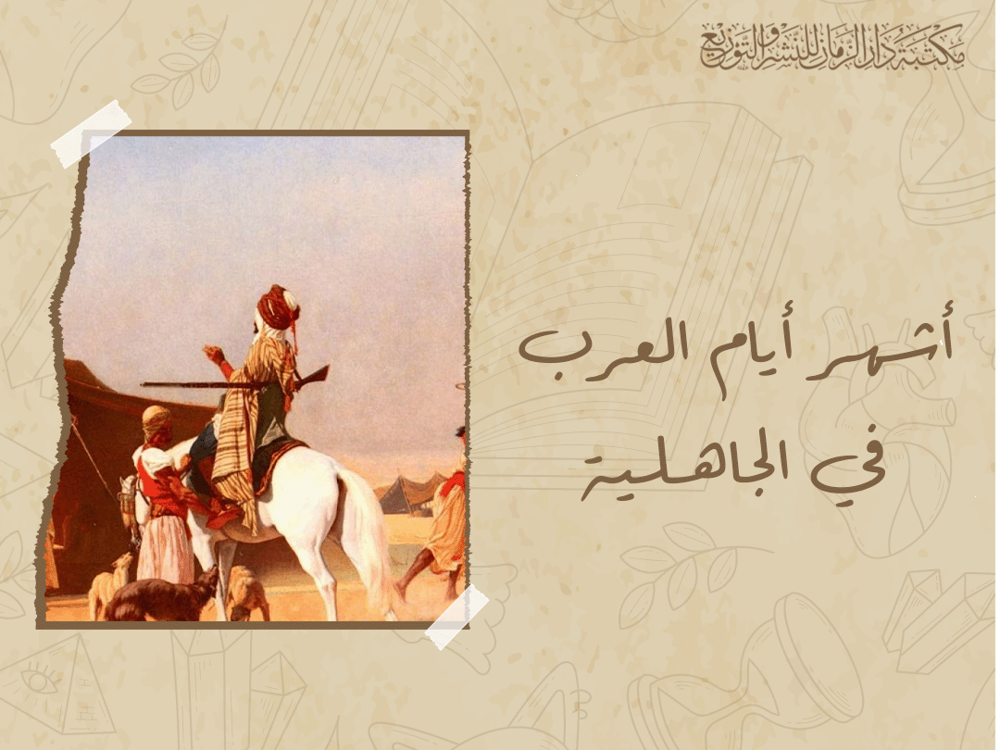
The Jahiliyya period is considered one of the most important historical periods that shaped Arab identity and culture. In this era, many events took place that left a clear imprint on Arab history, including the “most famous days of the Arabs in Jahiliyya”, which were characterized by battles and conflicts that had profound repercussions on tribal and social relations. In addition, they contributed to the formation of legends and traditions that were transmitted by poets across generations, making them an integral part of the Arab cultural heritage. The study of the most famous days of the Arabs in Jahiliyyah is not only limited to the historical aspect, but also includes understanding the influences they had on Arab identity and history.
The most famous days of the Arabs in Jahiliyyah
1. Day of Badr
Badr Day is one of the most famous days in Arab history, as the Battle of Badr the Great took place in 624 AD. The battle was between Muslims led by the Prophet Muhammad (peace be upon him) and Quraysh, and is considered a turning point in the history of Islam.
- Causes: The battle resulted from tensions between Muslims and Quraysh, especially after the migration to Medina.
- Results: The Muslims won the battle, which strengthened their position and increased the number of believers. It also had a great impact on other Arab tribes.
2. Hanin Day
The Battle of Hunayn took place in 630 AD between the Muslims and the Hawazin tribe.
- Reasons: After the conquest of Mecca, Hawazin decided to fight the Muslims to regain its prestige.
- Results: Initially, the Muslims suffered losses, but they regained control and won a major victory, uniting many tribes under the banner of Islam.
3. Day of Dhi Qar
The Battle of Dhi Qar (609 AD) is considered one of the first battles between Arabs and Persians, which took place in an area between Kufa and Basra.
- Causes: The constant struggles between Arabs and Persians for influence and control.
- Results: The Arabs were victorious in this battle, which increased their self-confidence and showed their strength against the Persians.
4. Day of the ungodly
The Battle of Al-Fajjar took place in Jahiliyyah between the tribes of Quraysh and Kananah.
- Causes: Tribal conflicts have been going on for a long time, and this battle was a result of those conflicts.
- Results: The outcome was inconclusive, but it established the spirit of inter-tribal rivalry and showed the importance of military power in that period.
5. Halima Day
It is one of the days that witnessed conflicts between tribes, and refers to one of the invasions led by Arabs against each other.
- Causes: Competition for resources and land.
- Results: These battles reinforced the division of the tribes, which affected relations between them.
6. Company day
Saraya refers to the small expeditions that Arabs undertook before and after Islam.
- Reasons: It was meant to defend the tribe or attack rival tribes.
- Results: Contributed to the formation of alliances between tribes and showed the importance of military tactics.
The reasons behind the most famous days of the Arabs in Jahiliyyah
1. Tribal conflicts:
- Arab tribes in the Jahiliyya lived in a state of constant rivalry and conflict, with disputes over resources such as water, pasture, and agricultural land being the main reasons for the conflicts. These conflicts drove the tribes to fight in order to maintain their control and influence.
2. The desire to dominate:
- Many tribes sought to achieve political and military dominance over surrounding areas. This ambition to dominate caused wars and battles between tribes, and was a major motive in many of the “most famous days of the Arabs in Jahiliyyah”.
3. Alliances and allegiances:
- Alliances formed between some tribes to confront common threats, but these alliances were also prone to disintegrate, leading to new conflicts. Tribal loyalties played a large role in determining tribal positions on conflicts.
4. Trade and economic competition:
- Trade played an essential role in Arab life, and trade caravans were often attacked by certain tribes. This spurred conflicts, as tribes sought to protect their caravans or control trade routes.
5. Revenge and revenge:
- The culture of revenge was a pivotal factor in Jahiliyya society. If a member of the tribe was killed, the tribe was expected to seek revenge, leading to an escalation of conflicts and wars.
6. Dignity and honor:
- Dignity and honor were central concepts in Jahiliyya culture. Tribes considered it a duty to defend their honor and dignity, leading them to fight battles even in cases of minor disputes.
Notable personalities in the most famous days of the Arabs in Jahiliyyah
1. Amr al-Qays:
- One of the most famous poets of the Jahiliyah, Amrut al-Qays played a prominent role in promoting the fighting spirit in the tribes. He wrote poems about wars and battles, which contributed to documenting historical events and fostering tribal pride.
2. Al-Aswad bin Sareeq:
- He was a well-known commander in the Battle of Hunayn, where he led the Hawazin tribe against the Muslims. He had great courage and leadership ability, which made him a pivotal figure in that battle.
3. Abdullah bin Abu Bakr:
- He was one of the prominent figures in the Battle of Badr, where he played a major role in gathering information about the Quraysh before the battle. He contributed to boosting the morale of the Muslims.
4. Ali ibn Abi Talib:
- Ali ibn Abi Talib is one of the most prominent figures in the history of Islam, but he was also instrumental in many Jahiliyya battles. He had great courage and exceptional fighting skills.
5. Al-Humairi:
- He is one of the leaders who stood out in the Battle of Dhi Qar, where he led the Arabs against the Persians. He had a great influence in strengthening the fighting spirit among the Arab tribes.
6. Al-Harith ibn al-Summa:
- He was one of the commanders who participated in the Battle of Fujjar and was known for his courage and loyalty to his tribe. He contributed to strengthening tribal identity through his battles.
The consequences and repercussions of the most famous day of the Arabs in Jahiliyyah
1. Changing the balance of power:
- Muslim victories in battles like Badr brought about a radical shift in dominance among the tribes, giving Muslims greater power and influence.
2. Strengthening tribal identity:
- Battles were the embodiment of tribal pride, and poems of heroism and bravery proliferated, giving a distinctive character to Arab culture.
3. Formation of alliances:
- The conflicts led to the birth of new alliances between tribes, changing the nature of political relations and further complicating the social landscape.
4. Impact on trade:
- The wars had negative effects on trade, as caravans were attacked, affecting the economy and stability of the region.
5. Conversion to Islam:
- The Muslim victories were a catalyst for many tribes to join the new religion, which helped spread Islam across the Arabian Peninsula.
6. Write down the date:
- These landmark events contributed to the documentation of Arab history, as poets and storytellers immortalized the stories of battles and heroes in the nation's memory.
At the conclusion of this presentation, we find that “The Most Famous Days of the Arabs in the Age of Jahiliyyah” are not just transient events, but historical stations that shaped the features of the Arab identity, as they contributed to strengthening ties between tribes, and influenced the course of history through the battles and epics fought by the Arabs, and the most famous days of the Arabs in the Age of Jahiliyyah left a rich cultural legacy embodied in poetry and tales, reflecting the depth of the human experience of the Arabs in that period.