

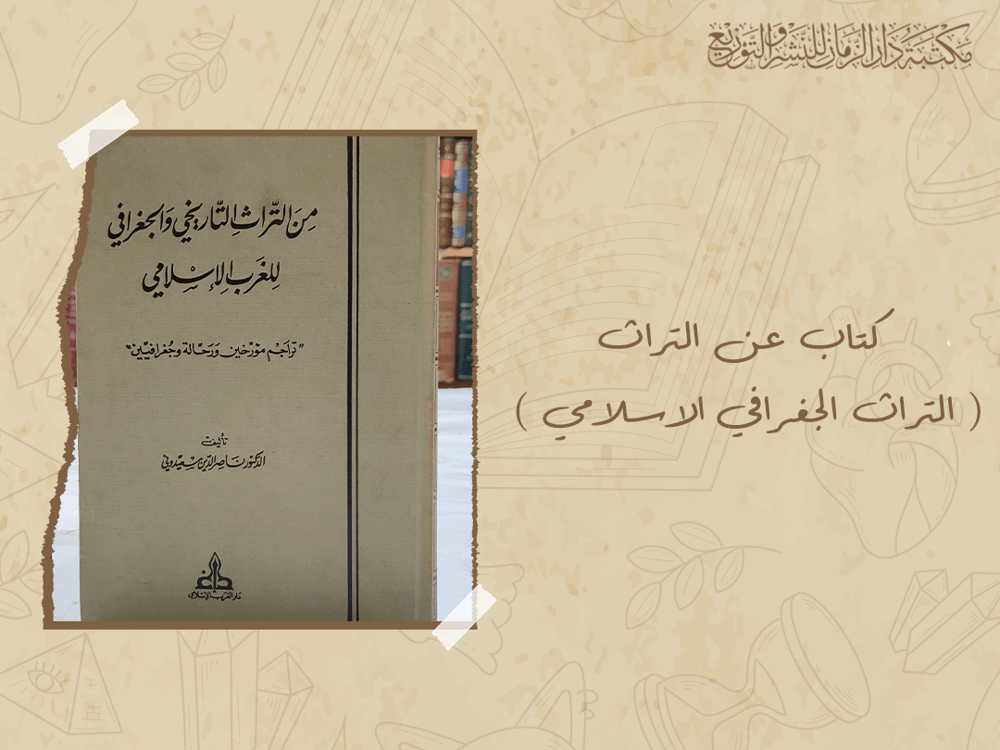
The importance of books such as a book about heritage (Islamic geographical heritage) is of great importance because it contains what is related to Islamic heritage. The Islamic geographical heritage is an important part of the scientific and cultural heritage of the Islamic civilization, and Muslim scholars have contributed significantly to the development of this science from the eighth century AD until the modern period. They benefited from the knowledge of previous civilizations, such as Greek, Persian, and Indian, and developed their geographical methods and tools, making them pioneers in this science for long periods. Geography in the Islamic tradition is not only limited to describing the land and the distances between places, but also includes the study of climate, natural resources, population, maps, and navigation. These studies were necessary for multiple purposes, including trade, pilgrimage, and Islamic conquests. In the following, we will talk about the Islamic heritage and some books that are referred to as a book on heritage (Islamic geographical heritage).
Book on Heritage (Islamic Geographical Heritage)
The Development of Geography in Islamic Civilization
Translations and authorship
The geographical renaissance in the Islamic world began with the translation movement that was active in the Abbasid era, where many Greek geographical works were translated into Arabic. Among these works was Ptolemy's Geography, which had a great influence on Muslim scholars. This translation movement was not limited to geography, but also included many other sciences such as astronomy, mathematics, and medicine, providing a fertile scientific environment for the development of geography.
Notable scientists and their publications
Idrisi:
- Abu Abdullah Muhammad al-Idrisi is one of the most prominent Muslim geographers. His most famous work is Nuzhat al-Mushtaq fi Rakhteh al-Afaq, commonly known as Al-Rawd al-Maatar. This book contains detailed maps and accurate geographical explanations of the known world at the time. Al-Idrisi relied on his personal travels and the information he collected from sailors and merchants, which allowed him to provide accurate and comprehensive descriptions of different regions and places.
Ibn Battuta:
- Ibn Battuta is considered one of the greatest travelers and geographers in Islamic history. His travels, recorded in Tahfat al-Nazar fi Gharib al-Amsar wa al-Ajjar al-Asafar, provide accurate descriptions of the places he visited in Africa, Asia, and Europe. Ibn Battuta was not only a traveler but also a keen observer of events, customs, and traditions in the places he visited, enriching his writings with valuable cultural and social information.
Makdessi:
- Shams al-Din al-Maqdisi, known for his book “The Best of the Taksim in the Knowledge of the Regions,” is one of the most famous Muslim geographers. In this book, al-Maqdisi provided a comprehensive description of Islamic regions in terms of geography, climate, and resources. Al-Maqdisi relied on collecting information from multiple sources, which allowed him to present an integrated and comprehensive picture of Islamic regions.
Al-Khwarizmi:
- Muhammad ibn Musa al-Khwarizmi, one of the leading scholars at the House of Wisdom in Baghdad, made important geographical contributions. His book The Image of the Earth is one of the first books to deal with geography in scientific detail. Al-Khwarizmi was not only a geographer but also a mathematician and astronomer, which allowed him to use mathematics to accurately determine locations and distances.
Religious books
The Holy Quran and its interpretation
Al-Jami'ah al-Qur'an
- Written by Imam al-Qurtubi, this book is one of the most important books of Quranic exegesis. It provides a comprehensive interpretation of the Qur'anic verses and is based on hadiths and the sayings of the righteous predecessors. Al-Qurtubi not only interpreted the texts but also provided linguistic and rhetorical analyses, making this book an important reference for researchers and students.
Tafsir al-Tabari
- Written by Imam Muhammad ibn Jarir al-Tabari, this book is one of the first and most comprehensive books of Quranic exegesis. Al-Tabari relied on the collection of various narratives and hadiths that explain the verses, making it a rich and multidimensional source for understanding the Qur'anic text.
Hadith
Sahih Bukhari
- Compiled by Imam Bukhari, this book is considered one of the most authentic books of hadith. It contains a wide range of hadiths narrated by the Prophet Muhammad, and is considered a major reference for scholars and researchers in the sciences of hadith.
Sahih Muslim
- Written by Imam Muslim ibn al-Hajjaj, it is considered one of the most authentic books of hadith after Sahih al-Bukhari. It contains a large collection of hadiths that deal with various aspects of religious and social life.
Philosophical and intellectual books
Reviving the Science of Religion
- Written by Imam al-Ghazali, this book is one of the most important philosophical books in the Islamic tradition. It deals with the spiritual and ethical aspects of Islam and offers in-depth analyses of the human psyche and how to achieve spiritual happiness.
The frivolity of philosophers
- Also written by Imam al-Ghazali, this book criticizes philosophers who were influenced by Greek philosophy and is considered an important reference in classical Islamic philosophy.
Rational philosophy
Healing
- Written by Avicenna, this book is one of the most important philosophical and scientific works in the Islamic tradition. It deals with various topics such as medicine, philosophy, and mathematics, and is considered an important reference for researchers in these fields.
The savior from the shadows
- Written by Imam al-Ghazali, this book is a philosophical work that deals with al-Ghazali's personal experience in the search for truth. Al-Ghazali discusses his spiritual and intellectual journey and his transition from rational philosophy to mysticism.
Historical books
History of Apostles and Kings
- Written by Imam al-Tabari, this book is one of the most important books of Islamic history. It provides a comprehensive account of the history of the world from the beginning of creation until the Abbasid period. Al-Tabari relied on collecting and analyzing different historical accounts, making it an important reference for history researchers.
Complete History
- Written by Ibn al-Athir, this book is one of the most important historical works in the Islamic tradition. It deals with the history of the Islamic world from the beginning of Islam until the Mongol period, and is considered a comprehensive and detailed reference to historical events.
Biographies and biographies
Sir Alam Al-Nablaa'a
- Written by Imam al-Dhahabi, this book is one of the most important biographical books in the Islamic tradition. It provides biographies of prominent figures in Islamic history, such as scholars, philosophers, and leaders, and is considered a rich source of information on the biographies of these figures.
Absorption in the Knowledge of Companions
- Written by Ibn Abdul-Barr, this book is an important reference for the biographies of the Companions. It provides accurate and comprehensive information about the lives and deeds of the Companions, and is considered a major source for researchers in the history of the Companions and Islam.
Literary books
Diwan al-Mutanabbi
- Abu al-Tayyib al-Mutanabbi is one of the most famous poets in the Islamic tradition. His Diwan contains a large collection of poems that deal with various topics such as wisdom, pride, and ghazal, and is considered an important reference for researchers in Arabic literature.
Book of songs
- Written by al-Isfahani, this book is one of the most important literary works in the Islamic tradition. It contains a wide range of songs, poems, and musical compositions, and is a rich source of information about cultural and artistic life in Islamic times.
Prose and stories
Thousand and One Nights
- This book is one of the most famous literary works in the Arab and Islamic heritage. It contains a large collection of interesting stories and adventures told in an enjoyable narrative framework, and is considered an important reference for the study of popular literature in the Islamic world.
Hariri denominators
- Written by Hariri, this book is one of the most prominent prose works in the Islamic tradition. It contains a collection of maqamat that deals with stories and anecdotes in an enjoyable rhetorical style, and is considered an important reference for the study of prose literature in Islamic times.
Scientific books
Law in Medicine
- Written by Avicenna, this book is one of the most important medical works in the Islamic tradition. It deals with various topics in medicine, such as diseases and their treatment, and is considered a major reference for doctors and medical researchers.
Al-Hawi in Medicine
- Written by Al-Razi, this book is one of the most prominent medical works in the Islamic tradition. It contains a wide range of medical and therapeutic information and is considered an important reference for doctors and medical researchers.
Astronomy and mathematics
Sabian zigzag
- Written by al-Battani, this book is one of the most important astronomical works in the Islamic tradition. It contains accurate astronomical tables that are used to determine the positions of stars and planets, and is considered an important reference for astronomers and researchers in astronomy.
The Short Book of Algebra and Reciprocity
- Written by Al-Khwarizmi, this book is one of the most important works in mathematics. It provides a detailed explanation of the concept of algebra and algebraic equations, and is an important reference for researchers in mathematics.
At the end of today's article, in which we talked about Islamic heritage and also about a book about heritage (Islamic geographical heritage), the Islamic geographical heritage has made great contributions to the development of the science of geography. Through the efforts of Muslim scholars, accurate descriptions of the land, climate, and resources were provided, which helped the development of this science through the ages. These contributions are still studied and celebrated today, and are an integral part of the Islamic scientific and cultural heritage. Geography in the Islamic tradition is not just a science but a part of Islamic culture and civilization that shows the greatness and creativity of Muslim scholars in understanding the world around them.