Description
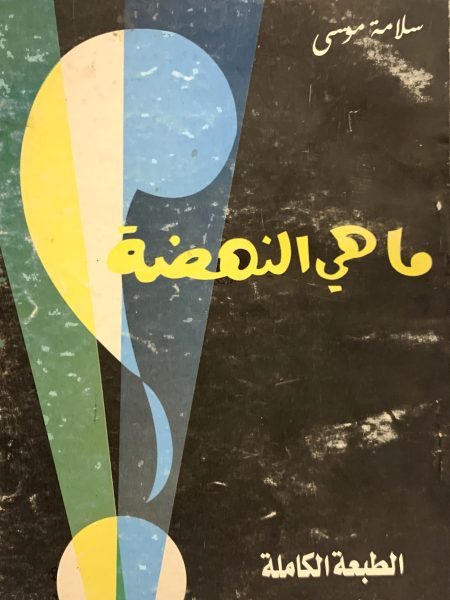
«What is Renaissance?» is a question that has become a puzzling question after it was once a certainty! A question whose answer has become confusing after it used to be certain! A question that used to be certain! A possibility after it was inevitable! And novelty after being familiar! This can only mean a change of circumstances and a change of statements about the European Renaissance as a historical phenomenon. The beginning was with modernism, which interpreted the so-called «Renaissance» as a revolution against the corrupt ecclesiastical traditions in Europe at the time, and the substitution of the authority of reason for the authority of religion, and it seemed as if history takes a linear form in which man progresses from worse to better, until he reaches an earthly paradise! This was the story of the Renaissance in the modernist narrative, whose texts are tainted by certainty, determinism, and familiarity, and Salama Musa's answer to the question «What is Renaissance?» can fall under this type of narrative. could fall under this type of narrative. However, critical studies of modernity by philosophers and scholars such as Nietzsche, Max Weber, Martin Heidegger, and Karl Marx deconstructed these paradisiacal visions of the concept of renaissance, followed by historical schools belonging to the postmodern movement, some of which went so far as to ironically label the age of renaissance and enlightenment as the age of «dark enlightenment».