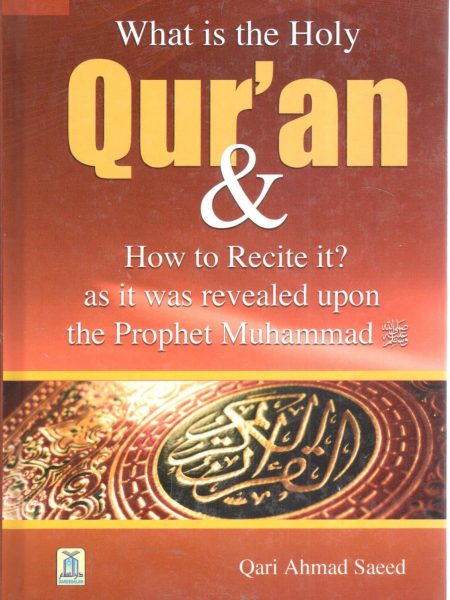
Description
Book description:
-
Author's name: Hosni Sheikh Osman
-
Number of pages: 424 pages
-
The theme of the book: The right to recite
The contents of the book:
-
Calm down
-
Introduction
-
Why he wrote this book
-
Classification of the book
-
What makes this book stand out
-
Why I collected four novels in the book
-
Assets
-
A reminder about collecting readings and synthesizing brushes
-
Typographical terms used in this book
-
Ticket
-
A chapter on the fundamentals of teaching tajweed in composition and recitation
-
General Principles of Teaching
-
Special Principles in Teaching Tajweed of the Qur'an
-
Chart of alternatives to arranging modules during instruction
-
Introduction to recitation and intonation
-
The first module: Definitions and explanations
-
Prayer to start reciting the Qur'an
-
Bootstrap
-
Chapter on the Seven Characters and the Seven Readers
-
A chapter on the correct readings and their pillars
-
Chapter on reading, narration, the road, the reader, and the reader
-
Chapter on Fabrication
-
A chapter on the concept of movements: opening, closing, and breaking
-
Chapter on Unauthorized Reading Techniques
-
Invocation and Bismillah
-
Formula for invocation
-
Bismillah formula
-
Part I: Recognizing Standing and Beginning
-
Knowing the stand
-
Stopping on syllables
-
Ruling on stopping on verse breaks
-
Urgent necessity
-
Module Two: Moratorium and Initiation
-
Cutting, stopping and silencing
-
Types of Waqf and their rulings
-
Permissible Waqf and its Divisions
-
First: Full stop
-
II: Endowment
-
III: Good endowment
-
Invalid Waqf and its Divisions
-
Stop arbitrariness
-
Module Three: Beginning, Cutting and Interrupting
-
Initiation, permissible initiation
-
Inadmissible Beginning
-
Cutting and interrupting
-
Chapter on signs of stopping and some
-
Conventions of terminology
-
Chapter on Recitation Prostrations
-
Module Four: Starting and Stopping a Word
-
Beginning with the word "cut" and "join
-
Stopping the word
-
Stopping at the end of a word
-
Chapter on recognizing connecting and cutting symbols
-
Stopping on tides (vowels)
-
A at the end of a word
-
F's at the end of a word
-
The y at the end of the word
-
Stopping on the T and E: Feminine T
-
E metaphor
-
Invocation, Bismillah and Surah
-
Bismillah between the two suras
-
Takbir between the two surahs
-
Section II: Intonation of letters
-
The truth about words and the limits of pronunciation
-
Module Five: Temporal weights and intonation
-
Temporal weights (thousandths and movements)
-
Rinse
-
Important caution about rattles
-
Showing the nun on the stressed nun and the stressed mim
-
Module Six Characteristics of Original Letters
-
Characteristics of letters
-
Module Seven: Characteristics of the original letters
-
Module VIII: Characteristics of Original Letters
-
Module IX: Characteristics of Accidental Letters
-
Module Ten: Characteristics of Accidental Letters
-
T provisions
-
Module Eleven: Characteristics of Accidental Letters
-
Masking and flipping
-
M provisions
-
Module Twelve: Characteristics of Accidental Letters
-
Tide and shortening
-
The original short or long
-
Subtidal tide: Hamz-induced tides
-
Stretching due to static
-
Important note on the ugliness of stretching the natural tide before a stop or cut
-
Housing and stirring
-
Silence
-
Module Thirteen: Characteristics of Accidental Letters
-
Consonant and tanween rules
-
Consonant N, Tannuin
-
Showing consonant and tween
-
Consonant Nun and Tanween
-
Module Fourteen: Characteristics of Accidental Letters
-
Flip the consonant and tween
-
Hide the consonant and tween
-
Module XV: Characteristics of Accidental Letters
-
Inserting homophones
-
Consonant B's
-
Consonant T provisions
-
Consonant Tha rules
-
Consonant D sentences
-
Consonant Dhal provisions
-
Consonant T provisions
-
Convergence of convergences
-
L in R, K in K
-
Module Sixteen: Supplements
-
Provisions of the Seine
-
Facilitating the accent
-
Words with an obvious melody
-
Module XVII: Adhan, Iqamah, Takbeer, Tabbiyah, and Prayer Praises.
-
Definition of the Adhan and Iqama and their rulings
-
The words of the azan
-
Words of Iqama, Tajweed of Adhan and Iqama
-
Muezzins most often fall into melody
-
Prayer enlargements
-
Takbirat al-Eidin
-
Meeting the pilgrim
-
Prayer rosaries
-
Section III: Exits of letters
-
Director
-
Letter positions
-
Original Alphabets
-
First position: lips
-
Second position: Tongue
-
Third position: throat
-
Fourth position: Hollow
-
Fifth position: gill
-
Section IV: History of the Imam's Qur'an and the six rules of drawing in the Qur'an
-
Chapter I: History and Drawing of the Imam's Qur'an
-
History of the Imam's Quran
-
Writing the Qur'an during the Prophet's time
-
Collecting the Qur'an during Abu Bakr's reign
-
Codification of the Qur'an during the reign of Uthman
-
The Imam's Qur'an and the Ottoman Qur'an
-
Calligraphy and drawing
-
Drawing science
-
Chapter II: Drawing Rules in the Imam's Qur'an
-
The first rule: On ellipses
-
Rule Two: On Increase
-
The third rule: In the humming
-
Rule four: On commutativity
-
Rule five: Connecting and disconnecting
-
Rule six: If there are two readings, write on one of them
-
Conclusion: On Recitation Etiquette
-
A chapter on the recitation of the Qur'an, both outwardly and inwardly
-
Ten Heartfelt Manners
-
Virtual etiquette
-
Prayer for concluding the Quran
-
Prayer for those who fear forgetting the Qur'an, please
-
Provenance binder
-
Index of Drawings and Figures
Also browse:
-
A special collection of books The Holy Quran and its sciences
-
Marah Labid ” Nawawi Tafsir Al-Manir Tafsir Al-Tafsir Al-Tanzil 1/2 “