Description
Book description:
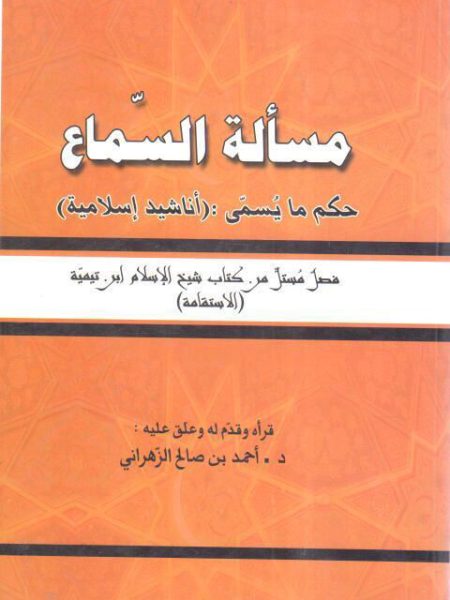
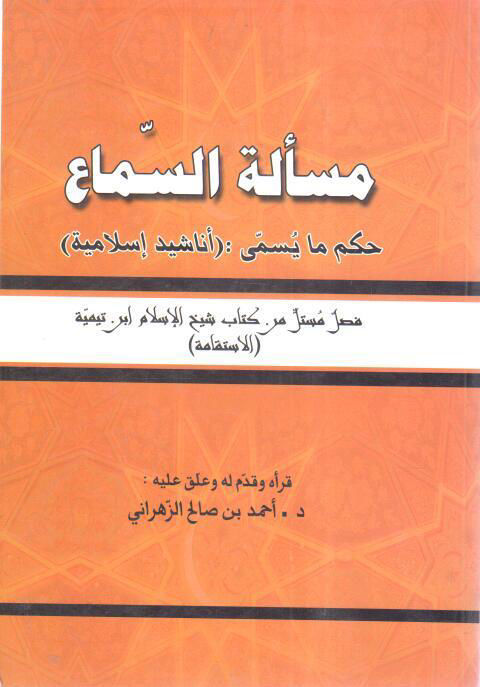
- Author's name: Ahmed Ibn Taymiyyah
-
- Comment on it: Dr. Ahmed bin Saleh Al-Zahrani
- Number of pages: 264 pages
- The subject of the book: The question of hearing is the judgment of what is called
The contents of the book:
- Introduction
- The purity and purity of the Rashidun caliphs' reign
- Breaking the door
- The emergence of non-Sunnah sects
- Why Mysticism Happened
- Songs are one of two things
- The truth about jingles
- Some scholars have spoken about the truth about singing
- The word of the Imams of the Salaf is unanimous on the prohibition of singing, even if it is not accompanied by music.
- Legalizing singing and listening to it is an anomaly
- Important cautions before reading the words of Shaykh al-Islam
- Singing doesn't have to fulfill all the evils in order to be prohibited
- Failure to realize the cause in some cases does not contradict the original
- One of the ways innovators infer licenses over permits
- It is a mistake in the door to infer the specific from the general or vice versa
- It is wrong not to distinguish between singing and playing music
- It's a mistake to confuse the names of the sounds
- Important words by Al-Shatibi - may Allah have mercy on him
- The Reality of the Contemporary Islamic Anthem
- It is not permissible to refer to the state of the Sahaba in reference to what is happening today in chanting
- It is misleading to cite fatwas by scholars that do not indicate the permissibility of the anthem
- The relationship between Islamic chants and Sufi singing
- Shaykh al-Islam's discussion of al-Qushayri begins
- Al-Qushayri's saying that it is permissible to listen to every saying
- Allah Almighty does not command to listen to every word
- Hermits' Expansion of Sight and Hearing
- Types of misinterpretation
- The deviation of Sufis is the same as the deviation of Christians
- He praises what Allah and His Messenger have praised.
- The saying we are commanded to listen to
- The verbal and auditory heresy involves lying to God and denying the truth
- Allah Almighty, it is the praise of listening to the Qur'an
- His reasoning that the believers enjoy listening to music in paradise
- Al-Qushayri's reasoning that the Prophet and his companions listened to poetry
- Shaykh al-Islam - may Allah have mercy on him - refutes al-Qushayri's Muqaddimat al-Qushayri
- Expression
- The way of the philosophers and heretics
- Refuting his argument that the Prophet listened to poetry and said it in his hands
- Bad argument
- It is not permissible to read the Qur'an with melodies
- invalidating the second premise
- The reference point for proximity and obedience is the Shari'ah
- The words of some Sufi imams about following and not innovating
- Hearing stirs the passions
- Hearing people are often plagued by a similarity to Christians
- Not every permissible thing can be worshipped
- Shaving the head
- Many hermits may have a branch of the Kharijites in them. What the people of hearing find is not what Allah and His Messenger love.
- The Basics of Loving God
- Modernized audiologists fall short on these fundamentals
- The shortcomings of the righteous are a temptation to others
- Al-Qushayri's citation of some of those who were quoted as listening to singing and his response to them
- Lying about imams is a habit of the people of heresy
- False actions
- There are two ways to talk about hearing
- Appeal
- The license to sing at weddings for women and children
- Arguments in this section
- One of the best arguments against the prohibition of singing
- Abu Talib al-Makki said, "Whoever denies hearing has denied seventy friends.
- Allah Almighty has protected this Ummah from going astray
- Allah Almighty has legislated for the Ummah what He has not legislated
- Failure to do the right thing causes the wrong thing to happen
- The origin of the hearing aid
- The realization of Ibn Mas'ud's statement that singing breeds hypocrisy
- The reason why some sheikhs are confused about singing and its rules
- The demons attend the hearing of songs and chants. If this is the path to paradise, where is the path to hell?
- Hearing people's contact with women and minors
- Singing is the work of women, so whoever resembles them is a sissy.
- Raising one's voice in a legitimate dhikr is not permissible, let alone a non-legitimate one
- The Sunnah in fighting is to lower your voice
- Al-Qushayri's reasoning that a good voice is a blessing
- His mistake in saying that Allah condemned the horrible sound
- A false anecdote about al-Shafi'i
- Giving up sex for pleasure is a heresy
- Sufism's Contradiction in Hearing
- Examples of bad analogies
- The origin of polytheism
- Loving what is forbidden between disbelief and debauchery
- The banishment of transvestites is a year old.
- It is sunnah to distinguish men's places from women's
- It is not permissible to allow boys to socialize with men who practice heresy and immorality, the effects of which are visible to them
- God decorating his work for the servant
- Cursing effeminate men
- A good voice and image may be called upon to do unpleasant things
- Hearing is of two types
- The Devil's voice provokes human beings
- Junayd's doctrine of hearing
- Who is reliable and who is not
- No one can rely on the mere words of his companions, even if they are among the most knowledgeable people
- Conversations and gestures are not an argument against the Shari'ah
- Whoever listens to the hearing aid is heretical.
- Two Essays on Al-Junaid on Hearing
- Hypocrites' dislike of legitimate hearing
- About Shibli
- Beliefs and bad intentions deter from righteous worship and good intentions
- Hearing the lesson and hearing the temptation
- Abdulrahman ibn Mahdi's statement about Sufism
- The error of some Sufis in abandoning worship
Also browse:
- A special collection of Religious books
- Warn your immediate family