Description
Book description:
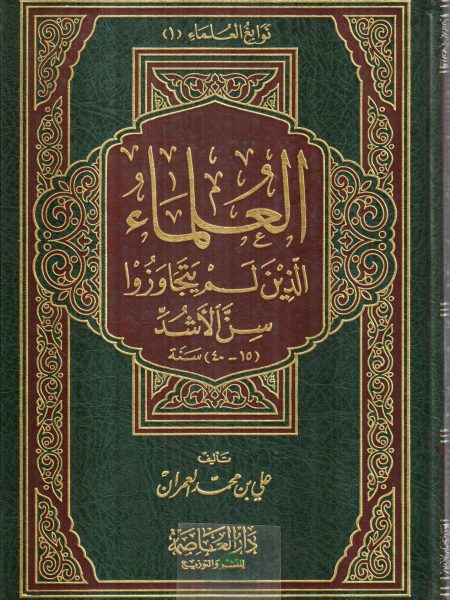
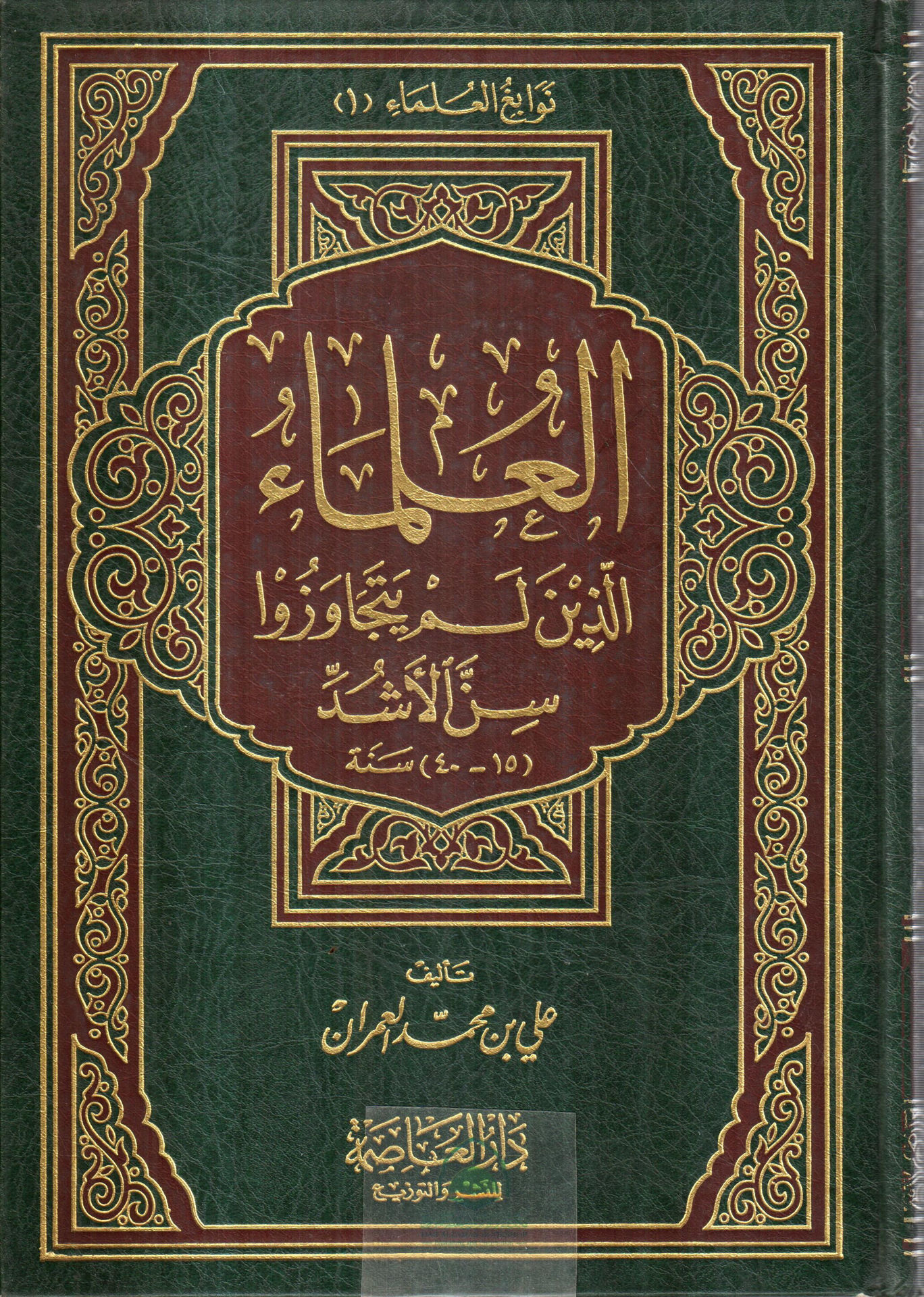
- Author's name: Dr.. Dr. Ali bin Mohammed Al-Omran
- Number of pages: 261 pages
- The subject of the book: Scientists under the age of majority
The contents of the book:
- This type of writing is one of the best types of categorization.
- Blogging is not a new thing
- Some works that focus on the sciences and the classifiers in them
- Examples of works in this color in chronological order
- There is no reason to deny this type of categorization
- The saying "Whoever is ignorant of something is hostile to it" ....
- What is related to this thesis and its subject matter The thesis's ten topics
- This dissertation is the first part of Nawabu'l-Ulama, and the second: On those who were issued a fatwa, judiciary, and compilation under the age of twenty
- Exhibit I: The literature on the subject Historians have specialized in the creation of historical works
- The first person I saw who referred to this research was Abu al-Wafa ibn Aqeel al-Hanbali.
- Then Ibn Asaker Damascene
- Then Ibn al-Jawzi in Umrat al-Ayyin
- The Idea of Ibn al-Jawzi's «Umrat al-Ayyin» (C)
- I did not benefit from Ibn al-Jawzi's book except for three translations
- Ibn al-Jawzi's condition in his book Wide
- Reference to some books that have some kind of relevance to the topic of the thesis
- We are not concerned with the merits of young people and their introduction to those with dreams. The footnotes of the manuscript of Umar al-Umar al-Umar al-Oyayyin have notes on it, from which I benefited (C).
- Al-Muqtadir's successor was younger than him, and then the contract was broken.
- Second article: Usefulness and fruitfulness of the topic
- Some of the quotes indicating the virtue of the science of history are Al-Maqrizi's words in Al-Khattabat, Al-Najm ibn Fahd's words in Ittaf al-Warra, Abu al-Wafa' al-Aradi's words in Minerals of Gold.
- As for the benefits of our topic, there are many, including what Ibn al-Jawzi said
- Argonian Tuning (T)
- Benefits of this book
- This book and its sequel can be a starting point for studies in genius
- Third article: What is the meaning of the modernity that is forbidden?
- Ramhormozi's threshold
- Qadi Ayyad's objection
- Al-Iraqi's words on this
- The words of al-Hafiz Ibn Hajar are plucked from the words of the scholars regarding the transporter
- The words of Sheikh Bakr Abu Zayd in explaining the modernity in which he forbids leading
- A group of scholars who wrote a fatwa, authored a book, or served as a judge under the age of twenty
- The number of people who have translated Ibn Taymiyyah is incalculable, and I have tracked down those who have singled him out for translation
- Fourth article: Meaning: «old age» and «old age»
- The meaning of adulthood
- (Benefit) Adjusting the Book of Sahih (T)
- The meaning of tenseness
- Al-Azhari put it very succinctly
- Ibn al-Qayyim's endorsement of al-Azhari
- Fifth article: Phrases used by historians to indicate that the translator died young
- The variety of historians« phrases, and their expansion of the most commonly used phrases He died young, and the term »old age" had a wide field of use and was the one that most interested Al-Dhahabi" (C)
- Phrases that are less commonly used in the Arabic language
- Exhibit VI: Attributes shared by translators
- Exhibit VII: Book condition
- Scientists who died in their prime (15-40)
- I may mention those who don't lead by example
- (Benefit) On the purpose of non-recognition in compilation (C)
- Exhibit VIII: Approach to writing
- Ranked on deaths
- Exporting a translation with the fame of science
- The years of birth and death and then the age
- Nouns and prepositions
- Translating the world's best translators
- Mentioning what motivates
- I refer to some of the sources of the translation without internalizing them
- Paper IX: Important alert
- Some scientists died after forty and under fifty, and I have not mentioned them here.
- Some of the imams who died at this age
- Tenth article: Nuts and bolts
- A four-year-old boy who memorized the Qur'an and considered the opinion
- Abdul Qayyum ibn Sharaf al-Din was not twelve years old and was keeping up with the scholars
- Nasr ibn Dahman lived (190) and then returned as a young man
- In the interpretation, they said, "We have heard them.)
- Seven human teeth
- A number of poets have excelled in old age
- A group of scholars who sought knowledge in old age
- Abu al-Hassan al-Tuhami's poem in mourning for his son, Abyat al-Baroudi, after his thirty-fifth birthday
- Manfaluti's 40th birthday message
- Scientists who have not exceeded the most severe (on deaths):
- (first century)
- (second century)
- (third century)
- (4th century)
- (5th century)
- (6th century)
- (7th century)
- (8th century)
- (9th century)
- (10th century)
- (11th century)
- 12th century)
- (13th century)
- (14th century)
- (15th century)
- Indexes
- Alphabetical Index of Translated Flags
- Index of books in the body of the thesis
- Index of poems
- Index of benefits
- Index of References and Sources
Also browse:
- A special collection of books History
- Children around the Prophet (PBUH)