Description
Book description:
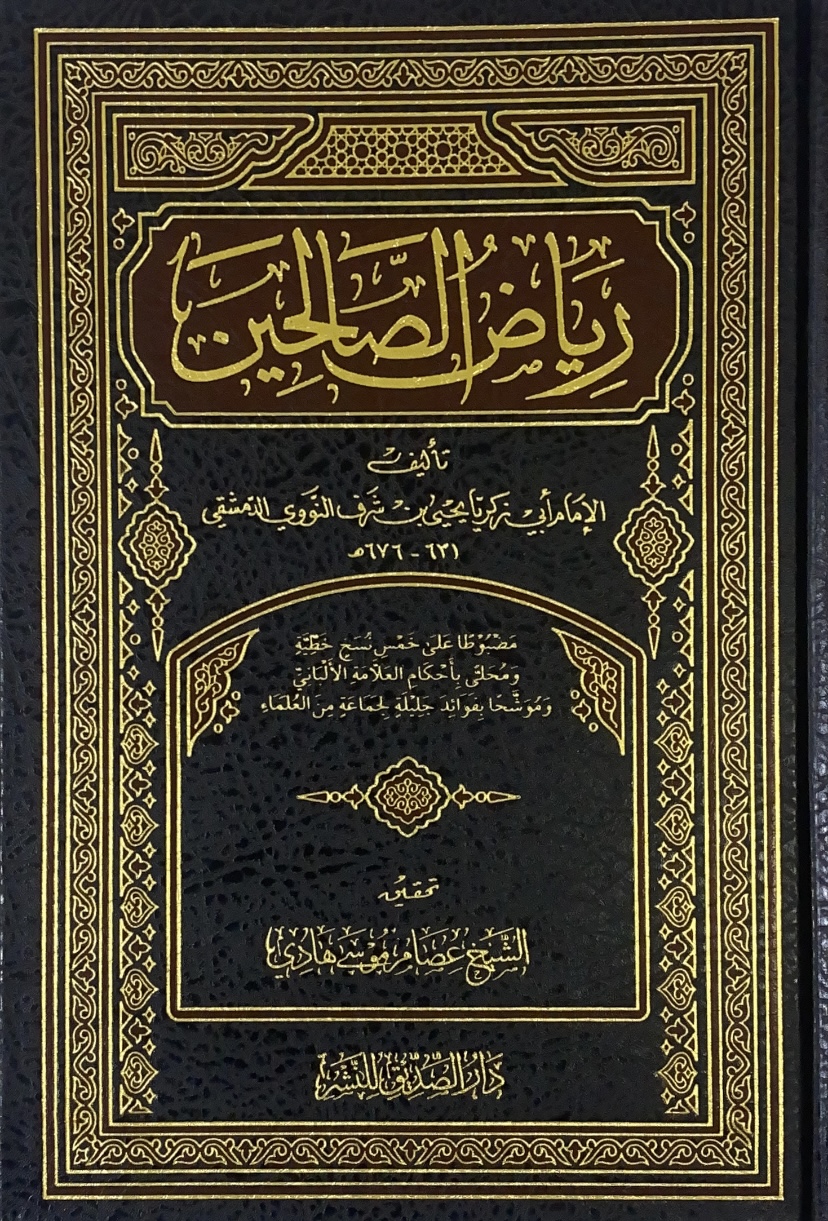
- Author's name: Imam Abu Zakariya Yahya ibn Sharaf al-Nawawi al-Damascene
- Number of pages: 680 pages
- The subject of the book: Riyadh al-Salihin
The contents of the book:
- Introduction
- Short translation of the workbook
- Imam Nawawi's approach in his book Riyadh al-Salihin
- Efforts around the book
- Ruling on the use of weak hadiths in the virtues of deeds
- Description of the manuscript used in the investigation
- Author's introduction
- Bab: Sincerity and the presence of intention in all actions, words and situations, both visible and hidden.
- Repentance door
- door: patience
- door: Honesty
- door: Monitoring
- Door: Piety
- Bab Al-Yaqeen and Tawakkul
- door: On straightening
- Bab: Reflecting on the greatness of Allah's creations, the mortality of this world, the horrors of the Hereafter, and all other matters, as well as shortening the soul and making it virtuous.
- The chapter on initiating good deeds and urging those who seek a good deed to pursue it diligently without hesitation.
- Chapter on Mujahidah
- The chapter urging the increase of good deeds at the end of life
- Chapter on the Numerous Ways of Goodness
- Bab: On Economy in Worship
- Chapter on Maintaining Business
- Bab: The command to observe the Sunnah and its etiquette
- A chapter on the prohibition of innovations and novelties
- A chapter on who enacts a good or bad year
- A chapter on indicating a good thing and calling for guidance or misguidance
- Chapter on Cooperation in Righteousness and Piety
- Chapter on Advice
- A chapter on enjoining good and forbidding evil
- A chapter on the severity of the punishment for those who command a favor or forbid a disadvantage and whose words are contrary to their deeds.
- Bab: The Command to Perform Honesty
- The chapter on the prohibition of injustice and the command to redress grievances
- The chapter on maximizing the sanctity of Muslims, explaining their rights, and showing compassion and mercy to them.
- The chapter on hiding the nakedness of Muslims and forbidding the spreading of it without necessity
- The Chapter on Meeting the Needs of Muslims
- Intercession door
- The chapter on reconciliation between people
- A chapter on the virtues of the weak, the poor, and the idle.
- The door to kindness and humility toward orphans, children, and other weak and poor people.
- The chapter on recommending women
- Bab: The Husband's Right over the Woman
- Chapter on Maintenance for Dependents
- Door: Spending from what you like and from what is good
- The chapter on the obligation to command his family, his discerning children, and everyone else in his care to obey Allah.
- The Almighty, forbidding them from transgressing, disciplining them and preventing them from committing what is forbidden
- A chapter on the right of the neighbor and bequeathing to him
- The Chapter on Parenting and Relating to Relatives
- Chapter on the prohibition of disobedience and breaking the womb
- The chapter on the virtues of loving the friends of the father, mother, relatives, wife, and others who are recommended.
- Honor him
- The Chapter on Honoring the People of the Household of the Messenger of Allah, may Allah bless him and grant him peace.
- The chapter on reverence for scholars, elders, and people of merit, and elevating them above others.
- Their councils and rankings
- The chapter on the virtues of love in Allah, the exhortation to love in Allah, and what to say when a man informs someone of his love.
- Bab: The signs of Allah's love for His servant and the urge to strive to attain them.
- The chapter warning against harming the righteous, the weak and the poor
- The chapter on judging people based on their appearance and their secrets to God Almighty
- Fear door
- Door of hope
- Chapter on the virtues of hope
- The Chapter on Combining Fear and Hope
- The chapter on the virtues of crying out of fear of Allah and longing for Him
- A chapter on the virtues of asceticism in the world, the urge to minimize it, and the virtues of poverty
- A chapter on the virtues of hunger, rough living, and limiting oneself to a small amount of food
- And drunk and dressed
- Bab: Contentment, abstinence, frugality in living and spending, and the prohibition of asking unnecessarily.
- Chapter on the Permissibility of Taking without Asking or Seeking
- The chapter urging people to eat from the labor of their hands and not to ask or ask to be given.
- The door to generosity, generosity, and spending in good deeds, trusting in Allah Almighty
- The chapter forbidding miserliness and greed
- The chapter on altruism and compassion
- The chapter on competing in matters of the hereafter and maximizing what can be blessed
- The chapter on the virtues of the rich man who is thankful, which is the one who takes money from his face and spends it on the things he is commanded to do
- Chapter on Death and the Shortness of Hope
- The desirability of visiting graves for men and what the visitor should say
- The chapter on wishing for death because of a misfortune that has befallen him, but it is okay if he fears sedition in religion.
- The chapter on piety and avoiding suspicion
- The chapter on the desirability of seclusion when times are corrupt or when there is fear of sedition in religion or falling into haram, suspicion, etc.
- The chapter on the virtues of mingling with people, attending their gatherings, attending their congregations, witnessing good deeds, attending dhikr sessions with them, visiting their sick and attending their funerals
- Chapter on Humility and Lowering the Wing for the Believers
- Chapter on the prohibition of pride and admiration
- The chapter on good manners
- Bab: Dreaming, kindness, and gentleness
- Chapter on Forgiveness and Ignorance of the Ignorant
- Bap: Tolerance of harm
- The door of anger if the sanctities of the law are violated and the religion of Allah is violated
- The chapter commanding rulers to be kind to their subjects, advise them, and have compassion for them, and forbidding them from cheating them, stressing on them, neglecting their interests, and neglecting them.
- The door of the fair governor
- The chapter on the obligation to obey rulers in disobedience and the prohibition of obeying them in disobedience
- The chapter on the prohibition against asking for an emirate and choosing to leave it if one does not have to or is not needed
- Bab: Urging the Sultan and others to take a good minister and warning them against bad associates
- The chapter on the prohibition against giving the emirate, the judiciary, and other states to those who ask for them
- Literature book
- The Book of Food Literature
- Dress book
- The Book of Etiquette for Sleeping, Lying Down, Sitting, Sitting, Sitting, Sitting and Seeing
- Book of Peace
- The book on visiting the sick, mourning the dead, praying for the dead, attending their burial, and staying at their grave after they are buried
- Book of Travel Etiquette
- Book of Virtues
- Book of I'tikaf
- Hajj book
- Book of Jihad
- Science book
- The Book of Praise and Thanks to Allah Almighty
- Prayer Book for the Prophet (peace be upon him)
- Al-Azkar book
- Book of invitations
- The Book of Forbidden Things
- The Book of Mantras and Salt
- Book of forgiveness
- Index of hadiths and relics in alphabetical order
Also browse:
- A special collection of books Hadith and its sciences
- Published Sunnah Flags