Description
Book description:
-
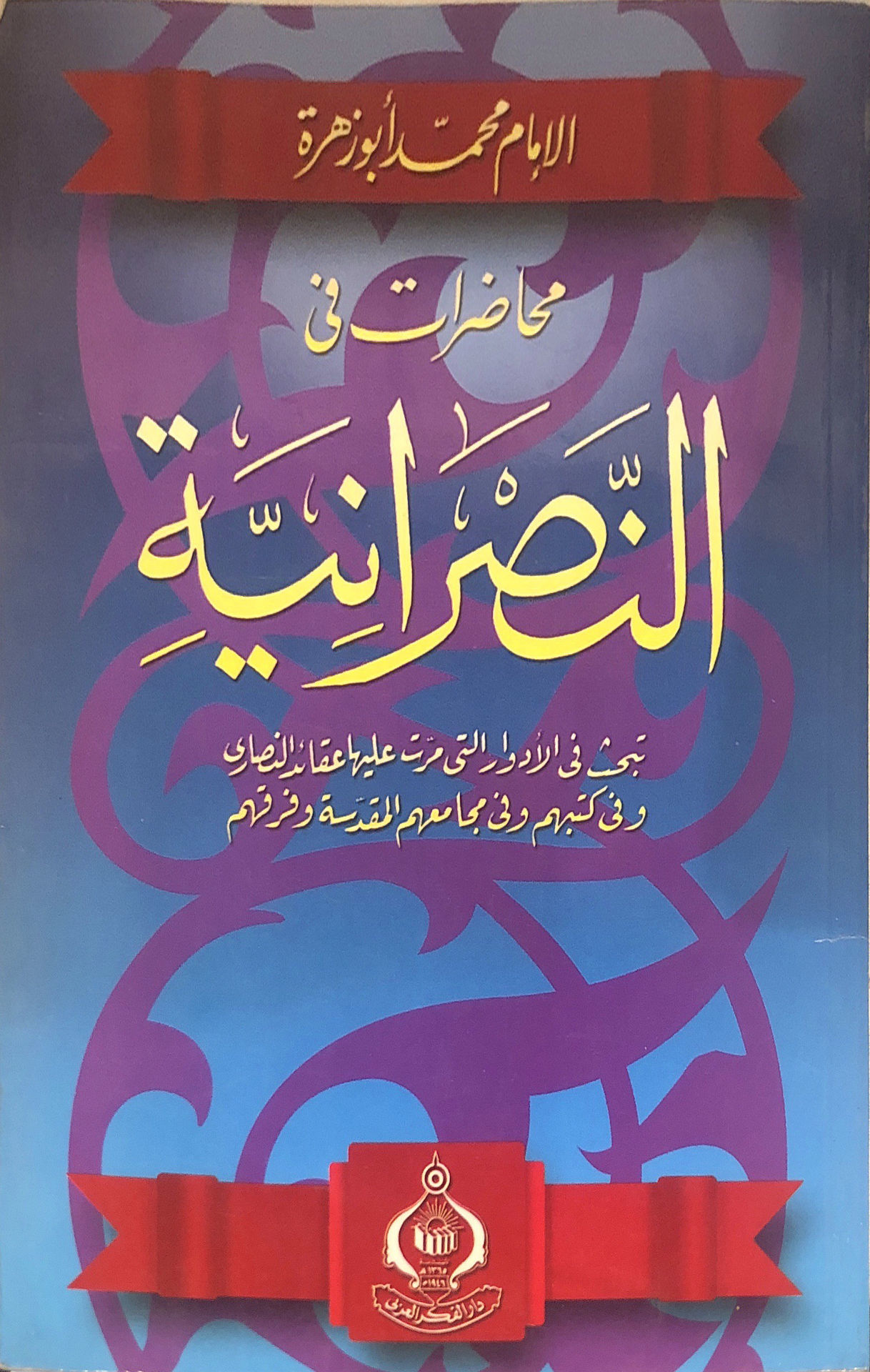
Author's name: Muhammad ibn Ahmad ibn Mustafa ibn Ahmad alias Abu Zahra
-
Number of pages: 191 pages
-
The subject of the book: Lectures on Christianity examining the roles it has played
The contents of the book:
Editorial of the third edition
Editorial of the second edition
Editorial of the first edition
Bootstrap
Christianity: As brought by Jesus Christ, peace be upon him
Christianity in the Quran:
Mary and Jesus in the Quran:
The conception and birth of Christ:
The wisdom of being born without a father:
Jesus' mission and miracles:
The wisdom of his miracles being of that type:
What we see is correct wisdom:
The Jews received his invitation:
The Jews' hostility to him:
The end of Christ in the world:
Christ after his deliverance:
A comparison between the Christ of the Qur'an and the Christ of contemporary Christianity:
Christianity after Christ
The persecution of Christians:
The impact of persecution on religion:
Roman and Christian philosophy:
Neoplatonism and its impact on Christianity:
Trinitarianism is not from Christianity but from Greek philosophy
Sources of Christianity after Jesus
24 The Christian Bible includes the Torah, the Gospels, and the letters of the apostles
Gospels:
The Gospels were not dictated by Jesus and were not revealed to him:
Gospel of Matthew:
The impact of ignorance of the history of codification and translation:
The Gospel of Mark:
Gospel of Luke:
Gospel of John:
When and why this gospel was written down:
What is inferred from the reason it was written:
These gospels did not remain with Jesus:
The Gospel of Jesus:
What Christian scholars say about the Gospel of Jesus:
Gospel of Barnabas:
Barnabas:
Is Barnabas one of the twelve apostles?
Talking about the validity of the name of this gospel:
The likelihood that the attribution in this gospel is true:
The value of the Gospel of Barnabas in terms of what it contains:
The Gospel of Barnabas is contrary to what Christians believe:
Messages of their messengers
Number of messages and their authors:
Translation of Ya'qub Sahib al-Risalah:
Translation of Judas:
Paul's translation:
Paul's qualities:
The books of the Old Testament, the Gospels, and the Epistles were written by inspiration:
A closer look
What qualities a religious book must have to be authentic:
Apply these conditions to the books of Christians:
Discuss the claim of inspiration in the book of Acts:
The messengers are unknown:
Luke the author of the book of Acts was not inspired:
The claim of inspiration is not unanimous among Christians:
The claim of inspiration is invalid for those who claim it:
Conflicts between the books of the New Testament:
The contradiction between them invalidates the claim of inspiration and shows their denial of some of them and then their recognition of them:
Kass's balancing act between the Prophet's hadiths and their books in terms of narration:
Demonstrate the falsity of his words:
A look at revelation in Islam and revelation in Christianity:
Christianity as it is practiced by Christians and in their books
Creed:
The doctrine of triangulation:
Son does not mean human birth:
The Trinity are distinct persons, albeit existing in tandem:
Christ was crucified for the redemption of creation:
Christ condemns and judges:
Sanctification of the cross:
their worship:
of Christianity:
from Planned Parenthood:
Biblical and Christian canons:
Analyzing pork while prohibiting it in the Torah:
Christian Councils: History, Causes, and Decisions
How did you come up with the idea of collecting magazines?
Public councils and private councils:
1 Council of Nicaea in 325
The particular variation after which the assembly was convened:
Constantine intervened and assembled the Council of Nicaea:
His decisions are backed by the awe of the Sultan:
Criticism of the complex:
He ordered him to burn anything that contradicts him:
Christians received the decisions of the Congregation:
What to make of this:
Unifier activity:
2 The First Constantinople Council in 381
The number of collectors and the challenge of being public:
3 The First Council of Ephesus in 431
4 The Council of Chalcedon in 451
Riot in the compound:
Egyptians reject the appointment of a non-Muslim patriarch:
The separation of the Egyptian Church:
Surviving aggregates
Society for the Prohibition of Taking Pictures:
The separation of the Eastern and Western Church and its cause:
Western Church or Churches:
Subsequent councils are all non-ecumenical except in the eyes of the Western Church:
Christian bands
Teams that emerged in the age of monotheism:
The companions of Paul of Shamashati:
The introduction of paganism into monotheism:
Berbera:
Other bees:
The loss of monotheism due to the perversion of books:
Ancient Teams in the Triangulation Era
Macedonian band:
Nestorians:
Jacobites:
Maroon:
Eastern Church and Western Church
Try to remove the disagreement:
Christian criticism of the Western Church:
Patriarchs of the Eastern Church:
Islam shades the eastern churches with religious freedom:
The modern band “Protestants”
The severity of the church on people and scholars:
Impose its authority on kings:
Denial decisions get kings:
The tyranny of the church in understanding the scriptures:
Impossibility and forgiveness:
The Church's overuse of indulgences:
An image of the Deed of Absolution:
Clergy's personal behavior:
Starting repair:
Some clerics call for reform:
Starting a non-clerical reformation:
Violent criticism:
Luther's revolution against the church:
Luther didn't want to tear down the church:
Zongli and his works:
Kelvin and his impact on reform:
Creating churches for reformers:
The most important principles of reform:
Christians have not taken their logic to its logical extreme:
Christian minds deny the divinity of Christ:
Conclusion