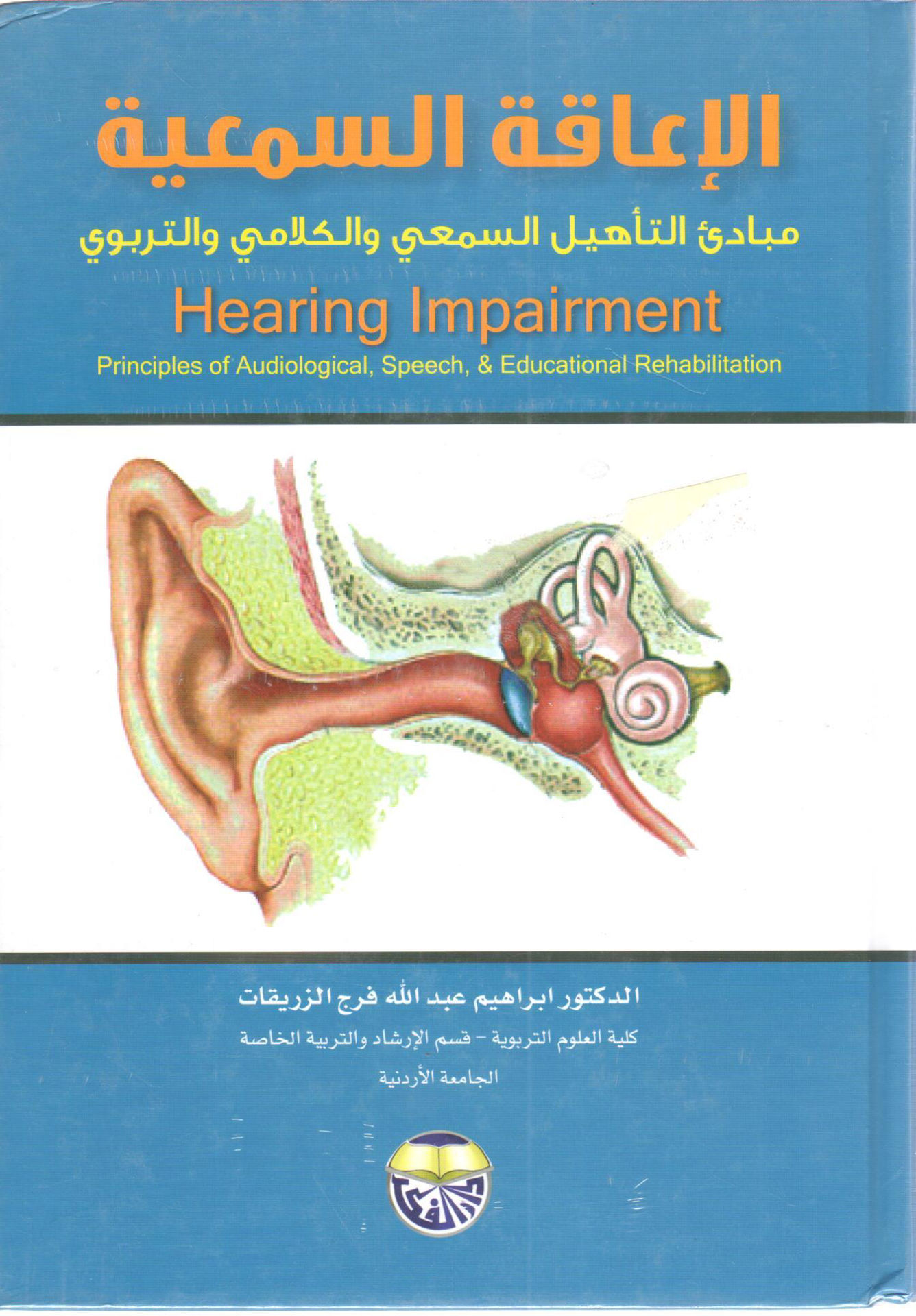
Description
Book description:
-
Author's name: Dr. Ibrahim Abdullah Faraj Al-Zuraiqat
-
Number of pages: 356 pages
-
The subject of the book: The book discusses the philosophy of raising and educating people with hearing impairments
The contents of the book:
-
Chapter one: The nature of hearing
-
The nature of the sound
-
Sound characteristics
-
Auditory apparatus
-
Anatomy and physiology of the outer ear
-
Anatomy and physiology of the middle ear
-
Anatomy and physiology of the inner ear
-
Auditory Nervous System
-
How to hear
-
Audiologist
-
Services provided by the audiologist
-
-
Chapter II: The nature of hearing impairment
-
Types of Hearing Impairment
-
Degree and severity of hearing loss
-
Definition of Hearing Impairment
-
Variation in speech (language) sounds
-
Impact of hearing impairment on communication
-
Prevalence of hearing impairment
-
Auditory disorders
-
External ear disorders
-
Middle ear disorders
-
Inner ear disorders
-
Central Auditory Nervous System Disorders
-
Central auditory process disorders
-
buzzing
-
-
-
Chapter Three: Hearing development and early intervention
-
Auditory development in newborns and infants
-
Speech development
-
The evolution of oral communication
-
Developmental stages of speech
-
Hearing, comprehension and speech development in children
-
How to encourage your child's speech and language development? Tips for parents
-
How to improve communication with your child? Tips for parents
-
The role of parents
-
Early intervention
-
Early Intervention Models
-
Family Centered Counseling
-
-
Chapter four: Auditory evaluation
-
Why are we evaluating the hearing impaired?
-
Meeting parents
-
Principles of working with children of all ages
-
Behavioral Observation Audiometry
-
Audiometric Reinforcement Procedure
-
Procedural Augmentation Audiometry
-
Auditory Reinforcement Measurement
-
Audiometrics with response recall
-
-
Clinical testing of a child aged 2-4 years
-
Speech reception threshold
-
Pure Tone Auditory Map
-
Measuring auditory brainstem response
-
Cochlear auditory frequency scan
-
Measurements of apparent resistance
-
Auditory verbal analogy
-
Tuning fork tests
-
-
Chapter V: Assessing people with hearing loss
-
Auditory assessment
-
Evaluation of communication
-
Speech evaluation
-
Language assessment
-
Psychoeducational assessment
-
Psycho-educational assessment of hearing impaired children
-
Capacity assessment
-
-
Chapter Six: The Impact of Hearing Impairment on Development
-
Factors affecting the development of a hearing impaired child
-
Language development
-
Psychosocial development
-
Cognitive growth and academic achievement
-
Vocal characteristics and speech ability
-
Factors affecting the activities of people with hearing loss
-
-
Chapter VII: Auditory rehabilitation
-
Definitions
-
Understanding the person
-
Rehabilitation process
-
Hearing Rehabilitation Program
-
Auditory rehabilitation for preschoolers
-
Preschool Programs
-
School-age children
-
Adults with acquired hearing loss
-
Adult Auditory Rehabilitation Program Goals
-
Elements of an adult hearing rehabilitation program
-
Self-Help Groups
-
Gallaudet Elder Program
-
Hearing Rehabilitation Technology
-
-
Chapter VIII: Communication Methods and Strategies
-
Auditory-Oral Methods
-
Speech training program design
-
Visual-verbal methods
-
Total communication
-
Other signaling systems
-
Verbotonal method
-
Communication strategies
-
Training on communication strategies
-
A model for communication training
-
-
Chapter IX: Counseling for families of people with hearing impairments
-
Guidance
-
Objectives of counseling families of hearing impaired children
-
Emotional reactions of parents of hearing impaired children
-
Family Stress
-
The role of the audiologist-counselor
-
Training for families
-
Siblings of hearing impaired children
-
Theories of counseling
-
Mentoring process
-
Supportive or supportive counseling
-
Content guidance
-
Auditory guidance
-
-
Chapter X: Meeting the needs of people with hearing loss
-
Adolescence
-
The effects of hearing loss on adolescence
-
Early childhood: The development of language, emotional and social development
-
Using auditory residuals in communication
-
Obstacles of adolescents
-
Psychological issues
-
Guidance for people with hearing impairments
-
The relationship between the audiologist and adolescents with hearing loss
-
Needed Programs
-
-
Chapter Eleven: Raising and Educating the Hearing Impaired
-
The role of the educational audiologist
-
Educational goals for hearing-impaired children
-
Types of pedagogical choices
-
Current status of education for the hearing impaired
-
Integration of hearing impaired students
-
Decision-making process
-
Individualized Education Plan
-
Placement considerations and individualized educational plan.
-
The relationship between the degree of hearing impairment and educational needs
-
Providing services
-
Changes across elementary school and high school
-
Teacher considerations
-
School management considerations
-
Grade considerations
-
Challenges in Deaf Education
-
The effects and needs of hearing impairment
-
Classroom Teacher Guidelines
-
-
Chapter Twelve: Deaf-blind people
-
Definition of Deaf-Blind
-
Characteristics of deaf-blind people
-
Learning and communication
-
Purposeful movement
-
Prevalence
-
Causes and prevention
-
Diagnostics
-
Usher syndrome
-
Deaf-blind children
-
Suggested guidelines for dealing with deaf-blind people
-
-
References
Also browse:
-
A special collection of books Ibrahim Zarikat