Description
Book description:
-
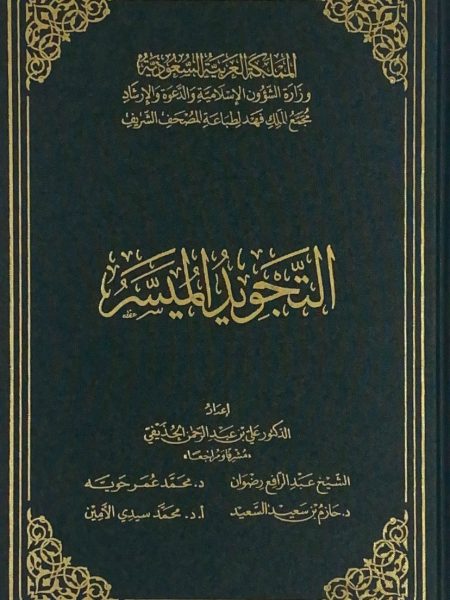
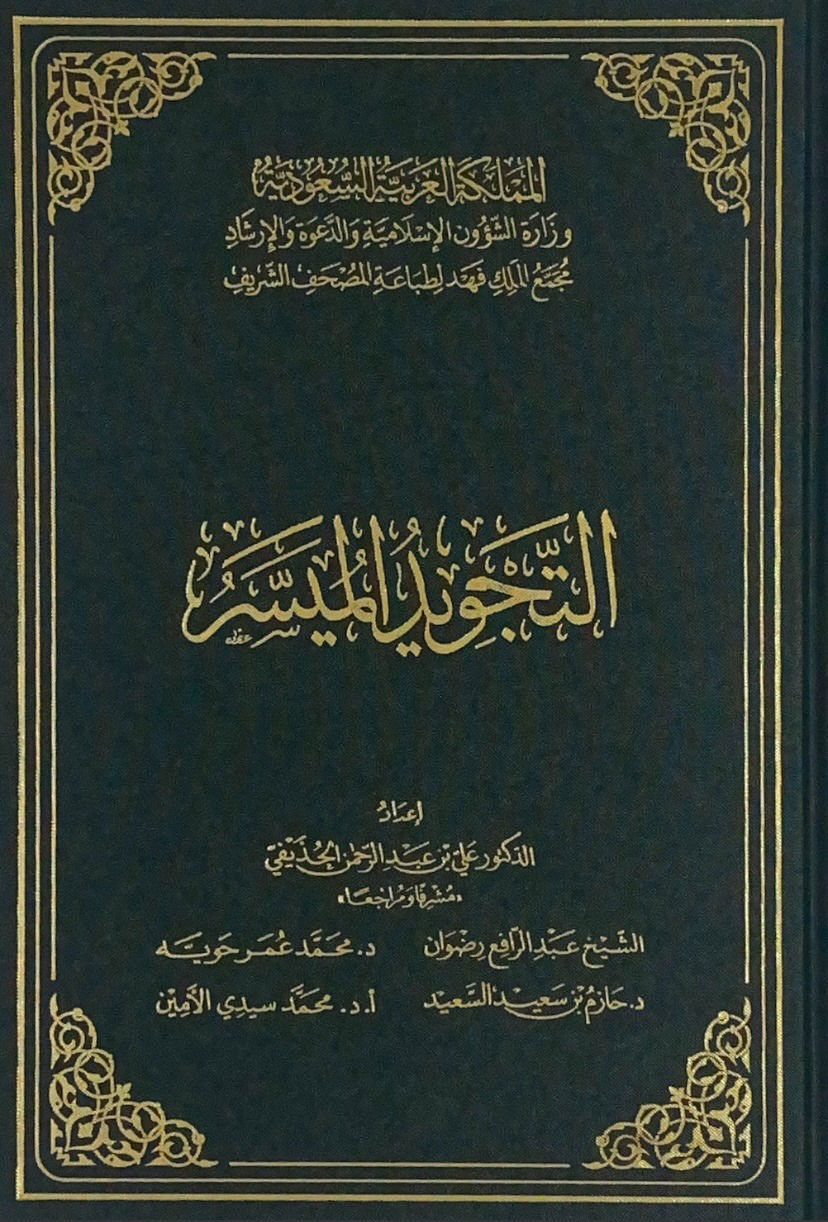
- Author's name: Dr.. Dr. Ali bin Abdulrahman Alhudaifi
- Number of pages: 189 pages
- The subject of the book: Easy intonation
The contents of the book:
- Minister's Introduction
- Secretariat Introduction
- Introduction to the book
- The virtues of the Quran
- Verses about his virtue
- Hadiths on his virtue
- Hadiths on the virtues of specific suras and verses
- Definition of intonation
- Intonation rule
- The Purpose of Tajweed
- Recitation ranks .
- Overt and subtle melody
- Recall
- Formulas for invocationCases of invocation
- Bismillah
- Letter Exits Chapter
- Number of letter exits
- General Exits and Special Exits
- The first director: Hollow
- Second exit: Throat
- Third exit: Tongue
- Fourth exit: Lips
- Fifth exit: gill
- Letter titles
- Chapter on Characteristics of Letters
- The Benefits of Knowing Attributes
- Number of letter adjectives
- Necessary archetypal qualities
- Adjectives that have an opposite
- Qualities that have no opposites
- Alkaline ranks
- Singing ranks
- Strengths and Weaknesses of Qualities
- A table showing the qualities of the letters
- Chapter on Consonant Nouns and Tanween
- Showing
- Muffling
- overturning
- Concealment
- Chapter on Consonant Memes
- Consonant Lammas Chapter
- Definition L
- L of the verb
- The letter L in Do and Bill
- Name L
- Command L
- Bab al-Bab al-Muqamalim and al-Muqamalim
- Talking about amplified letters one by one
- Amplification ranks
- Talking about laminated letters one at a time
- Talking about enclosed and enlarged letters
- Rule of Thousand
- L rule
- T rule
- Verdict of the R's
- The rule for the R's endowment
- Words that have different judgments about whether or not they can be seen as an endowment
- Bab Al-Idgham and its parts
- Big bang
- Small drowning
- Reasons for inclusion
- Edgham Semen Thelen
- Hakam H. Maliya with an edge
- Convergence of convergences
- Inserting homophones
- Contraindications
- Full immersion
- Imperfect immersion
- (Aspects of the word "believe" in Joseph
- The short and long chapter
- Tide letters
- Tide sections
- Original tide.
- Subtide
- Types of Subtides
- Continuous tide
- Separate tide
- Extend the wildcard
- The Necessary Tide and its Divisions
- Accidental Tide of Silence
- Extending the opening lines of the surahs
- Mududud ranks
- The reason for the necessary stretching in "Allah's pain" in the first Surah Al-Imran has changed
- E metaphor
- Cases of the pronoun
- Types of connection
- Stop and start
- The importance of stopping and starting
- Definition of stopping and starting
- Definition of cut and silence
- Hafs housing
- Types of endowment
- Moratorium
- Full stop
- Sufficient endowment
- Good endowment
- Ugly stop
- Test Stop
- Forced stop
- Types of initiation
- The chapter on stopping at the end of words
- The first type: stillness
- The second type: Rum
- The third type: Tattooing
- Categories of end-of-word stops based on the above
- How to stop a pronoun
- Fixation and deletion
- The first type is the inclusion and omission of the alef when stopping
- Second type: In the insertion and deletion of the wow when stopping
- Third type: In affixing and deleting the yah when stopping
- Lumped and plugged in
- The first word: Because the open-ended unabridged huma with and without
- The second word is: open with an attenuated nun with no
- The third word: An open-ended accent with an attenuated nun with if
- Fourth word: It's an open-ended word with a softened nun and a wen.
- Fifth word: It's the one with a broken hamza that's attenuated nun with lu
- Sixth word: The word "N" is a word that means
- Seventh word: The broken-humza-relieved nun with no
- The eighth word: Um with interrogative who
- The ninth word: An is an open-ended, emphasized noun with a hyphenated front
- The tenth word: Now not the broken accent emphasized nun with a tilted hyphenated nun
- The eleventh word: (where) with what
- Twelfth word: who with what
- Thirteenth word: Cursed with who
- Fourteenth word: Where his with safety
- Fifteenth word: Neighboring Yemen with what's connected
- The sixteenth word: But with what
- Seventeenth word: All for Him
- Eighteenth word: But with and without negation
- Nineteenth word: Upgrading with prescribed money
- Twentieth word: Day with Hmm
- Twenty-first word: L preposition with a postposition
- Twenty-second word: When it's time to move on
- The twenty-third and twenty-fourth words: Call them or send them back
- The twenty-fifth word: "Son of Umm)
- What the Qur'ans agree to connect
- Talking about the saying, "Peace be upon Al-Yasin" (peace be upon Al-Yasin)
- Organizing the severed and connected parts of the Al-Jazariyya introduction
- Organizing the severed and connected parts of the Samanudi masterpiece
- Ruling on stopping on the feminine ta
- Feminine T's that are agreed to be read in the singular.
- Word (and mercy)
- Word (Nemat)
- Word (Amrat)
- Word (and tooth)
- Curse word
- Word and sin
- Word
- Word remained
- The word read
- The word "weftrat
- The word tree
- The word (Wahnat)
- Word and daughter
- Feminine T's with different singular and plural forms
- What is written with an open T and is also stopped with an open T
- Grammar of the feminine ta'asat from the Al-Jazariyya introduction
- Organizing the Open T's from the Seminodean Masterpiece
- Hamsa
- verbs and how to start them
- The hyphen in nouns and how to start with it
- How to start a letter with a hyphen and how to start it
- Organize how to start with the Wasl symbol from the Al-Jazariyya introduction and the Samanoodi masterpiece
- Cautions on the hyphen
- The first: On the interrogative question mark entering the hyphen
- The second: On male faces and doors
- Third: Ruling on starting with the word tika in the Surahs of Al-Shu'araa and Al-Shu'araa.
- What Al-Hafs observes from Shatabiya
- Warning against innovations in recitation
- A list of the most important sources
Also browse:
- A special collection of books The Holy Quran and its sciences
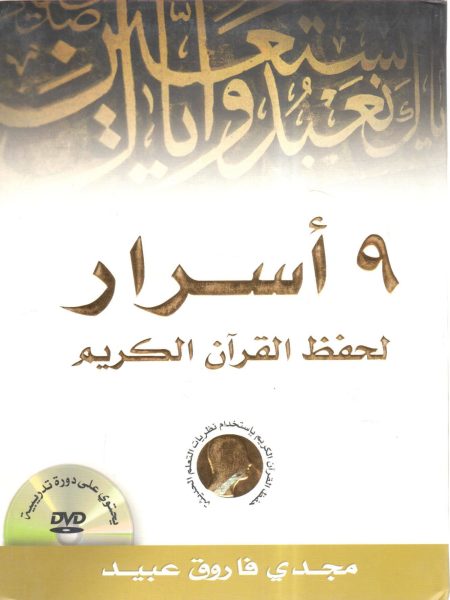
- 9 secrets to memorizing the Quran