Description
Book description:
-
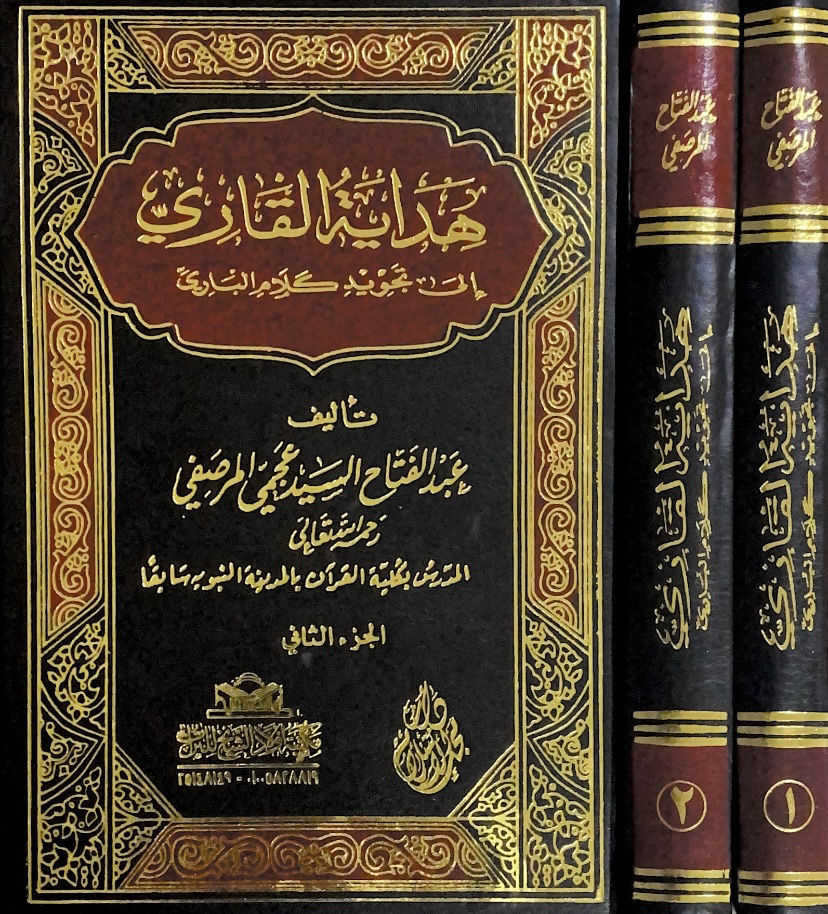
- Author's name: Abdel Fattah Elsayed Ajami Al-Marsafi
- Number of pages: 870 pages
- The subject of the book: Guiding the Qari to the intonation of the words of the Almighty
The contents of the book:
- Introducing
- Translation of Sheikh Abdel Fattah al-Sayyid Ajami al-Marsafi
- Introduction to the book by His Eminence Sheikh Hasnain Muhammad Makhlouf, former Mufti of Egypt, member of the Senior Scholars Group at Al-Azhar, and member of the founding council of the Muslim World League in Makkah, may Allah give it honor and glory.
- The speech of our great Sheikh, Sheikh Ahmed Abdulaziz Ahmed Mohammed Al-Zayyat, the great reciter of this era and the highest-supported reciter in Egypt and former teacher in the Department of Qur'anic Specialization at Al-Azhar.
- Speech by the Honorable Prof. Sheikh Hussein Khattab, Sheikh of Readers in Damascus, Syrian Arab Republic
- Speech by Sheikh Abdul Razzaq Ali Moussa, an Al-Azhar scholar and teacher at the College of the Holy Qur'an at the Islamic University in Medina
- Speech by His Excellency Prof. Sheikh Muhammad Tamim al-Zoubi of Homs, Syrian Arab Republic
- Speech by His Excellency Prof. Sheikh Amer Al-Sayyid Othman, Sheikh Amer Al-Sayyid Othman, the current Sheikh of the Qur'an in Egypt and a consultant at the King Fahd Complex for Printing the Holy Qur'an in Medina
- Author's introduction
- Introduction to the book
- Chapter One: Introducing Hafs (may Allah be pleased with him)
- Chapter Two: Introducing Imam Asim al-Kufi (may Allah be pleased with him)
- Chapter Three: In mentioning the attribution that led to the narration of Hafs from Asim (may Allah be pleased with both of them)
- Chapter Four: In mentioning the principles of Tajweed
- Chapter Five: On the order of reading
- Chapter Six: In Knowing the Pillars of the Qur'an
- Chapter Seven: On the definition, meaning and judgment of melody
- Section I: In Letter Exits
- Preparing to enter the door
- Chapter One: In explaining the difference in the number of exits of the letters
- Chapter Two: In detailing the exits
- Chapter Three: In Letter Titles
- Section II: On the qualities of letters
- Preparing to enter the door
- Chapter One: In the statements of scholars on the number of letter qualities
- Chapter Two: On the original necessary attributes
- Chapter Three: On the division of qualities in terms of strength and weakness
- Chapter Four: in knowing how to extract the qualities of each individual letter
- Chapter Five: In distributing adjectives to the alphabets according to their order of appearance
- Chapter Six: On incidental qualities
- Section III: In amplification and thinning
- The meaning of amplification and thinning in language and terminology
- Chapter One: In the speech on amplified letters, there is only one thing to say
- Chapter Two: In the speech on laminated letters, there is only one saying
- Chapter Three: In talking about letters that are lighter and heavier
- Section IV: In the Z and the Z.
- Chapter One: On the difference between Z and Za
- Chapter Two: In the Qur'an's Matter of Matter
- Chapter Three: On the need to distinguish the letter z from za, mashal, etc. when they meet
- Section V: On the rules of the consonant and tanween
- Definition of the consonant nun and tanween and the things they are different from the nun
- Talking about the first judgment, “Showing”, its face and rules
- Talking about the second verdict, including its parts, faces, and rules
- Important caveats about diction
- Talking about the third verdict, “the heart,” and how to perform it, its face, and its rules
- Talking about the fourth provision “concealment”, its face and rules
- Important cautions regarding concealment in terms of performance, how to perform it, the rankings, the difference between it and mudgham, etc.
- Section VI: In Ghunnah, its rulings and the scholars' opinions on it
- Definition of a hornet's nest
- its place
- Its director
- Their ranks
- Its amount
- How to perform them
- Saying about keeping the letters of the Ghanna in their exit or moving them to another exit
- Conclusion in the chapter summary
- Section VII: On the rules of the consonant mim
- The definition of a consonant meme
- Talking about the first verdict: Oral concealment and the opinions of scholars
- Talking about the second verdict: The face and controls of the small mudgham
- Talking about the third verdict: Oral revelation, its face and rules
- Section VIII: Consonant Lammas and their rulings
- Preparing to enter the door
- Chapter One: On the definition of L and its provisions
- Chapter Two: On the verb lam and its rule
- Chapter Three: In the command lam and its rule
- Chapter Four: In the name of the name and its rule
- Chapter Five: On the letter L and its rule
- Section IX: in homogeneous, convergent, homogeneous, and divergent
- Preparing to enter the door
- The definition of the two ideals and the opinions of the scholars about them.
- Convergent definition, divisions, and judgment
- Homologous definition, divisions, and judgment
- Divergent definition, divisions, and judgment
- What is meant by two letters that are close to each other
- Section X: In al-Imgham, its divisions and rulings
- Preparing to enter the door
- Chapter One: On the permissible inclusion of “if”
- Chapter Two: In the permissible incorporation of the word “may”
- Chapter Three: In the permissible incorporation of the feminine consonant ta
- Chapter Four: In the permissible insertion of the word “do” and "bil"
- Chapter Five: On the permissible mudgham in letters whose exits are close to each other and Hafs's doctrine of agreement and disagreement
- Section XI: In short and long
- Bootstrap
- The origin of the tide
- His definition
- Letters and conditions
- Its sections
- Second section: Sub-tide, which includes five issues
- The first issue is its definition
- The second issue is its causes
- Third Question of Types
- The fourth issue is about its rulings
- The fifth sub-tide issue is the ranking of sub-tides and the provisions that arise from these ranks
- Section XII: On the knowledge of stopping, starting, cutting and silencing
- Preparing to enter the door
- Chapter One: On the definition of waqf and its divisions
- Chapter Two: On the definition of initiation and what is required
- Chapter Three: On the definition of cutting and silencing
- Chapter Thirteen: On recognizing the severed and the connected
- Preparing to enter the door
- Chapter One: In the description of the words that are cut off, connected, and different between cutting and connecting that are mentioned in the Al-Jazariyya introduction
- Chapter Two: In explaining the words that are cut off, connected, and different between cutting and connecting that came from other than the Al-Jazariyya introduction
- Chapter Fourteen: In feminine E drawn with an open T and drawn with a bound E
- Preparing to enter the door
- First section: In the statement of the feminine E, which is agreed upon to be read in the singular and drawn with an open ta
- Second section: In the explanation of the different feminine pronouns among the readers in singular and plural
- Section XV: in the hyphen and ellipsis
- Chapter One: On the definition, placement, and judgment of the hyphen
- Chapter Two: On the definition, placement, and movement of the cutting hamza
- Chapter Three: On the meeting of the cutting and joining symbols in one word and the ruling on their joining and starting
- Sequel
- Chapter Sixteen: On stopping at the end of words
- Preparing to enter the door
- Chapter One: in stopping on the other correct word
- Chapter Two: In stopping the other word
- Chapter Three: In explaining some Qur'anic words in which the Ottoman drawing is followed in writing but not in reading
- Section XVII: In the invocation
- the first: in its formula
- Second: On the rule of speaking and hiding them
- the third: On whether it is obligatory or desirable
- Fourth: in place
- Fifth: In its meaning
- sixth: Facets
- Seventh: What happens if the reader interrupts his reading and then returns to them and what the consequences are
- Chapter Eighteen: In the bismillah
- The first issue is the ruling on the bismillah at the beginning of the surah
- The second issue is the ruling on the bismillah when opening the reading other than the beginning of the surah
- The third issue is the ruling on the bismillah when combining the two surahs
- Chapter Nineteen: What should be considered for Hafs in some Qur'anic words
- Section XX: On Takbir and its related matters
- Preparing to enter the door
- Chapter One: In the statement of its judgment, word and locality
- Chapter Two: In explaining the statements of the people of performance regarding the narration of Hafs from Asim by way of Tayyibah, the beginning and end of the verse, and the statements of the scholars in this regard, may Allah have mercy on them all.
- Chapter Three: In the description of its faces in its known locations - ten cautions, the third of which is the reason for the mention of takbir
- Chapter Four: In the description of his judgment in prayer
- Chapter Five: The ruling on interrupting the reading in the Takbir suras and others in and out of prayer
- Appendix of flags
- Addendum of the biographies of the people mentioned in Al-Qari's Hidayat al-Qari
Also browse:
- A special collection of books The Holy Quran and its sciences
- Etiquette for dealing with the Qur'an