Description
Book description:
-
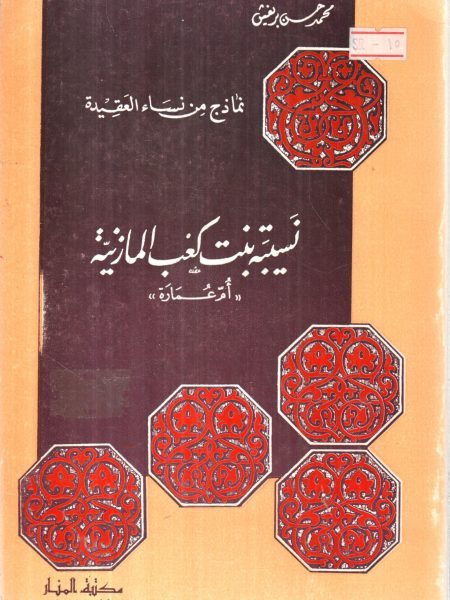
Author's name: Muhammad Hassan Brigesh
-
Number of pages: 104 pages
-
The subject of the book: Nusaybah bint Ka'b al-Maznia “Umm Amara”
About the author:
He was born in 1942 in the village of al-Tal, which is located on high hills about 15 kilometers north of Damascus. He comes from a poor, conservative family, so his eyes were opened while he “saw his father carving the rock to prepare it for construction, to support his children and provide them with the means of life.”.
In light of these difficult social conditions, he was forced to work since he was a student to help his poor father, but this did not push him to give up his studies or leave the companionship of the book, but rather these circumstances molded his personality and taught him many lessons of patience, endurance, cooperation, hope, and not being weak or lazy, especially since his father used to raise him and his siblings to seek knowledge, and show them that it is better than the way to follow positions and money, all of this and others shaped the personality of our writer. All this and more shaped the personality of our writer who lived for the Islamic idea and defended it with his pen, intellect and work until he passed away, and Mr. Bregesh is one of the founders of the International Islamic Literature League, which was headed by Sheikh Abul Hasan Al-Nadwi.
His scientific life
He then moved to Damascus University, where he obtained a bachelor's degree in Arabic language and a general diploma in education. He then entered the field of education and worked as a primary school teacher for a short time in Syria, before moving to Saudi Arabia in 1975, where he taught for a few years, after which he became an educational researcher at the Assistant Agency for Educational Development in the Curriculum Department of the General Presidency of Girls“ Education.
This development in the stages of study and teaching was accompanied by a development in Brigisch's scholarly personality, and one of the most notable and influential features of that personality.
In his autobiography, he talked about his father, who was passionate about reading even though he was denied access to education and certificates, and that he used to buy books from time to time and read many books with passion. He told that his father traveled, and when he returned from his travels, he gifted him and his brothers with heritage books. There is no doubt that his father's personality planted the first seed of love for science and reading, keenness on the book and attachment to it.
He read books on history, biographies of men and personalities, cultural and intellectual books, literature, philosophy, education and psychology, and read the great writers of the modern era, such as Al-Aqkad, Al-Rafi'i, Al-Maziny, Manfaluti and Sayyid Qutb, and was influenced by their styles and cultures. At this stage, he began to aspire to write and seek to produce, writing some topics and research, giving speeches to students and teachers, and writing about some modern-day writers, such as: Abu Al-Qasim Al-Shabi, Mahmoud Al-Aqkad, Ahmad Al-Rafi'i and Ahmad Al-Rafi'i: Abul Qasim al-Shabi, Mahmoud al-Aqkad, and Ahmad al-Rifai.
It is worth mentioning in the context of talking about the influences that interfered in the formation of Brigash's scientific personality that he chose to specialize in literature at the university level based on an unbridled desire, despite the fact that he excelled in the scientific division he studied at the secondary level: “You chose to study literature despite the scientific high school diploma you obtained with clear excellence, and the path of engineering was open to you, but in engineering there is no heart and love, while in literature, literature is poetry, poetry and poetry in prose...”.
This choice is evidence that literature was not a mere hobby and intellectual luxury for him, but a central concern that requires total dedication to giving and producing. He could have combined two or more disciplines, but he chose not to squander his energies and literary talent between literature and science, preferring to serve his nation through this avenue.
There is no doubt that the jobs he held had a great impact on building his scientific personality; his practice of teaching allowed him to come into contact with young people and prompted him to pay attention to issues of education, and one of the most prominent educational factors that attracted his attention was the kind and purposeful word that works in the mind and heart of a person and shapes his personality throughout his life.
He also devoted himself to research in this direction for a short period of time - when he held the position of an educational researcher at the Assistant Vice Deanship for Educational Development at the Curriculum Department of the General Presidency of Girls' Education in the Kingdom of Saudi Arabia - which made him more keen on values, morals and ethics in the life of the Muslim person in general and the writer in particular, and he did not write criticism or theorize without talking about this aspect, explaining its importance and role, and adhering to the function and mission of literature.
He died in Riyadh on July 19, 2003
Scientific books and works:
-
In contemporary Islamic literature, a study and application.
-
Islamic literature, its origins and characteristics.
-
Children's literature, its goals and characteristics.
-
In the contemporary Islamic story, a study and application.
-
Studies in Contemporary Islamic Storytelling with a review and study of a number of Dr. Al-Kilani's stories.
-
Mus'ab ibn 'Umayr, the mujahideen preacher.
-
Abu Basir is a pinnacle of Islamic pride.
-
Khalid ibn Saeed ibn al-'As, the mujahideen companion.
-
Nusaybah bint Saad al-Maznia (Umm Umara).
-
Asmaa bint Abu Bakr al-Siddiq, the daughter of Abu Bakr al-Siddiq.
-
Umm Ayman Baraka (the incubator of the Messenger of Allah, may Allah bless him and grant him peace).
-
Hammam and the cardiologist.
-
The little machine stopped.
-
Traveler.
-
Wax figurines.
-
Official talks.
-
A tree can only die standing up.
-
From the papers of Dr. Saad.
-
Vacation and estrangement.
-
Elder and leader.
-
Dream and snake.
-
Diwan Hashim al-Rifai: The Complete Works, compiled and edited.
-
From Modern Islamic Poetry, An Anthology.
The phenomenon of apostasy in Islamic society.
-
Muslim Women Preachers.
-
Women Preachers and the Muslim Family.
-
Awakening and the prospects of Islamic education.
-
Education and the future of the nation.
-
Toward an authentic Islamic approach.
-
Women's education in Saudi Arabia during a hundred years (a large encyclopedia of about a thousand pages).
He co-authored a number of textbooks, including: Dictation guide for primary school teachers - Reading and writing book for the first year of the literacy and adult education stage (two different versions: one for female students and the other for female teachers).
In addition to writing books, he has published dozens of articles and interviews, most of which focused on literary criticism, and some on proselytizing and educational issues, and participated in a number of international meetings on literature and other topics.
Also browse:
-
A special collection of books History