Description
Book description:
-
Preparation: A group of specialists
-
Supervision: Saleh bin Abdullah bin Hamid - Abdulrahman bin Muhammad bin Abdulrahman bin Malouh
-
Number of pages: 6982 pages
-
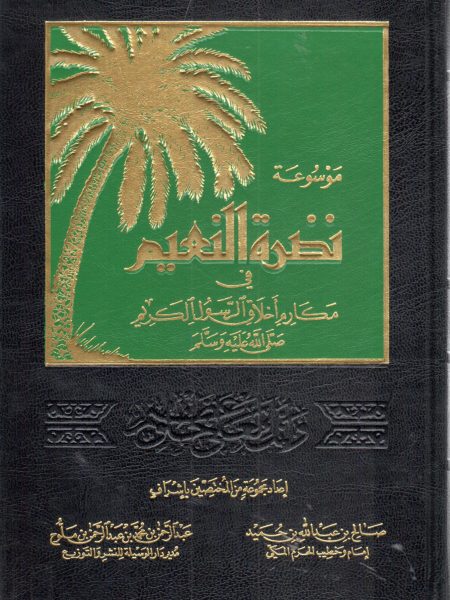
The subject of the book: The encyclopedia Nadrat al-Na'im on the morals of the Holy Prophet (PBUH).
The contents of the book:
[Introductions]
Encyclopedia of Heaven's Gaze
General supervision
Preparation Committee
Audit and Control Committee
Language, Proofreading and Cataloging Committee
Preparing a Prophetic Biography
Preparing a pedagogical introduction
Management and follow-up
Computer Programs
Collection and typesetting
Who was involved in the creation of this encyclopedia
Contents of the introduction
Encyclopedia contents
Introduction to the third edition
Publisher's introduction
The need for this encyclopedia
Encyclopedia Goals and Future Challenges
Suggestions and recommendations
Desired fruits
The Spirit of Hope and the Future
God's victory and the promise of truth
Acknowledgments
A tribute to His Excellency Dr.: Dr. Abdullah bin Abdul Mohsen al-Turki
Sheikh Abdullah bin Abdulrahman bin Abdullah al-Jabreen
Presented by Sheikh Dr. Saleh bin Abdullah bin Humaid
Purpose and goal
The building blocks of this encyclopedia's science and methodology
Conclusion
Linguistic Committee Introduction
Rich in faith ... and rich in the language of the Qur'an
The eloquence of the Prophet (peace be upon him)
Life and the Human Psyche by: Abdulrahman bin Mohammed bin Abdulrahman bin Malouh
Bootstrap
Man's Mandate and Testing
The relationship between man and life
Between Suffering and Good Manners
Ethics and Worship
Faith and morality
Worship and the light of nature
Seducing the devil
Sending messengers
Straight path
Suffering and the Straight Path
Human psyche
Self in language
Self in terminology
Psyche Talking Powers
Divisions of the human psyche
The qualities of the human psyche
I: The tranquil soul (the truth and signs of tranquility)
The peaceful soul and the joy of the heart
The perfection, bliss and pleasure of the heart (with tranquility)
Heart prostration
Vigilance is the first of the keys to goodness and is the origin of tranquility.
Awakening is the first home of the tranquil soul
II: Looming self
Third: The Wicked Self
The unsuspecting soul's spouse
The Wicked Self's Companion
The requirements of the peaceful self and the wicked self
The struggle between the wicked self and the peaceful self
Characteristics and Wonders of the Wicked Self
The virtue of invoking protection from the evil of the evil self and its consort
Know yourself
The Self and the Stages of Human Life
The relationship of the human psyche to the universe
The human psyche and its role in ethics
The Moral Role of the Tranquil Self
The Moral Role of the Inner Self
The Moral Role of the Looming Self
Suffering and moral values
[General Doors]
The life of faith in light of the relationship between testing and the human psyche
Chapter One: The Concept of Life Suffering
Worldly life is a language:
Worldly life is an idiom:
A description of the worldly life:
Other life:
The afterlife as described in the Quran:
Man's relationship with the afterlife:
The relationship between responsibility in this life and the next:
affliction and strife:
Scourge in terminology:
Strife is a language:
Sedition in terminology:
Types of strife:
The difference between temptation, trial, and test:
Chapter Two: Areas of Suffering Types Manifestations
We will address these various sections below:
I: Areas of affliction:
II: Types of affliction:
1 Taklifiya, by which we mean:
2 Personal affliction:
3 Social testing (people testing each other):
4 Collective or international affliction:
Third: Manifestations of the test:
1 Suffering from bad or evil:
2 Suffering from sins or bad deeds:
3 Suffering for good or bad:
4 Tested by obedience:
The test of commissioning and the test of temptation:
Chapter Three The Wisdom of Testing
First: The wisdom of being tested by bad or evil:
Strengthening faith in fate and destiny:
B Suffering is a bridge that leads to the fullest ends:
C Suffering is a means of empowerment in the land:
D To scrutinize the believer and rid him of impurities that are contrary to faith:
E. Deterrence and warning against vanity:
Mercy for the disobedient and relief for them on the Day of Judgment:
G. Establishing the argument of justice on the servants:
II: The wisdom of being afflicted with sins or transgressions:
The first: Repairing the slave's relationship with his Lord:
A repentance towards human perfection:
Praise, thanks and satisfaction:
c forgiveness:
D Charity, kindness and benevolence:
E. Realizing the meaning of the beautiful names:
To familiarize the servant with God's glory in His judgments and destiny:
Explain the servant's need for Allah's protection and help:
Help, invocation, and supplication:
I Tammam Al-Abdul:
God's compassion, generosity, and forgiveness:
Like repentance, love, and fleeing to God Almighty:
Humility and fear:
Second: Reforming the slave's relationship with himself:
A slave knows the truth about himself:
Take off the robe of pride and grandeur:
C Removal of confinement and distress:
D Realization of the slave's humanity:
E. Remorse and crying:
Third: Repairing the slave's relationship with others:
It teaches the slave to forgive, treat others well, and be satisfied with others:
Be humble with people and forgive their misdeeds:
Third: The wisdom of being tested for good or bad:
The story of Solomon's trial:
The story of Qarun's affliction:
Fourth: The wisdom of the test of obedience:
The story of Abraham's trial:
Chapter Four: The Educational Value of Suffering
Below, we will point out the most important educational fruits of the testing process.
1 Trial by experience:
2 Practice caution and vigilance:
3 Gain strength and courage in the face of enemies:
4 First-hand knowledge of psychological diseases and how to treat them:
5 Train and energize the mental powers to perform their tasks to the fullest:
A mindfulness:
B. Reflection, meditation and consideration:
C remembering:
6 Scrutinize and purify the heart:
Heart conditions that are strengthened by trials:
A fear:
B Fear of God:
c reverence:
D Raja:
E. Piety:
and straightening:
Heart diseases that are cured by affliction:
Purification of the heart:
Chapter Five A Muslim's approach to testing situations
First: Dealing with a Muslim who is afflicted with adversity:
1 Certainty and contentment:
2 Patience and calculation:
3 Self-accountability followed by repentance and forgiveness:
4 Straightforwardness and piety:
5 Prayer, supplication and reliance on God:
6 Psychologically preparing for the aftermath:
7 Serenity and tranquility:
II: Dealing with the afflicted Muslim:
1 The first step: A firm belief that this world and everything in it is ephemeral.
2 The second step is to praise and thank Allah for what He has bestowed upon him.
3 The third step: Paying God's right to this money.
4 Step Four: Commit to obedience, worship, and devotion to Allah.
5 Step Five: Staying away from those sins that are called royal sins
6 Step Six: Staying away from imitating Satan by committing Satanic sins
7 Step Seven: A Muslim should always remember that expansion in wealth or expansion in knowledge or body is nothing but a test for him from his Creator
Third: Dealing with Muslims afflicted with sins:
1 Modesty from God Almighty and chastity from His prohibitions:
2 Recalling the punishment (fear, apprehension, dread):
3 Take off immediately:
4 Forgiveness and repentance:
5 Confidence in Allah's mercy and forgiveness:
6 Jihad against Satan and making him an enemy:
7 Jihad and self-cultivation:
Fourth: Dealing with a Muslim afflicted with obedience:
Ethics and Educational Values in Islam
A preface:
Chapter One: The Concept of Ethics Its Originality in Islamic Thought Its functions
What manners?
Morality is a language:
Morality in terminology:
Ibn Taymiyyah's concept of morality:
Ibn al-Qayyim and the concept of morality:
Definitions of morality among modernists:
Islamic ethics:
The originality of moral thought among Muslims:
The development and richness of ethical thought among Muslims:
Early interests:
The school of rational thought:
A purely Islamic school:
Islamic values:
Values in language:
What are the values:
Characteristics of Islamic values:
Categorizing Islamic values:
Between morals and values:
Functions of ethical values:
A at the individual level:
B on a social level:
C at the level of international relations:
I. In a state of peace:
II: In case of war or litigation:
Chapter Two: Islamic Ethics: Its Nature, Sources, and Pillars
I: The nature of Islamic ethics:
In order to illustrate this, we offer two introductions.
First introduction: Islamic Ethics and Islamic Doctrine:
Introduction II: Islamic ethics and the principle of taklif:
Secondly, the pillars of moral action in Islam:
I: Moral obligation and its source:
(a) The first source: Koran
(b) Second source: Year:
(c) Third source: Consensus:
(d) The fourth source: Measurement:
II: moral responsibility:
The conditions of moral responsibility in Islam:
1 Information and statement:
2 Personal commitment:
3 Intention:
4 Freedom of choice:
III. The sanction:
(1) Moral sanction:
2 Legal sanction:
3 Divine Retribution:
1 Divine retribution in the urgent: That is, in the world.
Guidance:
God's satisfaction and love:
2 Divine retribution in the afterlife: (the afterlife):
And the bottom line:
Chapter Three: The Islamic Approach to Developing Ethical Values
First: Is morality acquired?
1 Moral growth and cognitive growth:
2 egalitarian social experience:
3 Independence from coercive adult authority:
A critical look:
II: Islam's approach to developing moral values:
Islam's approach to the formation of moral values is as follows:
Third: How to form ethical values:
1 Displaying ethical attitudes to draw attention to them:
2 An attitude of clear acceptance and reinforcing that acceptance:
3 The position of favoring moral value:
4 Value Commitment Position:
5 Clarity of ethical value organization:
6 Moral excellence and moral effectiveness:
7 The position of inviting others to commit to the value:
Chapter Four: Means of Developing Islamic Ethics
Introduction:
I: The concept of a pedagogical tool:
II: Terms of the medium:
Third: Means of developing Islamic values:
A worship:
Ordering good, forbidding evil, and recommending righteousness:
C Proverbs:
(d) Preaching and counseling:
E is an example:
1 Mind:
(2) Dreaming, tolerance, forgiveness when able, and patience when hated:
3 Generosity and generosity:
4 Courage and bravery:
5 Modesty and modesty:
Additional information
Additional information
Weight
12 kg
Dimensions
35 x 35 x 20 cm