Description
Book description:
-
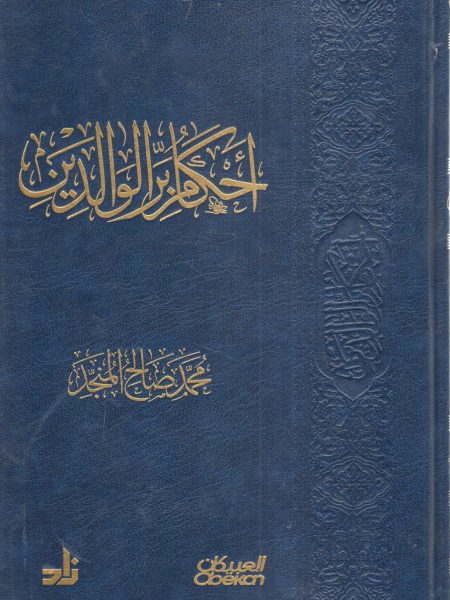
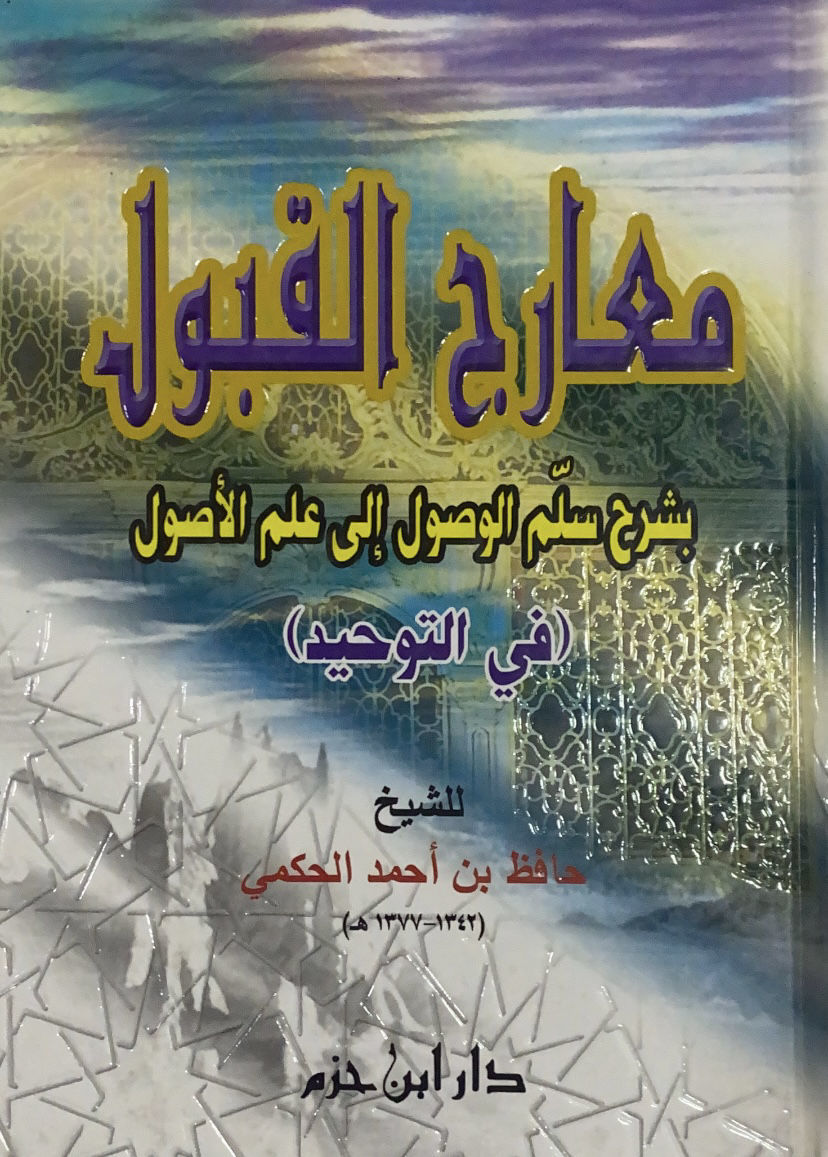
Author's name: Sheikh Hafez bin Ahmed Al-Hakami
-
Number of pages: 387 pages
-
The subject of the book: Maraj al-Qibl Commentary on the Ladder of Access to the Science of Fundamentals
The contents of the book:
-
Introduction (by the investigator)
-
Author's translation
-
Text of the access ladder system
-
(The sermon of the book in which Allah is praised by His beautiful names and attributes)
-
In that there is no goodness, happiness, or success except by knowing God Almighty and His monotheism
-
Different Islamic sects
-
Survivor band
-
The reason for organizing the text (Salam al-Aqsl) and composing the commentary (Maarij al-Qibl)
-
The bottom line on the interpretation of the bismillah
-
The saying about praising, thanking, and seeking help from God
-
Saying the word martyrdom
-
Saying the prayer and introducing the family and friends
-
Introducing the topic of the book
-
(Introduction): The slave knows what he was created for, and the first thing that Allah imposed on him
-
Worship is an umbrella name for everything that Allah loves and approves of.
-
Verse (And your Lord took from the sons of Adam from their backs their offspring and testified against themselves)
-
After this covenant that God made with humans, He sent messengers to them.
-
Tawhid is divided into two types: The first is Tawhid of knowledge and proof (the second type of Tawhid of intention and demand)
-
Mention of a debate between God's messengers and His enemies (And did you not see the one who argued with Abraham in his Lord?)
-
Another debate between Moses and Pharaoh (And Pharaoh said, "What is the Lord of the Worlds?)
-
What the Imams and others quoted in this section
-
God's Beautiful Names
-
God's names are not limited to the ninety-nine
-
The Names of God signify what they really are - conformity, implication, and obligation
-
God's names are uncreated
-
Meaning of the Hadith: Allah has ninety-nine names, and whoever memorizes them will enter Paradise.
-
Interpretation of the verse: "And shun those who blaspheme his names.
-
Proof of God's attributes as described by Himself and His Prophet
-
Proving God's Sovereignty
-
One without beginning, the other without end
-
The One and Only in His divinity, Godhead, names and attributes
-
The Almighty, who is omnipotent, omnipotent, and omniscient
-
The Eternal One with His Self, Names, and Attributes, the Samad, to whom creatures turn for help in their needs
-
Righteousness in word and deed, who dominates his servants by their deeds
-
The Most High and the Most Powerful
-
The one who has the highest and supreme status by the Book, the Sunnah, and the consensus of the angels, messengers, and their followers
-
His enthronement on the throne
-
The Qur'an's declaration of God's supremacy
-
The Qur'an and Sunnah state that God is in the sky
-
Declaring that some things are special to him
-
Lifting, ascending, and ascending to Him
-
Our Prophet's Miraj to the Sidrat al-Muntaha and to wherever Allah wills
-
Hadith: Our Lord descends every night to the lower heavens
-
Raising the hands and eyes to the Almighty in the hadiths of qunut, istisqa' and supplication
-
The Prophet (peace be upon him) pointed to the top in his Hajj al-Wada'a sermon with his finger and with his head
-
The texts on the mention of the throne, its description, its attribution to its creator, and that the Almighty is above it
-
Pharaoh's denial of Moses that his god is in the sky
-
Sayings of the Companions on the attribute of height
-
The statements of the followers and those after them from the Ahl al-Sunnah wa al-Jama'ah on the attribute of the Supreme
-
Abu Hanifa, Ibn Jurayj, Ozai and others
-
Another layer is Jarir ibn Abdul Hamid, Ibn Shaikh, Ahmad ibn Hanbal and their ilk
-
The class of Shafi'i, Ahmad, Al-Qaqanabi, and Muhammad ibn Mus'ab al-'Abed
-
The class of Muzanni, Muhammad ibn Yahya al-Dhahli, and Imam Bukhari
-
The class of Zakaria ibn Yahya al-Saji, Hammad al-Bushanji, and Ibn Khuzaymah
-
Another class of Imams of Islam and Sunni scholars
-
Nasr al-Maqdisi's Tabaqat Nasr al-Maqdisi, Abdul Qadir al-Jilani in Kitab al-Ghunya, and Qurtubi
-
Proximity and proximity do not negate superiority
-
The Qayyum is Qayyum by itself, Qayyum for others, and all things are dependent on it
-
The Almighty's uniqueness in will and volition
-
The meaning of the verse is: Whoever Allah wills, He wills to lead him astray, and whoever wills, He wills to set him on a straight path.
-
What Allah obliges His servants to praise Him for His wisdom in His creation and command
-
Reconciling the fact that God does not necessitate corruption with the fact that it is His will
-
Why didn't he make them all obedient and guided? What is the wisdom of estimating bad deeds when God hates them?
-
Proving God's Sight and Hearing
-
Talking about divine knowledge
-
God is self-sufficient, and everything else is dependent on Him
-
God's words
-
God speaking to His servant and messenger Moses ibn Imran
-
Divine speech is beyond counting, enumerating, and mortality
-
God's words in His wise book are the same as His words, not created and not an anecdote about His words.
-
The Origin of the Creation of the Qur'an
-
What the Sunni Imams said about the Qur'an and the judgment of the Jahmiyyah
-
The verbalists are Jahmiyyah, those who say: "My verbalization of the Qur'an is created.
-
Back to the Hadith al-Nuzul
-
Verse: Are they waiting for Allah to come to them in a shade of clouds?
-
Believers seeing their Lord on the Day of Resurrection The increase in the verse "For those who have done well, there is good and increase.
-
is looking at the face of God.
-
The tradition of the companions of the Messenger of Allah (peace and blessings of Allah be upon him) in this chapter
-
What the followers said about it
-
The sayings of the four imams, their classes, and their sheikhs
-
You must believe in the attributes in the Qur'an and pass them on as you are
-
It is obligatory to believe in the attributes contained in the Sahih al-Sunnah and pass them on as you are
-
Avoiding misrepresentation, disruption, characterization, and representation
-
The people of tawheel abandon a thousand evidences and cling to what is attributed to Al-Akhtal, a Christian, on the equilibrium
-
This type of monotheism is the Tawhid of Proof
-
The latecomers' increase in the number of adjectives and the fact that they are not intended
-
There are five sects in the unification of knowledge and proof: The first is a negative one that proves something that is the same as negation
-
The second sect is the Halulites, who claim that their idol is everywhere by itself. .
-
The third sect, the Federalists, who say that all existence is God
-
The fourth sect is the deniers of fate, and they are two groups
-
The fifth sect is the Jabariyyah, who believe that proving the act of the slave is the same as polytheism.
-
There are seven sects who disagree with Ahl al-Sunnah on the Qur'an:
-
The first is the Federalists, who say that every word in existence is the word of God, even cursing and swearing
-
The second (philosophers), followers of Aristotle, say: God's words are an overflow from the active mind
-
The third (Jahmiyyah) are the deniers of attributes who say: God's words are created
-
The fourth (Kalabiya) say: The Qur'an is a self-contained meaning that is not related to ability and will
-
Fifth, the Ash'ariyah say: It is a single meaning that exists within God
-
Note that Ash'ari is different from al-Ash'ari, and that al-Ash'ari returned to the doctrine of the Salaf
-
The sixth (Karamiyyah) say: It is related to the will and occurs after it was not
-
Seventh (The Salafis say: It is an old attribute that is not related to ability, will, etc.
-
The origin of the dispute between the sects is whether God speaks with or without his will
Also browse:
-
A special collection of books Beliefs and Worship