Description
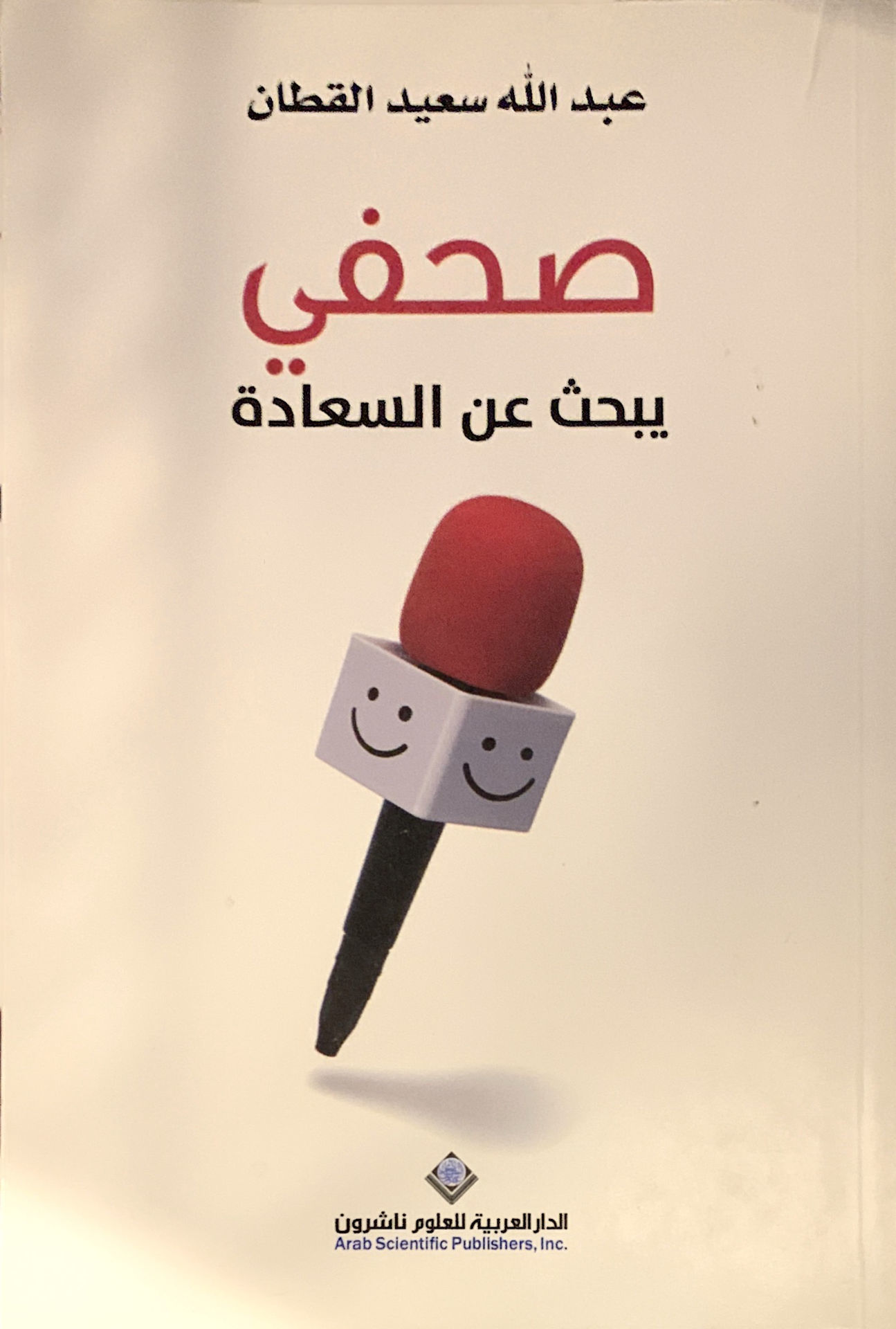
The search for happiness may seem unattainable for many people, let alone a journalist looking for happiness, a profession that everyone agrees is a profession of trouble; therefore, Abdullah Saeed Al-Qattan's stories in this book give the intrinsic value of the profession of journalism, especially since they refer to a current time in their carrier. By working the news in a narrative and loading it with social and living issues, the writer/journalist here has removed the boundaries between journalism and other arts, and sought to present a distinct creative act through a new technique in presentation that seems surprising to us.
- Abdullah Saeed Al-Qattan says of his book: “...life for me is a road that I like to know the experiences of those who have passed through it. And I have allowed Journalism, or the profession of searching for hardships, as it is called, has allowed me to attend many seminars and conferences and meet many personalities inside prisons and orphanages; as well as psychiatric patients, terrorists, businessmen, ambassadors, officials, clerics and artists, and ask them questions about how they have overcome difficulties in life or how they live happily despite what they have been through.
I wrote this book to convey to you what I concluded from their sayings, stories and experiences that may be fuel for you on the path of life, and advice has become more precious than a camel and is the shadow of a shrewd person.
You may read stories that say: Why didn't the journalist mention it in his newspaper with pictures? The answer is that the person who made the statement may have refused the statement or did not say it directly, and according to the established journalistic policy, some newspapers refuse to publish a statement without mentioning the person who made it.”.
- In this book, the reader gets to know the profession of the journalist closely, and how he rejects any authority over the pen, and goes to the limit of his possibilities, to present a text (article) that is intellectually and cognitively different from the mainstream, familiar and stereotypical in issues related to the human being, the homeland and the future. Al-Qattan's articles reflected his conscious freedom in writing, his ability to capture the ills, through the participation of the narrator in the act of narration, and the journalist containing an important part of the event at the same time, and finally how the work can be positively influential in the recipient's mind.