Description
Book description:
-
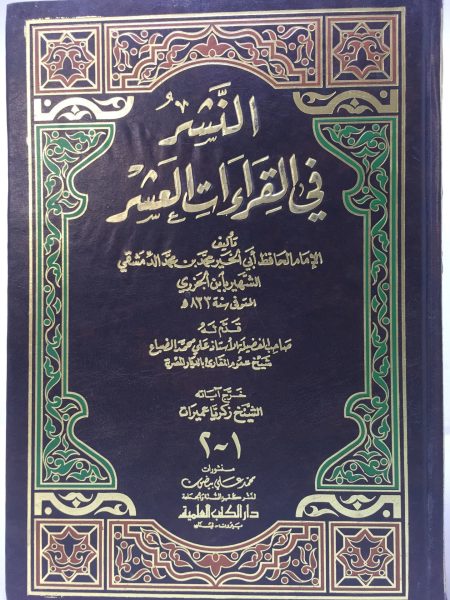
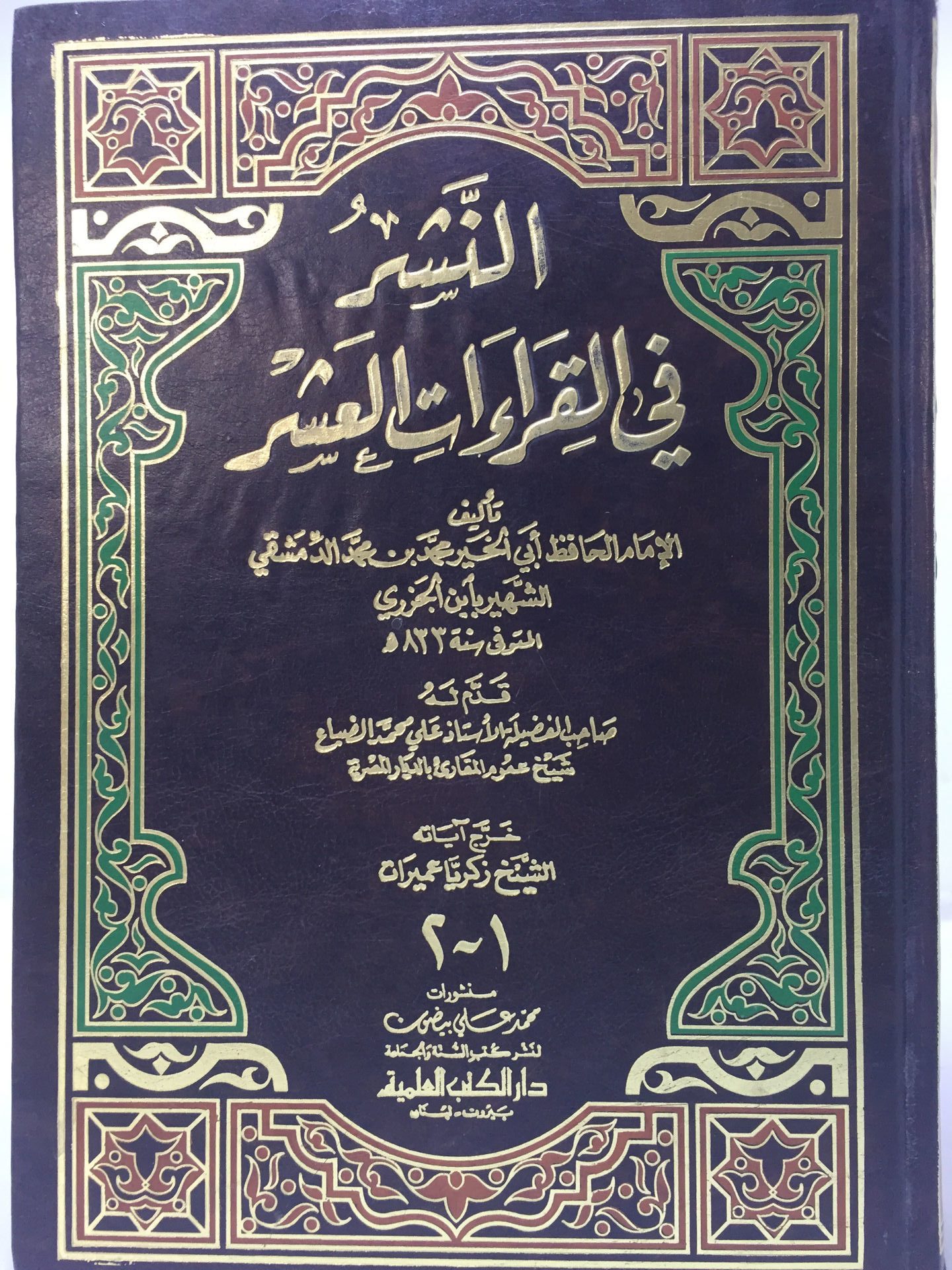
The name of the author: Imam Abu al-Khair Muhammad ibn Muhammad al-Damascene, known as Ibn al-Jawzi
-
عدد الصفحات: 972 صفحة
-
موضوع الكتاب: يتناول الكتاب النشر في القراءات العشر
The contents of the book:
First part
-
The virtues of Quran holders
-
The Almighty guarantees the preservation of his book
-
Relying on memorization to transmit the Qur'an
-
The Companions of the Prophet and others from whom some of the aspects of reading were transmitted
-
Collecting the Qur'an
-
Uthman's writing of the Qur'an
-
Countries to which the Qur'an was sent
-
The names of those who were famous for reading in the cities and who were in Madinah, Mecca, Kufa, Basra, and the Levant.
-
Pillars of Correct Reading
-
The drawing of the Qur'an is a great honor for the Companions (may Allah be pleased with them)
-
Shafi'i's words in describing the Companions (may Allah be pleased with them)
-
Makki's words on what is and is not acceptable from the Qur'an
-
Anomalous reading
-
Ruling on praying with anomalous reading
-
Imam Abu Hanifa's reading and the book attributed to him
-
The incident of a man who went against the consensus
-
Fabrication by reading
-
Talking about the Hadith: The Qur'an was revealed on seven letters
-
Al-Qasim ibn Salam stipulated that this hadith is recurrent
-
This hadith can be summarized in ten ways
-
The first is why it is written on seven letters
-
Scholars disagree on the permissibility of reading the Qur'an in non-Arabic languages
-
Words by Ibn Qutaiba
-
Second on the Meaning of the Seven Characters
-
The third is the meaning of these seven
-
The first to collect the seven readings
-
Why the Qur'an is on seven letters
-
There are seven ways in which readings differ
-
Abu al-Fadl al-Razi's take on it
-
Ibn Qutaiba's take on it
-
What is the difference between these seven
-
Reading Saad ibn Abi Waqqas: He has a brother or sister from a mother and the doctrines of the jurists on this issue
-
How many meanings do these seven letters have?
-
Are these seven letters scattered throughout the Quran or not?
-
The Ottoman Qur'an includes the seven characters
-
Why the Companions Stripped the Quran of Dots and Shapes
-
Are the readings that are read today in Egypt all seven letters of the alphabet?
-
The first to collect the readings in the book of Al-Qasim ibn Salam
-
The first to introduce the Qur'an to Andalusia
-
Names of those who are known for their prolificity in collecting readings
-
The error of those who think that the seven letters are in Shatbya and Taysir
-
Makki's words on this and the reading of Abu Jaafar and Yaqoub
-
Abu Amr al-Dani's words
-
The words of Abul Qasim al-Hazali
-
The words of Abu Bakr Ibn al-Arabi
-
Al-Baghawi's explanation
-
The words of Abul Alaa al-Hamdani
-
A fatwa by Ibn al-Salah on this
-
The incident of Abu Muhammad Abdullah bin Abdulmumin al-Wasiti
-
Answer by Shaykh al-Islam Ahmad ibn Taymiyyah
-
The Ibn Shanboudh incident
-
Answer by Abu Hayyan of the Tafsir
-
Abu Jaafar Sahib
-
Narrators of Abu Amr
-
Yazidi novelists
-
League narrators
-
The words of Al-Hafiz Al-Dhahabi
-
The words of Abul Fadl Abdulrahman bin Ahmed al-Razi
-
The words of Abul Abbas Ahmad bin Yusuf al-Kawashi
-
The words of Abulhasan Ali ibn Abdulkafi al-Subki
-
The Truth and Usefulness of the Seven-Character Difference
-
including the end of rhetoric
-
52 including maximizing the rewards of this Ummah
-
Answer by Sheikh Abdul Wahab Al-Subki, author of Gama'a Al-Jawamea
-
A fatwa for him as well
-
Ismail bin Ibrahim al-Qarab
-
Readings other than the seven in Surat al-Fatiha
-
Al-Rawda by Abu Ali Al-Maliki
-
Abul Hussein al-Farisi's Book of the Whole
-
Ibn al-Faham's book of abstraction
-
Ibn al-Faham's Jacob's Singularity
-
Summarizing for Abu Muasher
-
Kindergarten for the rate
-
Advertising for bile
-
Guidance for Ibn Ghalboun
-
Brief for Ahwazi
-
The Seven by Ibn Mujahid
-
Ibn Suwar's Enlightened
-
Al-Mabhaj by Sabt Al-Khayyat
-
Summarize him
-
The student's will for it
-
The beginner's insight for him
-
Abu Ali al-Khayyat's Al-Muhtahhabib
-
Ibn Faris's Al-Jami'ah
-
Tazkar by Ibn Shaita
-
Al-Mufid by Abu Nasr al-Baghdadi
-
Al-Kifaya by Sibt Al-Khayyat
-
Ibn Khairun's Al-Muwtahid and Al-Muftah
-
Guidance for Abu Al-Ezz Al-Qalansi
-
His grand sufficiency is also
-
Abul Alaa Al-Hamdani's Ultimate Abbreviation
-
Persuasion by Ibn al-Badash
-
Ibn Kathir's reading from Qunbul's narration from Ibn Mujahid
-
Reciting Ibn Kathir from Qunbul's narration by Ibn Shanboudh
-
Abu Amr's reading from al-Douri's narration by Abu al-Za'raa
-
Abu Amr's reading from al-Douri's narration from Ibn Farah
-
Abu Amr's reading from Al-Susi's narration from Ibn Jarir
-
Abu Amr's reading from Al-Susi's narration from Ibn Jumhur
-
Ibn 'Amer's reading from Hisham's narration by way of al-Halwani
-
Ibn 'Amer's reading from Hisham's narration by way of al-Dajouni
-
Ibn Amer's reading from the narration of Ibn Zakwan by way of Al-Akhfesh
-
Reading Ibn Amer from the narration of Ibn Zakwan by way of al-Suri
-
Asim's reading from Sha'aba's narration by Yahya
-
Asim's reading from Sha'aba's narration from Al-Alimi
-
Asim reading from the narration of Hafs by Ubayd ibn al-Sabah
-
Asim reading from the narration of Hafs by Amr ibn al-Sabah
-
Hamza's reading from Khalaf's narration via Idris
-
Hamza's reading from Khalaf's narration from Ibn Shazan
-
Ibn al-Haytham's route from Khallad
-
Al-Wazzan Road for Khalad
-
Tahi's path to Khalad
-
Kisa'i reading from Abu al-Harith's narration by Muhammad ibn Yahya
-
Al-Kasa'i's reading from Abu Al-Harith's version of Selma
-
Al-Kasa'i's reading from al-Douri's narration by Jaafar
-
Al-Kasa'i reading from the narration of al-Douri by Abu Othman al-Dhareer
-
Abu Ja'far reading from Ibn Wardan's narration by al-Fadl
-
Abu Jaafar reading from the narration of Ibn Jammaz by al-Hashimi
-
Vowel, spirit, middle, soft vowel, hard vowel, and independent vowel
-
Rising, Opening, and Declining Letters
-
Tides, hidden letters, soft, soft, deviation, and repeated letters
-
Outbreak and elongation letters
-
How to read the Quran
-
Reading by investigation
-
The verses related to the reading of the investigation
-
Reading with slope, rotation and chanting
-
The verses quoted in the Tafsir: And recite the Qur'an in order
-
Is it better to read slowly or quickly?
-
The serialized hadith: "Recite the Qur'an and decorate it with the best voices.
-
intonation
-
Tajweed is the ornament of recitation and the adornment of reading
-
Strange incident
-
What letters have in common and how they differ from each other
-
The correct law to refer to in the pronunciation of each letter and how to pronounce it correctly.
-
Hadith : I am the most articulate person who ever spoke
-
Consonant Meme Rulings
-
Concealment, concealment, and unconcealment
-
Stop and start
-
Endowment sections
-
Full stop
-
Sufficient endowment
-
Latecomers differ on what is meant by concealment
-
Explanation of where to ask for help
-
Explaining the meaning of the invocation
-
Stopping on the invocation
-
Ruling on the desirability and obligation of invocation
-
The public desirability of invocation outside and inside the prayer and the doctrines of the jurists
-
Chapter on their difference in the Bismillah
-
The first chapter of the basmalah and its discourse in the first chapter between the two suras
-
The second is the choice of housing for those who arrived in Al-Zahr
-
The third is the consensus on the bismillah at the beginning of every surah if the innocent begins with it
-
Fourth is the ruling on the bismillah in Bara'ah
-
Fifth, the rule of bismillah in the middle of the suras
-
Sixth, her judgment amidst innocence
-
Seventh The faces that come in the bismillah between the two surahs
-
Notes on Bismillah Rulings
-
Surah Umm al-Quran
-
A discussion on joining and breaking the singular and plural pronouns
-
A discussion on the relevance and irrelevance of the plural meme
-
Bab al-Imgham al-Kabir and the similarities
-
The conditions and contraindications of large mugham
-
Recall the convergent ones
-
Chapter on the Permissibility of Rum and Ichmam in Imdham
-
A reminder of the correctness and incorrectness of the letter before the merged letter
-
The second is that the money before immersion is tilted with it
-
The third is the complete incorporation of qaf into kaf
-
Demonstration of the softening of the letter L for blue
-
A statement of rules on the weakest and strongest causes of stretching, including issues
-
The first is in the statement that there is no entrance to and
-
Second: Hamza and Hisham's stopping on the bad side
-
Third on the insertion and substitution of the two hummus
-
The fourth is the difference between Nesta'een and Eight at the beginning
-
Fifth on changing the cause, maintaining the effect, and not changing the effect
-
A reminder about the reading faces in the changed hummazes for those who have changed their transitions, deletions, or simplifications
-
The sixth is to work with the stronger of the two causes
-
Chapter on the two letters of a word
-
Narrated by the insertion between the two letters of a word, which is the separation
-
Examination of the different types of interrogative and informative questions
-
Examination of the question of whether the second is broken, including what is agreed upon and what is disagreed upon
-
A discussion of what happens when two interrogatives are repeated
-
A discussion of what is agreed upon and what is disagreed upon
-
A discussion on whether the second is an open hamza, including what is different and what is agreed upon
-
A discussion on whether the second one is broken, including what is different and what is agreed upon
-
Imams
-
Chapter on Two-Word Hams from Two Words - First Strike - Mutually Agreeing
-
The second variation is different
-
Alerts on which of the two hummuzahs was replaced by Abu Amr and his associates, and Azraq's doctrine on what he replaced it with and without
-
The first consonant's single first beat
-
Moving Second Multiplication
-
Cautions on the Single Hummingbird
-
The chapter on moving the hamza to the consonant before it
-
Notes on the origin of al, why it was moved to it, and how to start with it at Warsh
-
The chapter on silence on the consonant before the Hams and others
-
Who agreed with Hamza on the silence
-
Notes on what can and cannot be done with silence
-
Chapter on Hamza and Hisham stopping the Hams
-
The Vowel Hams
-
Akhfesh's doctrine in the form of question and answer
-
A discussion of formal mitigation, including the non-standard form of the hummus
-
Cautions on stopping with romanization and exhalation with lightening
-
Ruling on stretching with lightening
-
Conclusion on issues of what works and what doesn't in extreme and average plus faces
-
Issues of what works and what doesn't in the average
Second part
-
Bab al-Idham al-Kabir
-
Chapter : Y: if
-
Chapter D : may
-
Feminine T Separation
-
Separate L : Do and Bill
-
Door of letters with shortened exits
-
The first letter is the consonant at the F
-
Second: He tortures whomever he pleases
Third Ride with us
-
Fourth: Blow them up
-
Fifth : Consonant R at the L
-
Sixth: Consonant L in the Thal
-
Seventh: The D at the W
-
VIII: The "N" in "Y
-
IX: The D in T if the D is preceded by an I
-
Tenth: The D in the T. I discarded it
-
Eleventh dal in ta'ala in: I took refuge in my Lord
-
Twelfth W in T in: You stayed
-
Thirteenth, the "W" in the "T" as well.
-
Fourteenth D in the D from R Male
-
Fifteenth Nun in the Waw of Yus and the Qur'an
-
Sixteenth N in the F of N and Pen
-
Seventeenth Nun at the Mim of Tasim
-
A reminder that homophones and heterophones must be merged
Chapter on Consonant Nouns and Tanween
-
Showing
-
Muffling
-
Heart
-
Concealment
-
Letter brushes
-
Surat al-Baqarah
-
Surah Al Imran
-
Surat al-Nisa
-
Surat al-Ma'idah
-
Surat al-An'am
-
Surat al-Araf
-
Surat al-Anfal
-
Surat al-Tawbah
-
Surat Yunus
-
Surat Hod
-
Surat Yusuf
-
Surat al-Ra'ad
-
Surat Ibrahim
-
Surat al-Hajar
-
Surat al-Nahl
-
Surat al-Isra
-
Surat al-Kahf
-
Surat Maryam
-
Surat Taha
-
Surat al-Anbiya
-
Surat al-Hajj
-
Surat al-Mu'minoon
-
Surat al-Nur
-
Surat al-Furqan
-
Surat al-Shu'araa
-
Surat al-Naml
-
Surat al-Taqsir
-
Surah Spider
-
Surat al-Rum
-
Surat Luqman
-
Surat al-Sajda
-
Surat al-Ahzab
-
Surat Sheba
-
Surat Fater
-
Surat Yus
-
Surat al-Safat
-
Surat R
-
Surat al-Zamar
-
Surat Gafer
-
Surat Faslat
-
Surat al-Shura
-
Surat al-Zukhraf
-
Surat al-Dukhan
-
Surat al-Jathiya
-
Surat al-Ahqaf
-
Surah Muhammad
-
Surat al-Fatah
-
Surat al-Hijrat
-
Surat Q
-
Surat al-Dhariyat
-
Surat al-Tur
-
Surat al-Najm
-
Surat al-Qamar
-
Surat al-Rahman
-
Surat al-Raqiya
-
Surat al-Hadid
-
Surat al-Mujadala
-
Surat al-Hashar
-
Surat al-Muttenah
-
Surat al-Saf
-
Surat al-Jumu'ah
-
Surat al-Munafiqun
-
Surat al-Taghabin
-
Surat al-Talaq
-
Surat al-Tahrim
-
Surat al-Malik
-
Surat al-Qalam
-
Surat Al-Haqqa
-
Surat al-Ma'raj
-
Surah Noah
-
Surat al-Jinn
-
Surat al-Muzammil
-