Description
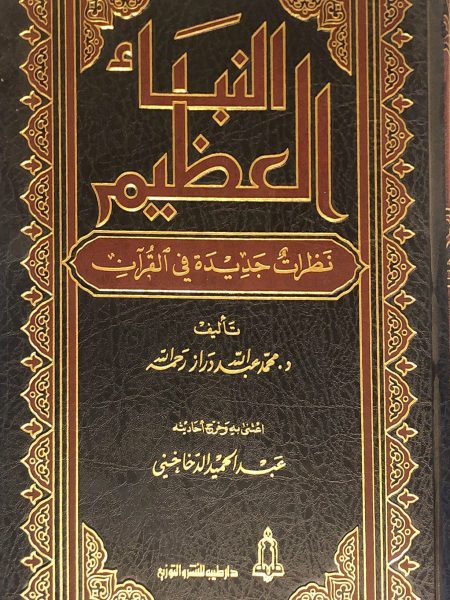
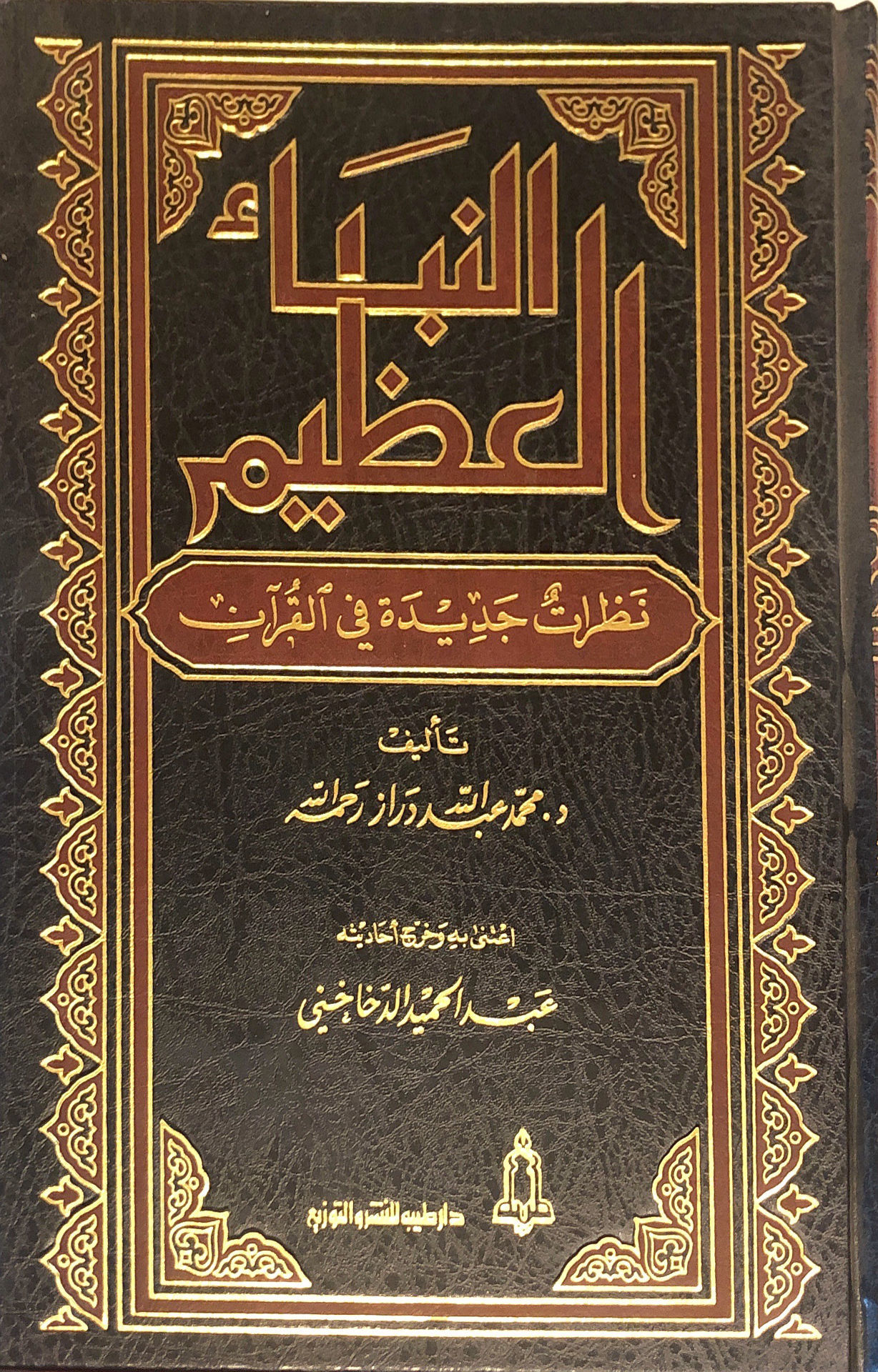
Book description:
-
Author's name: Mohammed Abdullah Draz
-
Number of pages: 211 pages
-
The subject of the book: The book deals with the source and identification of the Qur'an
The contents of the book:
-
Submission of publication
-
About the author's life
-
Authoring introduction
-
First research: Defining the Qur'an
-
The linguistic and etymological meaning of the words: «Quran» and "book
-
The secret to naming both names
-
Why the Qur'an is timeless and not corrupted, unlike previous books
-
Can the Quran be logically defined?
-
Elements of the popular definition of the Quran
-
The distinction between the Qur'an and the Hadiths: Revelation and ijtihad, revelation of text and revelation of meaning
-
Second research: On the source of the Qur'an
-
Bootstrap
-
Defining the claim based on the Qur'anic texts
-
Muhammad's disavowal of the attribution of the Qur'an to him is not a claim that needs to be proven, but rather a statement that is taken at face value.
-
Muhammad's attribution of the Qur'an to God cannot be a ploy to extend his influence over the world; otherwise, why didn't he attribute all of his words to God?
-
However, his sanitized biography before and after the prophethood rejects the imperfection of deceit and deception, as it is all accurate and strict honesty, complete and comprehensive purity, and complete submission to the authority of the Qur'an.
-
Part of his biography against the Qur'an
-
The period of revelation in the Al-Afk incident
-
The Qur'an violates the Prophet's temperament and severely chastises him on permissible matters
-
A Psychological Inference on the Separation of the Personality of the Revelation and the Personality of the Prophet
-
The Prophet's attitude toward the Qur'anic text is that of an exegete, who seeks the connotations of the phrases and takes the most favorable possibilities
-
The Prophet sometimes paused in his understanding of the meaning of the text until the statement came to him
-
Examples: His position on the issue of accounting for intentions
-
The meaning of the word "then" in Almighty God: "Then it is up to us to explain it.
-
His conduct in the Hudaybiyyah case
-
His approach to how he receives the text, his first exposure to revelation
-
Part of his general biography
-
Disavows the unseen
-
He doesn't show the opposite of what he's doing
-
He doesn't know what his luck will be with God
-
The study of the nature of souls in the biographies of their owners
-
The first stage: From the search
-
Demonstrating that the Qur'an cannot be a self-inspired revelation from Muhammad's psyche
-
The nature of Quranic meanings is not something that can be realized by intelligence and intuition: News of the past can only be accessed by learning and study
-
Unseen religious truths are beyond the reach of reason
-
Future news may be deduced by speculative analogy, but there is no way to know for sure except by true revelation.
-
Examples of Quranic Prophecies
-
Regarding the future of Islam, its book, and its messenger
-
Regarding the future of believers
-
Regarding the future of the recalcitrant
-
Phase Two: From the research
-
Explain that Muhammad must have received the Qur'an from a teacher, and search the human community for that teacher
-
Find it among the curators: Ignorance is not a source of knowledge
-
Searching for it among scholars
-
Muhammad's attitude toward scholars is one of correcting what they have distorted, revealing what they have concealed
-
Whoever claims to have a human teacher, let him name him
-
If the circle of seriousness is too narrow for him, he can't afford to tell jokes, and it is better for him to be silent than to speak
-
The perplexity and confusion of disputants in ancient and modern arguments
-
The theory of psychic revelation is not new
-
The third stage: From the search
-
Researching the circumstances of the revelation and the source of the Qur'an
-
The Phenomenon of Revelation and Analyzing Its Symptoms
-
A review of what science has revealed in current times
-
Fourth stage: From the search
-
Searching the essence of the Qur'an itself for the truth of its source
-
The nature of the Qur'an: The limits of human ability, the unity of miracles
-
The three aspects of miraculousness:
-
Linguistic miracle
-
Scientific miracle
-
Legislative miracle
-
The Quran is a linguistic miracle
-
Investigating possible doubts about this case, in order to erase them one by one
-
(The first doubt is that of a young person who fancies the ability to imitate the Qur'an
-
(The second doubt is that of a humble literary figure who attributes this ability to other stallions
-
(Third argument) The argument that the Arabs' lack of opposition to the style of the Qur'an may have been due to their preoccupation rather than their inability
-
(The fourth argument is that if the Qur'an is miraculous, it is not miraculous in its linguistic aspect because it did not depart from the Arabic language in its vocabulary or in the rules of its syntax
-
(The fifth argument is that the inability of people to match the style of the Qur'an is not a characteristic of the Qur'an, because the style of each speaker is the image of himself and his temperament, so no one else can replace him.
-
Moving from clearing the doubt to healing the grievances by revealing aspects of the miraculous secrets
-
Two looks at the surface veneer of the Qur'an:
-
Signature beauty in the distribution of his movements, gestures, durations and songs
-
The harmonic beauty in the alignment of its letters and the composition of different combinations
-
Considerations on the essence of the Qur'anic statement and its characteristics that distinguish it from other speech, whether in a paragraph dealing with a single issue, in a sura dealing with various issues, between one sura and another, or in the Qur'an as a whole
-
The Quran, paragraph by paragraph
-
The style of the Qur'an is the meeting place of the ends of graphical virtue, however far apart they may be
-
Intentionality in speech and fulfillment of meaning
-
Public Speech, Private Speech
-
Convincing the mind, refusing the conscience
-
Statement and summarization
-
Application to a verse
-
The Qur'an is succinct throughout, both in its outlines and in its details
-
New division of speech metrics
-
The Qur'an has no interjected words or extra letters
-
The Secret of the Increased Kaf in Almighty God: "There is nothing like him
-
Brevity by omission with clarity and fluency
-
Example
-
Another example
-
The Qur'an in Surah Surah: (Unity in Multiplicity)
-
It is more difficult to move from one meaning to another than it is to move between parts of the same meaning
-
Gathering hadiths with different meanings, different times, and different circumstances into one continuous hadith is a sign of disjointedness and brevity, and a sign of paradox and disparity
-
The great human dilemma of figuring out the position of each part of a compound before the parts are complete and even before the nature of those parts is known
-
Examples in various industries
-
The combination of all these reasons in each surah, without compromising its unity and order, is truly a miracle of miracles
-
Rational Politics in the Study of the Qur'anic Pattern
-
A sample of this study in the longest sura of the Qur'an: The system of meaning nodes in Surah al-Baqarah, in sum and in detail
Also browse:
-
A special collection of books The Holy Quran and its sciences