Description
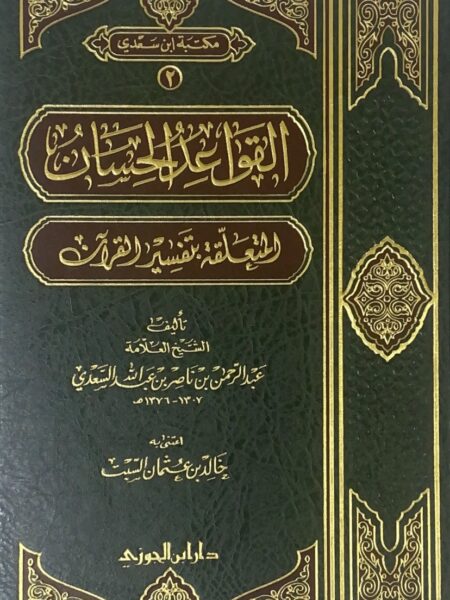
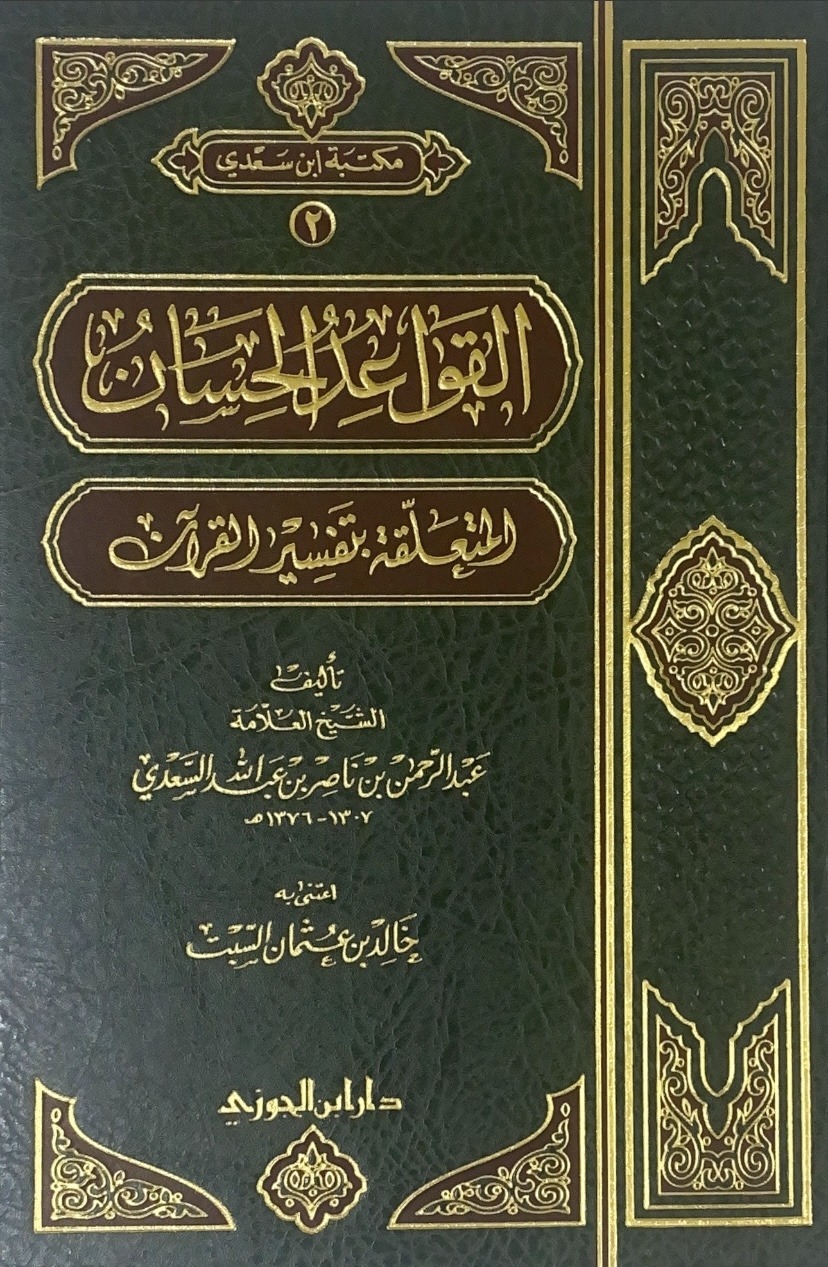
Abd al-Rahman bin Nasser al-Saadi said: “I know that the science of tafsir is the most important of all sciences, the best, the most obligatory, and the most beloved to Allah, because Allah has commanded the study of His Book, contemplation of its meanings, and guidance by its verses, and has praised those who do so, made them in the highest ranks, and promised them the highest talents, if a slave spends the jewels of his life in this art. If a slave spends the jewels of his life in this art, it would not be much in comparison to what is the best demands, the greatest goals, the origin of all assets, and the basis of happiness in both worlds and the righteousness of the affairs of religion, the world and the hereafter.
Book description:
-
Author: Abu Abdullah Abdulrahman bin Nasser bin Abdullah bin Nasser bin Hamad Al Saadi
-
Number of pages: 176 pages
-
The subject of the book: Jurisprudence
The contents of the book:
The book contains seventy-one rules for interpreting the Qur'an:
-
Introduction
-
The first rule: How to Receive Interpretation
-
Rule Two: The general meaning of words, not specific causes
-
Third rule: A and L in descriptions and names of genders are inclusive depending on what they are applied to
-
Rule four: If a nobody is in the context of negation, prohibition, condition, or interrogation, it implies generality
-
Rule five: It is established that the genitive singular is as general as the plural noun
-
The sixth rule: The Qur'an's method of establishing monotheism and negating its opposites
-
Seventh rule: The Qur'an's method of establishing Muhammad's prophethood
-
The eighth rule: The Qur'an's method of establishing the resurrection
-
The ninth rule: The Qur'an's method of commanding believers and addressing them with legal rulings
-
Tenth rule: The Qur'an's methods of inviting infidels of different faiths
-
Rule Eleven: Consideration of implication, conformity and obligation
-
Rule Twelve: Qur'anic verses that are understood by the short-sighted to be contradictory:
-
Rule Thirteen: The Qur'an's method of arguing with people of false religions
-
Rule XIV: Omission of the operative subject: It generalizes the appropriate meaning
-
Rule fifteen: God made the reasons for high demands as omens to reassure hearts and increase faith
-
Rule Sixteen: The omission of the conditional answer indicates the magnitude and severity of the matter in cases of threat
-
The seventeenth rule: Some names in the Qur'an, if singled out, indicate the meaning appropriate to them, and if paired with others, they indicate some of the meaning, and what they are paired with indicates the rest.
-
Rule Eighteen: Guidance and misdirection are free and restricted
-
Rule Nineteen: Hassanah Names at the conclusion of verses
-
Twentieth rule: The Qur'an is all wise in one sense, all similar in another, and some of it is wise and some of it is similar in a third sense
-
Rule XXI: The Qur'an is consistent with time and circumstance in its guidance in its rulings that refer to customs and habits
-
Rule XXII: On the purposes of Quranic examples
-
Rule Twenty-Three: The Qur'an's guidance is of two types
-
Rule XXIV: Moderation and moderation and the prohibition of exaggeration
-
Rule twenty-five: God's borders are commanded to be preserved and forbidden to be transgressed and sacrificed
-
Rule XXVI: Judgments in Restricted Verses
-
Rule twenty-seven: The precautions in the Qur'an occur in all places where they are most needed
-
Rule twenty-eight: In mentioning the comprehensive descriptions of the believer
-
Rule twenty-nine: On the benefits that the servant reaps from his knowledge and understanding of the different types of Qur'anic sciences
-
Thirtieth rule: The Pillars of Belief in the Beautiful Names
-
Rule XXXI: The Godhead of Allah in the Qur'an is of two types: general and special
-
Rule XXXII: The command to do something is a prohibition against its opposite
-
Rule Thirty-Three: Disease in the Qur'an The disease of the heart is of two types: The disease of doubts and suspicions, and the disease of desires and prohibitions
-
Thirty-fourth rule: The Qur'an indicates in several verses that whoever leaves what benefits him when he can, is afflicted with a preoccupation with what harms him, and the first thing is forbidden
-
Rule XXXV: Presenting the highest good and the least bad
-
Rule XXXVI: Meeting the aggressor with the same aggression
-
Rule XXXVII: Consideration of Intentions in Arranging Rulings
-
Rule XXXVIII: There are many verses about reparations for the broken-hearted and those who are eager to do something positive or desirable
-
Rule XXXIX: The Qur'an's approach to internal and external politics
-
Fortieth rule: The Qur'an's reference to the principles of medicine
-
Rule XLI: Limit yourself to the present situation
-
Forty-second rule: Rights to God and His Messenger
-
Rule XLIII: The order to verify
-
Rule XLIV: Treating the tendency of souls to indulge in what should not be
-
Forty-fifth rule: The Almighty urges goodness and righteousness in his book
-
Forty-sixth rule: What God has commanded in His Book
-
Rule XLVII: If the context of the verses is in special matters, the general meaning is general.
-
Forty-eighth rule: Whenever God suspends His knowledge of things after they exist, He means the knowledge that results in punishment.
-
Forty-ninth rule: If Allah forbids His faithful servants something that is related to their will, He opens a door for them that is more beneficial, easier, and better for them.
-
Rule fifty: Revelations of the Prophet: They are the ones that are revealed and initiated by the Almighty
-
Fifty-first rule: Whenever the Qur'an commands to pray, forbids praying other than Allah, and praises those who pray: It deals with the prayer of asking and the prayer of worship
-
Rule fifty-two: If the truth is clear and obvious, there is no place for scientific or practical opposition
-
Rule fifty-three: One of the rules of the Qur'an: It shows that the reward and reward is in proportion to the amount of hardship
-
Rule fifty-four: God often negates something because of its lack of benefit and intended fruit, even though its image is present.
-
Fifty-fifth rule: It is written for the slave for his work that he embarked on, completes for him what he started and was unable to complete, and writes for him what arose from his work
-
Rule 56: Refer interests to the extent possible and feasible
-
Fifty-seventh rule: How the creation of the heavens and the earth and what is in them can be used to prove monotheism and high demands
-
Rule fifty-eight: Perfection only appears when paired with its opposite
-
Fifty-ninth rule: {This Qur'an is the guide to the path of righteousness}
-
The sixtieth rule: Types of storytelling in the Qur'an
-
Rule 61: Knowing and controlling the times is urged by Allah, as it entails a general rule or a special rule
-
Rule sixty-two: Patience is the greatest help in all matters, and it is the knowledge and experience of something that helps patience
-
Sixty-third rule: The most important thing is the sincerity of faith and the goodness of deeds
-
Rule sixty-four: Accidental and unstable things that are caused by inconveniences or suspicions may interfere with the truth and certainty, but they will soon disappear.
-
Rule sixty-five: The Qur'an has guided the prohibition of permissible things if they lead to leaving the obligatory or doing the forbidden
-
Rule sixty-six: One of the rules of the Qur'an is that the words and deeds of the Prophet are inferred from his morals and qualities
-
Sixty-seventh rule: The Qur'an instructs to refer to the known and verified, to get rid of doubts and illusions
-
Rule sixty-eight: Mentioning opposite descriptions eliminates the need to declare a differentiation if the difference is known
-
Rule sixty-nine: Whoever leaves something for Allah, Allah will replace it with something better
-
Rule seventy: The Qur'an is able to resist all corruptions and only adherence to its principles and branches and the implementation of its laws and rulings can protect us from all evils.
-
The seventy-first rule: Many of the words of the Qur'an contain a wide range of meanings
The Pearls of Joy in the biography of the wives of our beloved Prophet (peace be upon him)