Description
Book description:
-
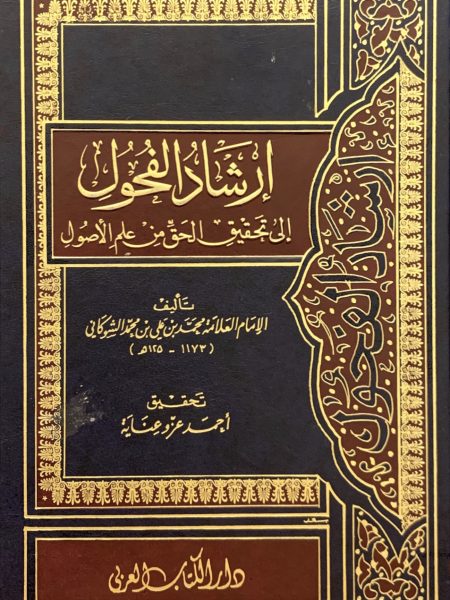
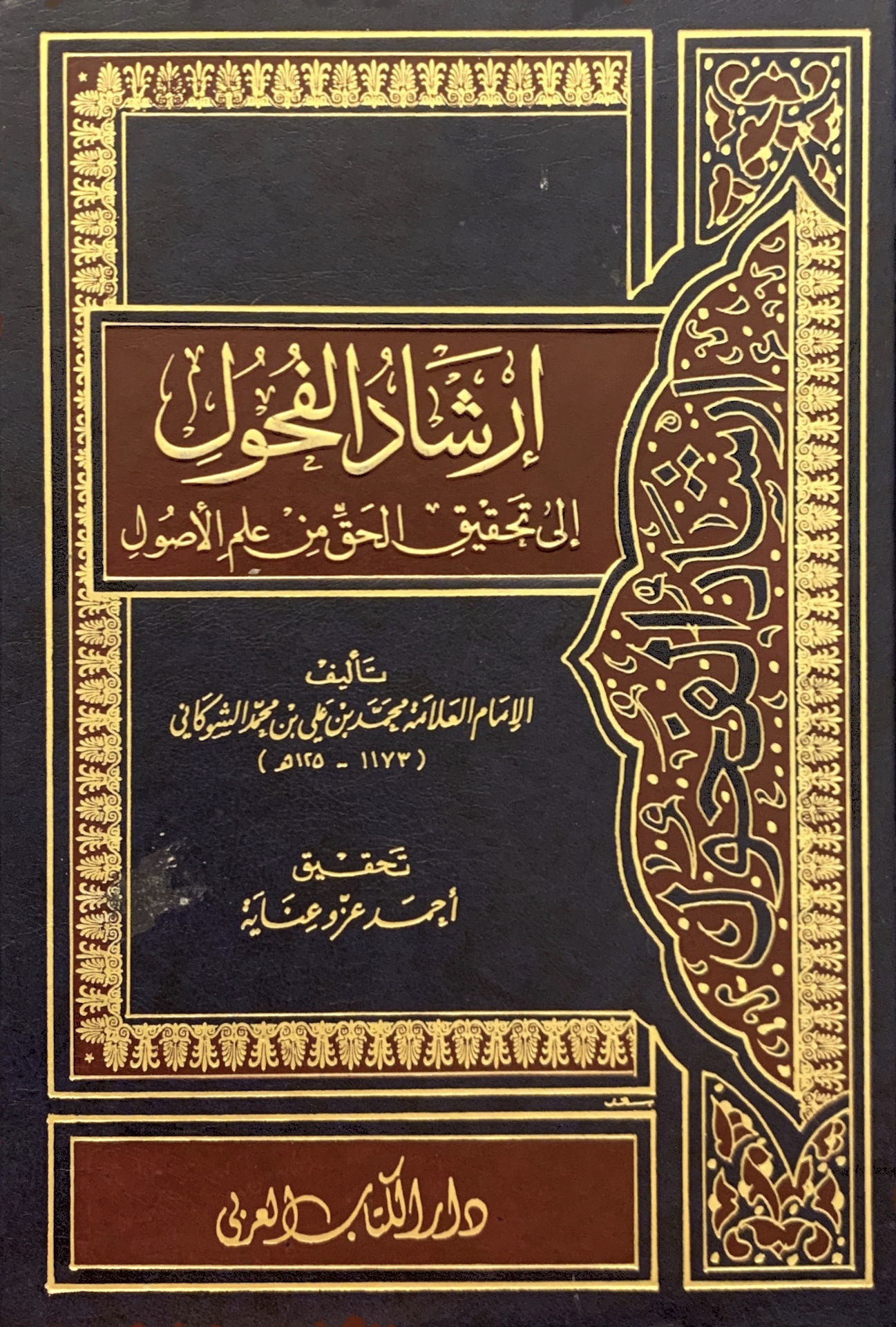
Author's name: Imam Muhammad bin Ali bin Muhammad al-Shawkani
-
Investigation: Ahmed Ezzo Enayat
-
Number of pages: 1238 pages
-
The subject of the book: The book deals with the guidance of al-Fawwal to the realization of the truth from the science of origins
The contents of the book:
Volume I
-
Introduction
-
Introduction His Eminence the Grand Mufti of Zahle, Bekaa and Western Gharbi, Sheikh Khalil Al-Mais
-
Introduction by Dr. Walidin Saleh Farfour of Damascus
-
Investigation introduction
-
Author's introduction
-
Introduction to Fundamentals
-
Part I: The definition, subject matter, usefulness, and derivation of the principles of jurisprudence
-
Entrance
-
Fundamentals of Jurisprudence
-
The usefulness and fruitfulness of jurisprudence
-
The Origins of Jurisprudence
-
Part II: On judgments
-
Entrance
-
Exhibit I: On the verdict
-
Research II: In the ruler
-
Section III: On the verdict
-
Entrance
-
First issue
-
Second issue
-
Third issue
-
Fourth article: On the defendant, the taxpayer
-
Section III: Linguistic Principles
-
First article: On the nature of speech
-
Research II: About the setter
-
Third article: On the topic
-
Fourth article: About the subject
-
Fifth article: On the way in which status is defined
-
Section IV: On the division of words into singular and compound
-
Entrance
-
The first question: On derivation
-
Issue Two: Synonymy
-
The third question: In the joint
-
Fourth issue: Disagreement on the use of common words in more than one meaning
-
Fifth issue: On truth and metaphor, in which there are ten researches
-
First research: On the interpretation of the words "truth" and "metaphor
-
Second research: In their limits
-
Third research: Linguistic, customary and legal facts and the dispute over their proof and its consequences
-
Fourth research: Metaphor in Arabic
-
Fifth research: Relationships between truth and metaphor
-
Sixth research: Evidence of metaphor
-
Seventh research: The things that define metaphor and distinguish it from reality
-
Research VIII: The lack of characterization of a word before use as real or metaphorical
-
Ninth research: In the case of words that are either metaphorical or common
-
Tenth research: On combining truth and metaphor
-
Sixth issue: Disagreement on some of the meaning letters
-
The first point: In the Dear Book
-
Chapter I: On its definition
-
Chapter two: Verdict on ahadh transmissions
-
Chapter three: On the Qur'an's mahkam and mashashaba
-
Chapter four: The Qur'an's Arabic: Is it in the Qur'an or not?
-
The second point: In the year
-
Chapter I: The Meaning of Sunnah in Language and Legislation
-
Chapter II: The Authenticity of the Sunnah and its Independence in Legislation
-
Chapter three: On the Infallibility of Prophets
-
Chapter four: On the actions of the Prophet (peace be upon him)
-
Chapter 5: Conflicting Actions
-
Chapter Six: Ruling on the conflict between words and deeds
-
Chapter VII: In the report
-
Chapter VIII: What the Prophet (peace and blessings of Allah be upon him) did and did not do
-
Chapter IX: On the Ruling on His Signing and Writing
-
Chapter X: What the Prophet (peace and blessings of Allah be upon him) left out and what to say about incidents that he did not rule on
-
Chapter Eleven: News in the news, of which there are several types
-
The first type: The meaning of news in language and terminology
-
Second type: Categories of news in terms of truth and falsehood
-
The third type: In the division of news
-
Fourth type: Categories of news in terms of frequency and non-frequency
-
First section: Frequent
-
Second section: Ahad
-
The third point: Consensus
-
Chapter one: Language and terminology
-
Chapter II: On the possibility of consensus in itself
-
Chapter three: On the uncertainty or finality of consensus
-
Chapter IV: What constitutes consensus
-
Chapter Five: On Considering a heretical mujtahid in consensus
-
Chapter Six: Consideration of the Mujtahid Tabi'i in Ijma'
-
Chapter VII: Ruling on the consensus of the Companions
-
Chapter VIII: Ruling on the consensus of the people of Madinah
-
Chapter IX: On not considering who will be found in the consensus
-
Chapter X: On the ruling of the extinction of the age of the people of consensus on the authenticity of their consensus
-
Chapter Eleven: Silent consensus
-
Chapter Twelve: The rule of consensus on something after consensus on something else
-
Chapter Thirteen: On the occurrence of consensus after disagreement
-
Chapter Fourteen: If the people of the age differ on a matter on two sayings
-
Chapter Fifteen: The rule of creating a new evidence or interpretation without canceling the first evidence or interpretation
-
Chapter Sixteen: On the existence of unopposed evidence that was not known to the people of consensus
-
Chapter Seventeen: Public opinion on consensus
-
Entrance
-
Branch: Consensus of the commoners
-
Chapter Eighteen: Consensus considered
-
Chapter Nineteen: One Mujtahidin's Violation of Ijma'
-
Chapter XX: Ijma (consensus) and its authenticity
-
Conclusion
-
Fourth point: On commands, prohibitions, and generality
-
Chapter I: On the command prompts
-
Chapter one: The truth about the word command
-
Chapter II: Disagreement on the limit of the command in the sense of saying
-
Chapter Three: The truth about the verb "to do
-
Chapter Four: Whether or not a command implies repetition
-
Chapter 5: Whether or not an Order Requires Immediacy
-
Chapter Six: The command to do something is a prohibition against its opposite
-
Chapter Seven: Doing what is commanded
-
Chapter Eight: Is a new order or the first order to be adjudicated?
-
Chapter Nine: Is ordering something a command or not?
-
Chapter ten: The command and what it entails
-
Chapter Eleven: Symmetric and heterosymmetric succession
-
Chapter II: On prohibitions
-
Research I: The meaning of prohibition in language and terminology
-
Research II: Real prohibition and its meaning
-
Research III: On the prohibition of corruption
-
Chapter three: In general
-
The first question: In his limit
-
Issue Two: Generality is a symptom of semantics
-
Third issue: Conceptualizing Generality in Judgments
-
Fourth issue: The difference between general and absolute
-
Fifth issue: General formulas
-
Sixth issue: In the reasoning that each of these formulas is general, there are branches
-
Seventh issue: On the Generality of the Denied Plural for the few or for the many
-
The eighth question: Minimal addition
-
Ninth issue: Disagreement on the generality of the stabilizing verb
-
Tenth issue: On the generality of the saying: Take from their money an alms
-
Issue Eleven: Plural words
-
The twelfth issue: On the universality of the proverb, O people
-
Thirteenth issue: The inclusion of the disbeliever in the speech that is good for him and the Muslims
-
Issue Fourteen: Oral speech
-
Fifteenth issue: Speech for the Ummah
-
Issue Sixteen: Ruling on the speech of one of the Ummah
-
Issue Seventeen: Ruling on the inclusion of the addressee in the general discourse
-
Issue Eighteen: The generality of the requirement
-
Issue Nineteen: Generality of the concept
-
Twentieth question: Detachment
-
Twenty-first issue: Deletion of the related
-
Issue Twenty-Two: Ruling on speech in praise or blame
-
Issue Twenty-Three: The rule of the general rule on a special cause
-
Twenty-fourth issue: The difference between the scholars' disagreement regarding the mention of some members of the general population that are similar to it in terms of judgment
-
Twenty-fifth issue: On the Generality of the Suspended Reason
-
Twenty-sixth question: Is the generalized general true of the rest or a metaphor?
-
Twenty-seventh issue: Authenticity of the general rule after specialization
-
Issue Twenty-eight: Conjugation of some members of the general population
-
Twenty-ninth question: Is it permissible to work with the general before looking for the specific?
-
Thirtieth question: On the difference between a specialized general and a general that is intended to be special
-
Chapter four: The Special, Allocation, and Specificity, in which there are thirty issues
-
The first question: In his limit
-
Second Issue: The Difference Between Copying and Personalization
-
Third issue: Allocation of generalities and its permissibility
-
Fourth issue: The amount that must remain after specialization
-
Fifth issue: Allocator
-
Sixth issue: Ruling on exclusion from the genus
-
Seventh issue: Argumentation against those who deny exclusion
-
Eighth issue: Conditions for the validity of the exception
-
Ninth issue: Exclusion from negation and its controversy
-
Tenth issue: Scholars differ on whether or not an exception after a conjunctive sentence belongs to all of them.
-
Eleventh issue: Ruling on the description after the excluded item
-
Issue Twelve: Allocation by condition
-
Thirteenth issue: Personalization by adjective
-
Issue Fourteen: Personalization by purpose
-
Fifteenth issue: Allocation by allowance
-
Issue Sixteen: Personalization by case
-
Issue Seventeen: Personalization by adverb, adverbial and prepositional phrase
-
Issue Eighteen: Personalization by distinction
-
Issue Nineteen: Assignment to the object and the object with it
-
Twentieth issue: Personalization by verb
-
Issue Twenty-One: Personalization by sense
-
Issue Twenty-Two: Allocation to the Holy Book and the Holy Qur'an
-
Issue Twenty-three: Assignment by analogy
-
Twenty-fourth issue: On specialization by concept
-
Twenty-fifth issue: Specialization by consensus
-
Twenty-sixth question: Specialization by habit
-
Twenty-seventh issue: Specializing in the doctrine of the Companions
-
Issue Twenty-eight: Contextualization
-
Twenty-ninth issue: On specialization by object cases
-
Thirtieth issue: Building the general on the specific
Volume II
-
Follow up on the fourth point
-
Chapter Five: The Absolute and the Restricted
-
Chapter I: The Limits of the Absolute and the Restricted
-
Chapter II: Carrying the Absolute to the Restricted
-
Chapter Three: Conditions for carrying the absolute over the restricted
-
Chapter four: The same applies to the restriction of the absolute
-
Section VI: On the Outline and the Explained
-
Chapter one: In their limits
-
Definition of aggregate
-
Definition of a manifesto
-
Chapter Two: The Occurrence of Summaries in the Qur'an and Sunnah
-
Chapter Three: What's in it for me?
-
Chapter four: What is unequivocal
-
Chapter Five: The Ranking of Judgments
-
Chapter Six: Delaying the statement from the time of need
-
Section VII: The Apparent and the Inferred
-
Chapter one: In their limits
-
Chapter II: What can be interpreted
-
Chapter three: On the Conditions of Interpretation
-
Section VIII: Operative and Conceptual
-
The first question: In their limits
-
Entrance
-
Operative sections
-
Concept sections
-
Issue Two: The Concept of Violation
-
Third issue: Conditions for the concept of contradiction
-
Fourth issue: Types of the concept of contradiction
-
Section IX: On copying, with seventeen issues
-
The first question: In his limit
-
Issue Two: Copying is mentally possible and legally possible
-
Entrance
-
The Wisdom of Copying
-
Third issue: Terms of copying
-
Fourth issue: Copying is allowed after believing and practicing what has been copied
-
Fifth issue: Copying is not required to be succeeded by a replacement
-
Sixth issue: Copying to a substitute takes many forms
-
Seventh issue: The Copying of News
-
The eighth issue: Copying the recitation but not the ruling, vice versa, and copying both
-
Ninth issue: Faces of Copying the Qur'an and Sunnah
-
Tenth issue: Copying the Qur'an with the Sunnah
-
Entrance
-
Copying the Sunnah with the Quran
-
Issue Eleven: Copying words and deeds from the Sunnah
-
The twelfth issue: The Copying and Repudiation of Ijma (consensus)
-
Thirteenth issue: An analogy does not supersede
-
Fourteenth issue: Copying the concept
-
Fifteenth issue: Increasing the text
-
Issue Sixteen: Is a decrease in worship a copy?
-
Issue Seventeen: The way in which a nakhir is known to be a naskh
-
Tenth chapter: Purposes of this book on analogy and related reasoning
-
Chapter I: On its definition
-
Chapter II: On the validity of analogies
-
Entrance
-
Evidence from the Qur'an
-
Evidence of analogy from the Sunnah
-
Evidence from consensus
-
Chapter three: The Elements of Measurement
-
Entrance
-
The conditions of the analogy
-
Bug investigations
-
Definition of a bug
-
Conditions considered in the case
-
What is not considered a condition in the case
-
Arguing for Multiple Causes
-
Requirements for the branch
-
Chapter four: On the paths of the cause, which are the ways in which it is indicated
-
Entrance
-
The first path: Consensus
-
The second path: Text on the cause
-
The third path: Nodding and nudging
-
Fourth path: The Prophet's (peace and blessings of Allah be upon him) actions
-
Fifth path: Sounding and splitting
-
Sixth lane: Occasion
-
The seventh path: likenesses
-
The eighth path: Expulsion
-
Ninth lane: rotation
-
Tenth path: Revision of the logic
-
The eleventh path: Realization of the requirement
-
Chapter Five: What Doesn't Measure
-
Ruling on the applicability of analogies to causes
-
Measurement in Hududud and Atonement
-
Chapter VI: On objections
-
Entrance
-
First objection: cassation
-
The second objection: fraction
-
Third objection: Non-reversibility
-
Fourth objection: Lack of effect
-
Fifth objection: Heart
-
Sixth objection: Positive statement
-
Seventh objection: Difference
-
The eighth objection: Inquiry
-
Ninth objection: Corruption of consideration
-
Tenth objection: Corruption of the situation
-
Eleventh objection: Prevention
-
Objection XII: Partition
-
Thirteenth objection: Different officers between the parent and the child
-
Fourteenth objection: Different judgments of the parent and child