

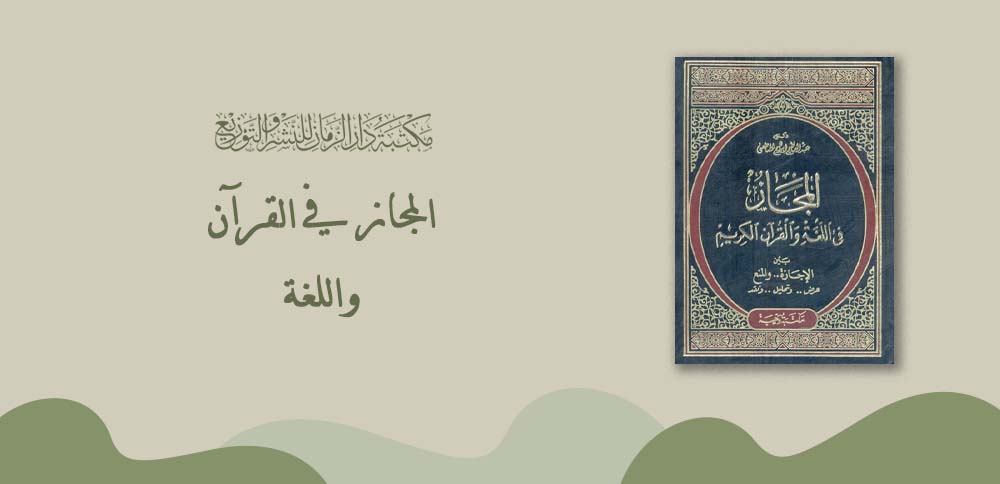
Metaphor in the Qur'an and language has a unique place in the world of Arabic statement, as it is the bridge that connects the apparent and the inner meaning, and gives texts a depth that evokes thought and emotion at the same time. A meditation on metaphor reveals the beauty and precision of language, and shows how the Qur'an was able to elevate the word to become a tool of revelation and guidance. This fine art not only enriches the style, but also opens the horizons of understanding for the reader to discover new dimensions in each verse or expression.
In this article, the reader will find a guide to understanding the difference between truth and metaphor, and how to distinguish them in their rhetorical and linguistic contexts.
What is metaphor in the Quran and language?
In the Qur'an and language, metaphor is the use of a word other than its original meaning due to the relationship between the two meanings and the presence of evidence that prevents the real meaning from being intended. This rhetorical technique diversifies the connotations of words and broadens the horizons of expression, giving texts a special depth and beauty, both in language in general and in the Qur'anic statement in particular. Metaphor is a means of portraying subtle meanings in an effective and expressive way.
What is the definition of metaphor in language?
A metaphor in language means that a word is used in a different sense than it was originally intended, provided there is a significant relationship between the two meanings, and the presence of a presumption that diverts the mind from the real meaning to the intended meaning. For example, when it is said, “I saw a lion preaching,” it means a brave man, and the relationship here is courage, and the clue is the word “preaching,” which prevents understanding the true meaning of the animal lion.
How is metaphor defined in the Quran?
Metaphor in the Qur'an is the use of a word in its original position in a way that is linguistically correct, with a relationship and a context that clearly shows the intended meaning. The Qur'anic metaphor appears in many verses that carry wonderful rhetorical meanings, such as Almighty God's saying: {Lower for them the wing of humility}, as it does not mean the real wing, but rather humility and mercy. This is one of the beauty of Qur'anic expression that depicts the meaning in a tangible form that brings it closer to both the mind and the heart.
What is the difference between metaphor and reality?
- The truth It is the use of the word in its original meaning as it was first used in the language without any transfer or diversion of meaning.
- Metaphor It is the use of a word other than its original meaning due to a relationship with the presence of evidence that prevents the real meaning from being intended.
- Basic teams Truth is the basis of usage, while metaphor is a branch that is used to achieve a rhetorical goal or clarify a deep meaning.
- Presumption It is the element that diverts the mind from the real and directs it to the metaphorical meaning.
How does metaphor appear in the Qur'anic text?
In the Qur'an and in language, metaphor manifests itself in multiple forms that touch the depths of expression and expand the circle of meaning. When the word «wing» is used in Almighty God's saying: «Lower the wing of humility out of mercy», it is not meant to refer to the actual wing of a bird, but rather to humility and submission in treatment. Similarly, the word «clothing» is used in the Almighty saying: «They are a garment for you and you are a garment for them,» metaphorically expressing proximity, affection and mutual concealment between the two spouses.
These examples highlight how the Qur'an employs words outside their original meaning to bring abstract meanings closer to the mind of the hearer and give the text a human and spiritual depth.
What are the roles of metaphor in Quranic rhetoric?
- Metaphor contributes to the intensification of meanings, as it makes the same word carry multiple connotations that enrich the text and deepen its impact.
- The Qur'anic expression gives an aesthetic dimension that touches the senses and evokes emotion, enhancing the psychological impact on the reader or listener.
- It opens the horizons for reflection and contemplation, as it invites the recipient to go beyond the surface and understand the hidden intentions of the discourse.
- The meaning is anchored in the consciousness through close sensory images, making the Qur'anic message more penetrating to the heart.
How does metaphor contribute to hermeneutics?
The use of metaphor in the Qur'an and language is one of the main keys to the hermeneutical process; it allows the text to be understood in light of its overall intentions and not just its verbal limits. The use of metaphor gives the text flexibility in interpretation and allows for multiple readings, so that meanings and judgments can be deduced through different layers of connotation. In this way, the metaphor becomes a bridge between the external and the internal, opening new paths for mental and spiritual interaction with the Qur'anic discourse.
Why do scholars disagree about metaphor in the Qur'an and language?
The majority of scholars have recognized metaphor in the Qur'an and the language as an inherent element in Arabic speech, and an artistic means of expressing deep meanings that cannot be performed by the real word alone. They saw metaphor as a way to materialize mental images and emphasize the magnificence of expression. The Mu'tazilites also supported this trend, and considered metaphor a door to richness of meaning and multiple rhetorical interpretations, which opens the Qur'anic text to horizons of meaning without taking it beyond the limits of language.
Who denied metaphor in the Quran?
Some of the Salaf and Ahl al-Zahir denied the occurrence of metaphor in the Qur'an and considered it contrary to the principle of absolute truth in God's words. They based their position on their fear that opening the door to metaphor would lead to the expansion of interpretation and thus jeopardize the stability of the Qur'anic text and its doctrinal purposes. Therefore, they restricted the meanings to their literal limits and considered the words of the Qur'an to be understood as they were intended, without deviating from their apparent meaning.
Why is the presumption needed?
Rhetoric is based on the idea that a metaphor can only be understood if there is a clue that diverts the word from its original meaning to the metaphorical meaning. This evidence is the evidence that prevents ambiguity and determines the meaning of the words. For example, God's saying: «Lower for them the wing of humiliation from mercy» is a clear example; the “wing” does not mean the physical wing, but is a metaphor for submission and gentleness, and the clue in the context is “humiliation from mercy”. Therefore, the context is a prerequisite that guarantees the integrity of understanding and accuracy of interpretation, emphasizing the flexibility of metaphor in the Qur'an and language and its ability to carry high meanings with a unique Arabic statement.
What are the best books on metaphor in the Quran and language?
is a Dar Al-Zaman Publishing and Distribution Library One of the most prominent libraries that specialize in Quranic and linguistic studies, and is known for its variety of publications that meet the needs of science students and researchers in the sciences of rhetoric and metaphor in the Quran and language. The library allows for easy online shopping, which makes access to these books easier for lovers of the Arabic language and its sciences.
Verbal Similarities in the Qur'an
The book is a“Verbal Similarities in the Qur'an”From the Islamic Books Written by Dr. Mohsen bin Ali Al-Shehri, one of the prominent books in the field of rhetorical analysis of the Quranic text, as it deals with the phenomenon of similar words in different contexts, and highlights the miraculous accuracy of the Quranic word choice and its change according to the meaning and situation.
The author links his study to Al-Alusi's Ruh al-Ma'ani, which gives the work an interpretive depth that enriches the recipient's understanding of Qur'anic metaphor and statement. The book measures (17 x 24 cm), with 450 pages, with a hard cardboard cover, and printed on non-reflective paper that gives a comfortable reading and a luxurious feel to the text.
How do you master eloquence?
Book “How do you master eloquence?” available in the Languages It is based on evidence from the Holy Qur'an, the Sunnah, and Arabic poetry, providing clear explanations and practical exercises that help readers apply the concepts of bayan, bid'a, and meaning. This book is suitable for those who are in their early or intermediate stages of studying the sciences of rhetoric, as it gives them gradual practical training that enhances their understanding of linguistic beauty and the secrets of metaphor.
Frequently asked questions about metaphor in the Qur'an and language
What is metaphor in language and the Quran?
In language, metaphor is the use of a word other than its original meaning, due to a relationship between the two meanings with evidence that prevents the real meaning from being intended. The origin of the word “metaphor” is from jawaz, which means crossing from one meaning to another. In the Quran, metaphor means the use of words to perform deeper meanings than their apparent meaning, in line with the eloquence and miracle of the Quran, which combines the accuracy of words and the breadth of meaning.
Does metaphor exist in language?
Yes, metaphor is present in the Arabic language and is an inherent part of its rhetoric. The difference between metaphor and expansion of meaning is that metaphor moves the word from its original meaning due to a relationship of analogy or similarity, while expansion remains within the framework of the original meaning. For example, in the saying: “They put their fingers in their ears,” the intention is not to insert all the fingers but the fingertips, and this is a metaphor to signify the severity of the act.
What are examples of linguistic metaphors?
Linguistic metaphor is evident in many of the Arabic usages in which the word moves from its original meaning to another meaning due to some relationship. The difference between truth and metaphor is that truth is used in its first meaning, while metaphor is used in another depending on the evidence.
Examples of linguistic metaphors include: “The sea has silted up,” meaning it has less water, although silt is a characteristic of the liquid and not the sea itself: “The feet ran in the field,” meaning the people with the feet, in a metaphor, such as: “I saw a lion preaching,” meaning a brave man: "I saw a lion speaking," meaning a brave man, so he was likened to a lion in strength and might.
Metaphor in the Qur'an and language shows the depth of Arabic expression and its ability to communicate subtle meanings in an effective and aesthetic manner. It reveals the distinction between truth and metaphor, as it goes beyond the limits of the direct meaning to give the text a richer and deeper meaning. It shows the beauty of the Qur'anic statement and the splendor of the Arabic language in portraying feelings and meanings in their finest form, making metaphor in the Qur'an and language one of the pillars of authentic Arabic eloquence and eloquence.
Read more: