

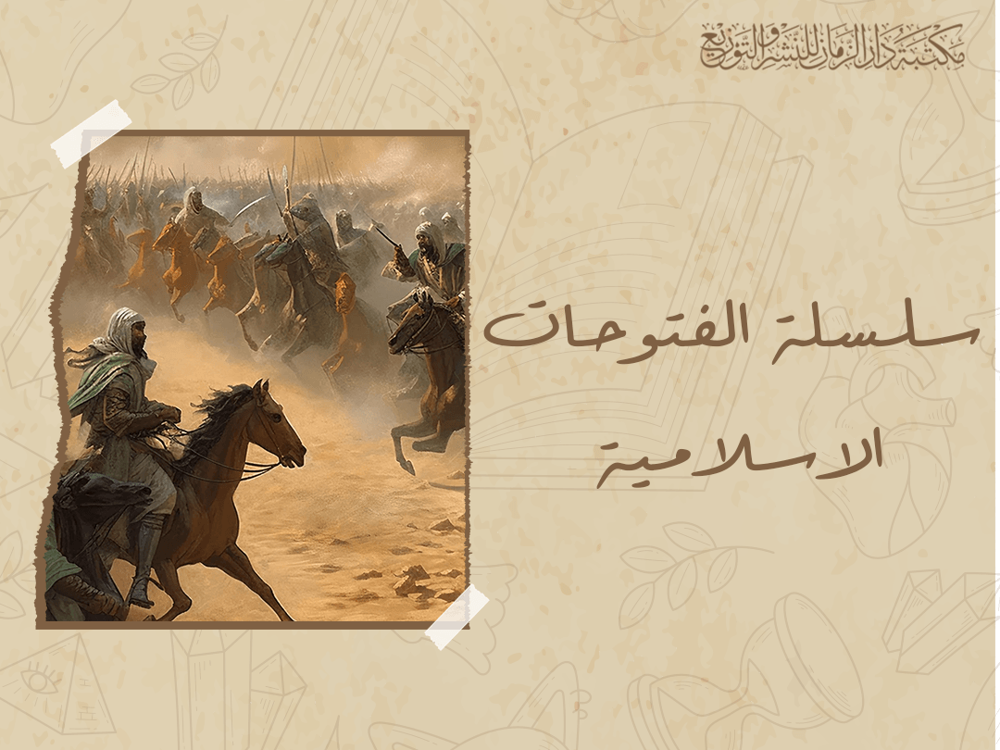
In the history of Islam, the series of Islamic conquests stands out as one of the greatest achievements of Muslims. These conquests began during the reign of the Prophet Muhammad and continued during the reign of the Rashidun caliphs, as the Islamic state expanded greatly. The Islamic conquests were not just wars, but a call to spread justice, peace, and the teachings of Islam throughout the world. Through this series, Muslims were able to build a great civilization that influenced various aspects of human life.
Islamic Conquests Series
Beginning and genesis
The series of Islamic conquests began during the time of the Prophet Muhammad, who led Muslims in the battles of Badr, Uhud, and Khandaq, which served as the foundation for the great conquests. After the Prophet's death, the Rashidun caliphs continued these conquests, conquering the Levant, Iraq, Persia, and Egypt.
Conquests during the reign of the Rashidun caliphs
During the reign of Caliph Abu Bakr al-Siddiq, the Islamic conquests began to take on a more organized character, as Iraq and the Levant were conquered. During the reign of Caliph Umar ibn al-Khattab, the conquests expanded to include Persia and Egypt, and the Battle of Qadisiyah was one of the most prominent battles led by Muslims in this period. The series of Islamic conquests continued during the reign of Caliph Uthman ibn Affan, where North Africa and parts of Europe were conquered.
Conquests during the Umayyad and Abbasid periods
The series of Islamic conquests continued during the Umayyad period, as Muslims were able to conquer Andalusia and southern France. This period also saw the conquest of Indus and India. Under the Abbasid dynasty, conquests continued but at a slower pace, as the Abbasid caliphs focused on strengthening internal governance and developing science and culture.
Details and critical battles
The series of Islamic conquests included many decisive battles that changed the course of history. The most notable of these battles include the Battle of Yarmouk, led by Khalid ibn al-Walid against the Romans, and the Battle of Qadisiyah, led by Saad ibn Abi Waqqas against the Persians. These battles were turning points in the history of the Islamic conquests, as Muslims were able to achieve major victories and expand the Islamic state.
Conquests in Andalusia
The Islamic conquests in Andalusia are one of the most notable conquests achieved by Muslims. These conquests began during the reign of the Umayyad Caliph al-Walid ibn Abd al-Malik, where Tariq ibn Ziyad led the Muslim army to cross the Strait of Gibraltar and conquer Andalusia. The conquests in Andalusia continued for centuries, where Muslims were able to build a thriving civilization that greatly influenced European culture.
Conquests in Asia
The series of Islamic conquests was not limited to Arab and European regions, but extended to Asia as well. Muslims were able to conquer Indus and India during the Umayyad period, and conquests in these areas continued during the Abbasid period. These conquests were aimed at spreading Islam and promoting trade and cultural relations between peoples.
Conquests in Africa
The Islamic conquests in Africa are one of the important conquests achieved by Muslims. These conquests began during the reign of Caliph Uthman ibn Affan, where Muslims were able to conquer North Africa. The conquests in Africa continued for centuries, with Muslims spreading Islam and building thriving civilizations in areas such as Morocco, Algeria, and Tunisia.
Conquests in Europe
The series of conquests was not limited to Arab and African regions, but extended to Europe as well. Muslims were able to conquer parts of southern France and Italy, and conquests in these areas continued for centuries. These conquests were aimed at spreading Islam and fostering trade and cultural relations between peoples.
Conquering Iraq and Iran
The Islamic conquests began during the reign of Caliph Abu Bakr al-Siddiq (may Allah be pleased with him), as the Islamic armies were directed towards Iraq to confront the Persians. Muthanna ibn Haritha al-Shaibani led the first campaigns against the Persians and achieved important victories. After Abu Bakr's death, Caliph Umar ibn al-Khattab (may Allah be pleased with him) completed the conquests, sending Saad ibn Abi Waqqas to lead the armies in the Battle of Qadisiyah, which ended with the victory of the Muslims and the fall of the Persian Empire⁶.
Conquest of the Levant
The Muslim armies headed towards the Levant under the leadership of Khalid ibn al-Walid and Abu Ubaidah ibn al-Jarrah. The Battle of Yarmouk was one of the most important battles the Muslims fought against the Romans, where they managed to achieve a major victory that led to the conquest of Damascus and the rest of the cities of the Levant.
Opening Egypt
Amr ibn al-'As led the Islamic conquest of Egypt, where he managed to enter Alexandria after a long siege. This conquest contributed to the spread of Islam in North Africa, and Egypt became an important cultural and civilizational center in the Islamic world.
Conquering North Africa
Islamic conquests continued during the Umayyad period, as Muslim armies headed towards North Africa under the leadership of Uqba ibn Nafi. The Muslims were able to conquer Tunisia, Algeria, and Morocco, and founded the city of Kairouan, which became a center for spreading Islam in the region.
Conquest of Andalusia
Under the leadership of Tariq ibn Ziyad, Muslims crossed the Strait of Gibraltar and entered Andalusia (present-day Spain). They defeated the Visigoths in the Battle of Wadi Lakka and continued to conquer Andalusian cities until Andalusia became part of the Islamic state.
Islamic Conquests in Central Asia
Opening the bond
Islamic armies headed towards Sindh (present-day Pakistan) under the command of Muhammad ibn al-Qasim al-Thaqafi. The Muslims were able to conquer the cities of Sindh and spread Islam in the region, contributing to the strengthening of Islamic civilization in Central Asia.
Conquest of the Caucasus
Muslims led military campaigns towards the Caucasus region, where they were able to conquer many cities and castles. These conquests contributed to spreading Islam to new areas and strengthening Islamic influence in the region.
The impact of Islamic conquests
Spreading Islam
The Islamic conquests contributed to the spread of Islam to large areas of the world, as people entered the religion of God in droves. The conquered cities became centers of civilization and culture, and the Arabic language and Islamic culture spread everywhere.
Cultural exchange
The Islamic conquests led to a wide cultural exchange between Muslims and the conquered peoples. Muslims benefited from the sciences and arts found in those regions, and contributed to their development and transfer to the Islamic world.
Islamic unity
The conquests contributed to the unification of Muslims under one banner, which strengthened their power and influence. The Islamic state became a superpower feared by other empires and contributed to spreading justice and equality among people.
In conclusion, the series of conquests remains one of the most important historical events that influenced the course of human history. These conquests served as a bridge between peoples and cultures and contributed to spreading the values of justice and equality. Through the Islamic conquests, Muslims were able to spread Islam to large areas of the world, leading to a wide cultural exchange and the development of science and art. Studying these conquests gives a deeper understanding of the history of Islam and its role in shaping the world. The series of Islamic conquests are not just historical events, but a story of success, faith and determination, reflecting the power of faith and determination to spread goodness and justice in the world.
The Islamic conquests were not just wars and battles, but a comprehensive civilizational movement that contributed to building thriving civilizations and spreading science and knowledge. Understanding these conquests gives us a deeper insight into how Islam has shaped human civilization.