

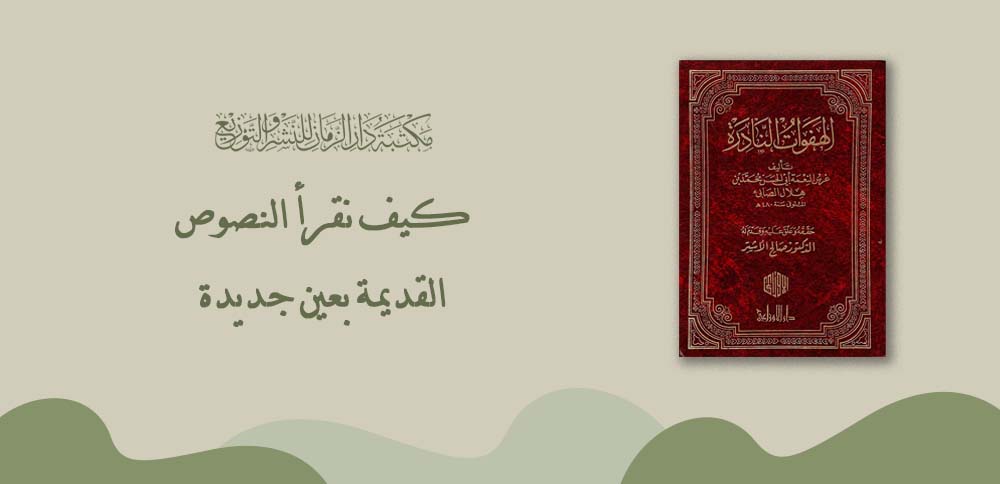
Ancient texts carry the voices of past civilizations, wisdom and human experiences that continue to inspire minds and raise questions. With the passage of time, these texts sometimes seem distant from the realities of contemporary life. When you read them, you encounter a gap in language or cultural context that makes it more complicated to communicate with them. Despite this distance in time, the passion for discovering the deep meanings and symbols in these texts remains a strong motivation to reconsider how we read and understand them.
This article seeks to provide new keys for anyone interested in learning how to read ancient texts with a new eye, through modern approaches that combine scientific analysis, literary criticism, and digital technologies.
How do we read old texts with a new eye?
Reading ancient texts with a new eye means breaking free from the rigid constraints imposed by traditional interpretations and allowing the text to live with us in our current reality. When we ask how to read ancient texts with a new eye, we are calling for a living interaction between the past and the present, so that the text becomes a source of inspiration that is renewed with every reading and not just a static historical document. This approach makes ancient texts part of our contemporary cultural conversation rather than remaining static in the memory of heritage.
The question of how to read ancient texts with a new eye urges us to use modern tools of understanding, not to erase the past, but to recover it in a critical and conscious spirit. Combining historical understanding with contemporary techniques opens up prospects for a deeper interpretation that keeps pace with developments in thought and gives ancient texts a new chance to continue to shape our consciousness.
Why is re-reading important?
Re-reading ancient texts allows for the discovery of new levels of meaning that were hidden to previous generations. Each generation sees the text with its own eyes, informed by its own experiences, interests, and issues. Therefore, rereading does not aim to negate the old understanding, but rather to enrich and reframe it within a broader and more diverse perspective.
How does a critical approach change understanding?
Modern critical approaches, such as Hermeneutics, change the way we understand a text by emphasizing the interactive relationship between the reader, the text, and the cultural context. Meaning is not fixed, but is reproduced in each new reading according to the reader's background and experience.
What is the role of contemporary context in hermeneutics?
The contemporary context guides the hermeneutical process and gives the text renewed life in the face of contemporary challenges. When we practice how to read ancient texts with a new eye, we project our contemporary questions onto the text, discovering references and ideas that were not obvious in its original environment. The text becomes a space of interaction between history and the present, reworking itself through our contemporary consciousness and our intellectual needs today.
What are the latest methods for understanding ancient text?
How does modern hermeneutics work?
Modern hermeneutics (Hermeneutics) is one of the most important approaches that help us understand ancient texts in their historical and cultural context, as it opens the door for us to learn how to read ancient texts with a new eye. This approach is not limited to interpreting words or analyzing language, but seeks to reconstruct meaning in accordance with the intellectual and spiritual vision in which the text was written. This approach allows for a modern reading that emphasizes the human and intellectual values inherent in traditional texts and makes them more relevant to the questions of the present and the needs of contemporary society.
Why is contextual analysis important?
Contextual analysis of an ancient text, from a historical and social perspective, helps to discover lessons that remain valid despite the passage of centuries. Identifying the nature of the environment in which the text originated, and the social relations that shaped its content, enables us to project those concepts onto today's reality in a more conscious and balanced way. Understanding the context restores the original spirit of the text and prevents it from being misinterpreted.
When do we use digital technology?
The use of digital technology has become an essential step in understanding heritage and realizing the goal of how to read ancient texts with a new eye, as technological advances have opened up unprecedented horizons in the study of manuscripts. Thanks to artificial intelligence and advanced imaging tools, it is now possible to uncover blurred or missing texts within manuscripts and analyze copy variations with amazing accuracy. These tools give researchers the opportunity to recover details that were not possible through traditional means, making the reading of ancient texts more in-depth and relevant to the modern scientific method.
What is modern literary criticism?
Modern literary criticism focuses on analyzing the symbolic and aesthetic methods within ancient texts, helping to understand hidden layers of meaning. Rather than just narrative and content, modern literary criticism is concerned with the way images and meaning are constructed, revealing philosophical or psychological cues that were not previously apparent. The text becomes a living arena of interaction between beauty and thought.
What is the value of interdisciplinarity in reading?
A modern reading of the ancient text benefits greatly from the interdisciplinarity that combines philosophy, sociology, law, and Islamic sciences. This diversity of approaches deepens understanding and gives the reading new dimensions that link the past and the present. When these disciplines complement each other in analyzing the text, reading becomes a cognitive project that reveals the text's relevance to human and social issues of all times.
What are some of the challenges of reading old texts with a fresh eye?
When trying to understand how to read ancient texts with a new eye, a set of intellectual and methodological challenges arise that relate to the balance between respecting the past and keeping up with the present. Contemporary reading does not seek to destroy the heritage, but rather to explore it with different eyes that recognize its depth and rethink its meanings.
What about conservative movements?
Attempts to read ancient texts with a new eye face clear resistance from some conservative currents that fear transgressing the traditional rules of interpretation. These currents consider that excessive openness to modern approaches may lead to the weakening or distortion of the heritage reference. On the other hand, renewalist trends believe that rereading texts does not mean a break, but rather an attempt to activate the text in a new reality without compromising its authenticity.
Where does modern hermeneutics struggle?
The conflict in the How to Read Ancient Texts with a New Eye project revolves around the limits of freedom of interpretation and the extent to which modern reading adheres to the scientific method. Some argue that interpretation should remain tied to its historical and linguistic context, so that texts do not lose their original spirit, while others call for giving the text the ability to interact with the current reality and renew its meanings over time. This divergence of views makes the project an arena for debate between tradition and innovation, as it sometimes leads to some readings bypassing the original references, which raises a debate about the credibility of the results and their consistency with the spirit of the ancient text and the limits of reinterpreting it in the light of contemporary thought.
How do we strike a balance between authenticity and innovation?
The deepest challenge in how to read ancient texts with a new eye is to maintain full respect for the heritage while consciously opening up to contemporary tools of analysis. This balance can only be achieved through a critical awareness that recognizes the value of the heritage without freezing it, and makes use of modern methods without dissolving cultural specificity. In this way, old texts can be revitalized with a new spirit that inspires the past and addresses the present with clarity and awareness.
What are the best products for books and studies on the critical reading of ancient texts?
Served Dar Al-Zaman Publishing and Distribution Library A collection of books and articles that help those interested in developing their skills in reading ancient texts with a new eye, by integrating academic knowledge with a critical approach and historical analysis. These publications contribute to familiarizing readers with the methods of scientific investigation of manuscripts and how to re-present heritage in a contemporary spirit.
Essay: From the Old Version to the Revised Text
In the article: From the old version to the realized text Available in the History The idea of how to read ancient texts with a new eye through the art of heritage investigation. The article explains the stages of the manuscript investigation process, starting from collecting and comparing different copies, to preparing a scientifically verified text that takes into account the exact principles of language and content. It also discusses the main difficulties that researchers face during the investigation, such as discrepancies between copies or the loss of parts of the text, while proposing practical solutions based on field experience.
The article features a visual presentation inspired by the aesthetics of Arabic manuscripts, making the reading experience enjoyable and full of details that inspire the reader to contemplate heritage with a new vision.
Book of Research Methods and Heritage Investigation
Represents a book Research methods and heritage realization from a section Book collections Written by Akram Diaa Al-Omari and published by Dar Al-Zaman Library, this book is a comprehensive reference for researchers who want to know how to read ancient texts with a new eye in a scientific and sober manner. The author explains the steps of research in Islamic sciences, from choosing a topic, through collecting and analyzing sources, to writing the final research paper.
The book includes a specialized section on manuscript investigation methods, explaining the types of manuscripts, investigation tools, accurate documentation methods, and how to deal with errors and differences between ancient texts.
The black cover with gold embossing gives it an elegant heritage feel, reflecting the deep content that combines authenticity with a modern scientific approach.
How do modern methodological approaches help to read ancient texts with a fresh eye?
Books such as “Methods of Research and Heritage Investigation” play a pivotal role in supporting the project of how to read ancient texts with a new eye, as they provide researchers with the tools that enable them to deal with ancient texts with a deeper understanding and a more accurate methodology. They do not limit themselves to presenting traditional research steps, but rather open up new horizons in analyzing and critically understanding the heritage text, away from indoctrination or rigid reading. Through this type of book, the idea of reading heritage texts with a contemporary consciousness that connects the past with the present and gives new life to heritage in the light of modern approaches is put into practice.
These books also explain the rules of scientific investigation and documentation and how to edit ancient texts in a way that preserves their authenticity and reveals their hidden intellectual and linguistic layers.
How do you pay for critical analysis?
Modern approaches push researchers to practice critical thinking within the framework of the project of how to read ancient texts with a new eye; they motivate them to go beyond the superficial reading of letters to analyze the content, connotations, and deep intentions of the text. It also calls for a reconsideration of inherited doctrines through a rational review of historical sources and contexts, which helps build a renewed understanding that connects the past with the present without falling into the captivity of tradition or intellectual rigidity. In this way, these approaches contribute to the revitalization of ancient texts in a contemporary scientific spirit that balances between originality and novelty.
Why is comparative reading important?
Comparative reading is one of the most effective tools for understanding ancient texts with a new eye. It allows the researcher to place the heritage text in a lively dialog with contemporary texts and ideas, opening the way to see new dimensions of meaning and intent. This interaction between the old and the new gives the reading depth and breadth, and contributes to renewing our understanding of heritage as a continuous source of thought rather than a static legacy.
FAQs on how to read ancient texts with a new eye
How do I improve my reading?
You can improve your reading skills by training yourself to analyze texts with a critical eye and avoid superficiality. Expand your horizons by comparing ancient texts to modern texts to understand the evolution of ideas, and continue to self-assess your reading to see where you are weak and where you can improve over time.
What are the steps to reading a literary text?
Read the entire text once to discover the context and atmosphere, identify the main ideas and characters to understand the dimensions of the literary work, analyze the language and methods used to explore the aesthetics and hidden meanings of the text, and connect the events and their connotations to complete the picture and reach a coherent interpretation.
How do I read and understand quickly?
Force yourself to speed read first to accustom your eyes and brain to the faster pace, focus on phrases rather than single words to quickly grasp the overall meaning, learn to skip reading and mark important ideas that need revision, and regularly test your words per minute to see how your speed and comprehension improves.
The How to Read Ancient Texts with a New Eye project is based on the principle of interaction between the past and the future, where modern critical approaches and methods of analysis converge with advanced digital technologies. These tools not only facilitate access to heritage texts, but also rediscover and reinterpret them in ways that open up new avenues of understanding. With this multiple approach, heritage is transformed from a static past into a living source that nourishes thought and stimulates creativity, making reading ancient texts not just a retrieval of the past, but an active participation in building human consciousness and envisioning the future with a renewed culture.
Read more:
- From folktales to world literature, get to know him
- What are the main themes of contemporary Islamic literature?