

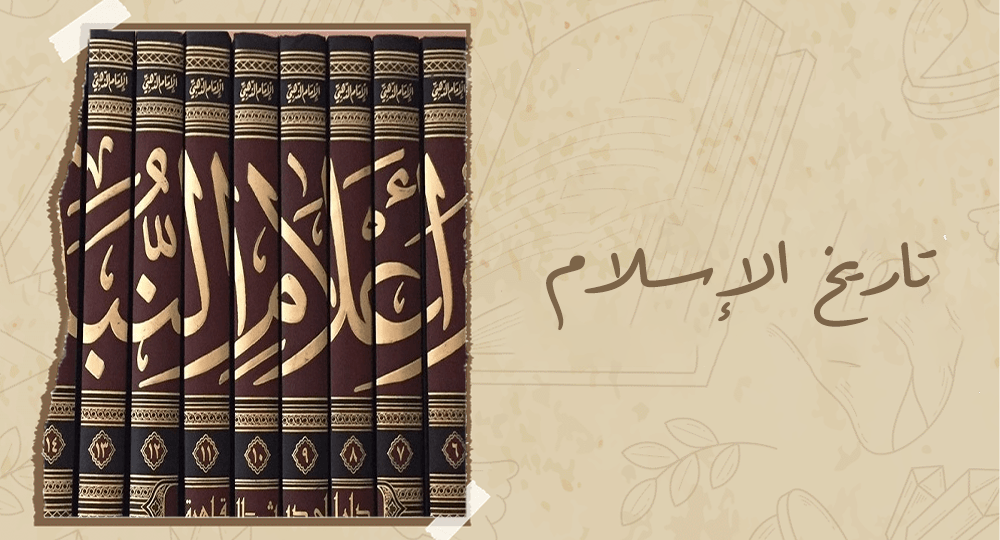
Are you looking to discover the history of Islam and understand its rich details? You are not alone! Millions around the world are eager to learn about this extraordinary record of a religion that has shaped the face of human civilization and left unforgettable imprints on politics, culture, and science. The history of Islam is not just a series of events and milestones, but a long journey that began on the Arabian Peninsula in the seventh century AD and turned into a complex tapestry of social, cultural, and creative change.
In this article, we take you on a clear and accessible tour of the major milestones in the history of Islam. You'll find yourself following the development of a civilization that shone through the ages, and learn about its role in the formation of intellectual and political systems that continue to this day.
What is the history of Islam?
When you think about the history of Islam, it is not just a sequence of events, but a story of an identity and a culture that has influenced the entire world. This history began with the mission of the Prophet Muhammad in Mecca in the seventh century A.D. The message spread and transformed from a spiritual calling to a civilizational force with global influence. Early events, such as the revelations, the migration, and the first battles, were not fleeting moments, but turning points that shaped the framework of the Islamic state and built the foundations of the new society.
The history of Islam includes successive periods, during which Muslims went through multiple challenges and achievements that shaped the relationship between Muslims and the world and determined the contours of Islamic identity through the ages. These periods were accompanied by prominent leaders, each of whom left their own mark and contributed to building a civilization that was characterized by diversity and richness.
When did the history of Islam begin?
The history of Islam actually began with the mission of the Prophet Muhammad in Mecca in 610 AD, where he received his first revelation from God, thus beginning a new phase in the Arabian Peninsula, which soon expanded outward.
Highlights of the development of Islam
- The era of prophecy: The establishment of the message saw the building of the first Islamic community in Mecca and Medina, and the establishment of the basic principles of doctrine and legislation.
- Rightful succession: It was characterized by internal stability and the expansion of the Islamic state beyond the Arabian Peninsula under the leadership of the four caliphs.
- The Umayyad era: The state stretched from India in the east to Andalusia in the west, and the first political and administrative challenges emerged.
- Abbasid era: Islam has become a global center of science, culture, and civilizational development.
- Territorial empires: They ruled large areas with diverse cultures and influenced the arts and sciences.
- Ottoman era: The Ottoman Empire was a global and Islamic power until the early 20th century.
- Modern times: It was characterized by the multiplicity of Islamic states and the evolution of their relationship and presence in the contemporary world order.
Who were the most prominent early leaders of Islam?
In the history of Islam, a number of leaders emerged who took it upon themselves to consolidate the principles of religion and build the state; foremost among them was the Prophet Muhammad, followed by the four Rashidun caliphs: Abu Bakr al-Siddiq, Umar ibn al-Khattab, Uthman ibn Affan, and Ali ibn Abi Talib. These leaders played a pivotal role in spreading the message, achieving stability, and laying the first building blocks of the Islamic identity that has influenced the world through the ages.
What are the most important milestones in the history of Islam?
Emergence and Prophetic Mission
When we reflect on the beginnings of the history of Islam, we must go back to the birth of the Prophet Muhammad in 570 AD. The revelation of the revelation in 610 AD was a turning point, as the call to monotheism was launched, which changed the face of the Arabian Peninsula. The Prophet's migration to Medina was not just a geographical move, but the establishment of a new society, in which the circle of invitation expanded and the building blocks of the first Islamic state were laid.
The Rightful Caliphate and Expansion
The caliphate of Abu Bakr, 'Umar, 'Uthman, and 'Ali witnessed radical transformations in the history of Islam. Beyond the borders of the Arabian Peninsula, the state expanded in an unprecedented way, and the foundation of the Islamic system of government and its administrative and judicial structures was laid. Islam was no longer just a message confined to a tribe or a region, but a political and social phenomenon that was rapidly taking shape.
Umayyad and Abbasid
The rise of the Umayyads allowed Islam to spread eastward to Asia and westward to Andalusia, and strengthened the construction of the Arab-Islamic personality. As for the Abbasid state, it witnessed the peak of scientific and cultural civilization, the development of the concept of a centralized state, and a boom in the fields of science, philosophy, and the arts, making Baghdad a global center of knowledge for centuries.
Mongol invasions and regional conflicts
The fall of Baghdad in 1258 at the hands of the Mongols cannot be ignored. This event ended the unified Islamic caliphate, but it was not the end of Islamic civilization. Powerful entities such as the Mamluks and Seljuks emerged in different regions, playing a pivotal role in protecting Islamic heritage and maintaining political and cultural continuity in the face of external threats.
The Ottoman Era and the Great Empires
Later Islamic history witnessed the rise of the Ottoman Empire with great military and political power, along with the rise of the Safavids in Persia and the Mughals in India. These major powers redrew the map of the centers of influence in the Islamic world and allowed Islam to spread and influence new societies and regions, until it became a global religion and a transnational civilization.
Colonization and Reform
In the nineteenth century, things changed with the acceleration of European influence and the expansion of colonialism in Muslim countries. This intervention led to the emergence of reformist and revivalist movements that sought to redefine Islamic identity and seek a foothold in a changing world. The debate over religious reform intensified, and movements calling for modernization emerged, with a great concern to preserve the doctrinal and cultural heritage of the Islamic world.
Islam in modern times
With the official end of the Ottoman era in 1924, Islam entered a new phase in which a wave of independent nation-states poured in and Islamist movements rose that attempted to restore the role of sharia in public life. Today, Islamic history continues to face contemporary political and cultural challenges, amid ongoing debates about identity, modernity, and the connections between past and present.
What are the best books for understanding the history of Islam?
Always looking for reliable sources that combine scientific rigor and cultural diversity to better understand the history of Islam? Dar Al-Zaman Publishing and Distribution Library It offers a wide range of specialized books in this field, giving you a rich journey of knowledge that goes beyond the traditional narrative and dives deep into the depths of events and characters.
A story from the life of Uthman ibn Affan (may Allah be pleased with him)
The book “A story from the life of Uthman ibn Affan (may Allah be pleased with him)”is a rich choice for those who want to explore the biography of the third caliph in all its dimensions. You will learn the details of his impact on the expansion of the Islamic state, the reform efforts he led, and how the Qur'an was compiled into a single Qur'an. The book does not ignore the most difficult periods. Islamic Books The course of events that led to the Great Fitna with credibility and clarity, making the reading experience an unforgettable historical and humanitarian journey.
Atlas of the Quran
Weren't you wondering about a visualization of the history of Islam?“Atlas of the Quran”A unique reference that recreates one of humanity's most remarkable eras from a rich geographical perspective. This book covers pivotal locations, major events, the development of Islamic societies and the spread of the message, all supported by precisely illustrated maps that help you connect the facts to the texts and make understanding the history of Islam more in-depth and informative. Languages at the best prices.
How have periods in the history of Islam affected the Muslim world?
Throughout its history, the Islamic world witnessed profound intellectual and scientific transformations that made its influence transcend its geographical borders. During the Abbasid era in particular, it became a global center for scientific and cognitive creativity, as Baghdad and Cordoba attracted scholars from diverse civilizations. Specialized schools were established in medicine, astronomy, mathematics, and philosophy, and Muslims became pioneers in the transfer and development of knowledge, making this period a meeting point between Greek, Persian, and Indian thought.
On the political and religious front, each stage of Islam's history has left its mark. From the unification of the Arabian Peninsula under one banner, to the divisions that occurred after the first fitna, which resulted in the emergence of Sunni and Shiite sects, to the establishment of major empires such as the Abbasid, Umayyad, and Ottoman empires that transcended geographical boundaries and imposed their mark on global political maps.
Cultural and civilizational diversity was a natural result of the spread of Islam and its contact with other civilizations. The expansion led to interactions with the cultures of Persia, India, Africa, and even Andalusia. This contributed to the flourishing of multiple schools of thought and unprecedented linguistic and artistic diversity, as the Islamic world became a melting pot of different arts, sciences, and traditions, forming a rich and unique civilizational identity.
Frequently asked questions about the history of Islam
What is the history of the rise of Islam?
Islam emerged in the Arabian Peninsula, specifically in Mecca, in the seventh century AD. It began with the revelation of the first revelation to the Prophet Muhammad, launching the message of monotheism in a society that was dominated by tribalism and a multiplicity of religions and beliefs.
When did Islamic history begin?
Islamic history actually began with the mission of the Prophet Muhammad in 610 AD. With the migration to Medina in 622 AD, the Islamic state was established and a new phase of political and social organization began in Islamic history.
What is the history of the Islamic religion?
The Islamic religion was established during the life of the Prophet Muhammad and spread after his death through the efforts of the Rashidun caliphs. After them, major states such as the Umayyad and Abbasid dynasties followed, and later transitioned to successive periods of regional rule with the emergence of local authorities, until it reached the modern era.
The history of Islam reveals a long and complex journey from the Prophet Muhammad to the formation of modern states, encompassing a wide spectrum of civilizational diversity and fundamental changes that have influenced human politics and culture through the ages. This span of time gives you an opportunity to understand the profound transformations and their deep-rooted impact on different societies.
Read more: