

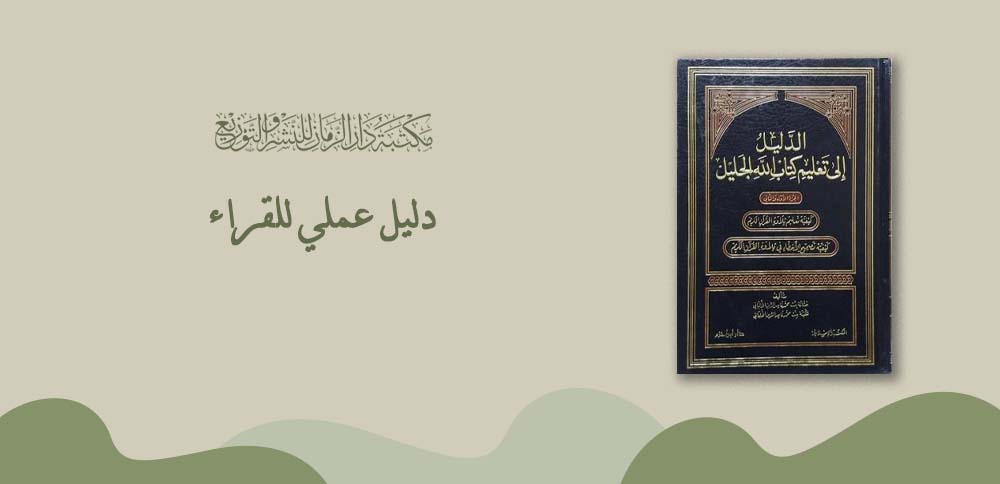
Reading is not just a leisure-time habit; it is a living way to learn, discover, and expand your horizons. It is the key to understanding the world around you, diving into the experiences of others, and building a critical mindset. With the accumulation of sources of knowledge and the expansion of options, a practical guide for readers is a necessity to help you organize your reading time, choose books that serve your personal and scientific goals, and invest every page you read to add real value to your intellectual journey.
In this practical guide for readers, you will learn effective ways to enhance your reading experiences and expand your comprehension and analysis skills.
What is a practical guide for readers?
A Practical Guide for Readers is an organized map that accompanies the reader on his journey with books, helping him to plan ahead and organize his reading time in line with his cognitive or personal goals. It guides readers step-by-step from selecting the right resources to managing the reading experience with greater awareness and benefit.
The guide usually consists of clear elements that include identifying appropriate books and resources, setting reading goals, and providing guidelines and practical applications that make it easy to understand and follow. It also includes a progress assessment phase to measure the knowledge gained and the development of users' reading skills.
How does it support readers?
This practical guide supports readers by simplifying the reading process into a clear path that minimizes confusion or distraction in the face of diverse content. It helps overcome obstacles to understanding literary or scientific texts and encourages conscious reading that is characterized by focus and continuity. In this way, the interaction with the text becomes more profound and the reader gains more confidence in their ability to analyze and understand.
The importance of skill development
The importance of a practical guide lies in raising the reader's efficiency and enhancing his intellectual and organizational skills. It helps to increase the enjoyment of reading and turn it into a productive habit that enriches the mind and expands knowledge. It also guides readers to choose what suits their needs and knowledge priorities, enabling them to optimize the use of libraries and various content platforms by selecting materials that serve their educational and cultural goals.
How do I start my reading journey?
Before you pick up your first book, it's important to set a goal for your reading. Having a clear purpose gives you focus and continuity. The goal may be to develop personal skills, such as improving your writing or speaking skills, or to enhance your general culture through exposure to diverse fields, or even specialized reading in your field of study or work.
For example, someone who wants to improve communication skills might choose books on emotional intelligence or the art of dialog. Such a step in any practical reader's guide is the cornerstone for guiding the reading path in the right direction.
Choosing Sources and Books
Choosing the right book depends not only on a catchy title, but also on examining the content and making sure it is suitable for your knowledge level and interests. Be sure to browse the index, and read the book's introduction or the author's bio before you start. These steps will help you build a balanced reading list that includes both lighter and more in-depth books, making the Practical Guide for Readers more effective in developing taste and diversifying knowledge.
Organizing the timeline
After setting a goal and selecting resources, it's time to organize your time. Create a flexible schedule that allows you to incorporate reading into your daily routine without pressure or long interruptions. Books can be divided into chapters to be read over days or weeks depending on the size of the book and your reading speed.
Some real-world advice that is backed up by any practical evidence for readers:
- Set aside a consistent amount of time each day to read, even if it's only half an hour.
- Write short summaries after each session to increase comprehension and solidify information.
- Review what you've read from time to time to reinforce comprehension and connect the dots.
With these steps, your reading journey turns into an organized and continuous experience that enriches your knowledge and keeps your passion for reading alive every day.
What are the best tools for reading development?
Practical Guide to Books
Practical guides for readers are one of the most effective ways to organize the reading process and turn it into a focused and productive experience. These guides can be provided by an author or publisher, or they can be created by the reader themselves to suit their own goals. This method helps to divide the book into main themes, identify central ideas, and connect them to the overall theme.
This organization makes it easy to return to the notes at any time, enhancing understanding and giving the reader a clearer view of the knowledge gained. The practical guides are an excellent entry point to consciously and directly apply what has been read in life or work.
Feedback and summarization techniques
Taking notes while reading allows the reader to interact with the text instead of just understanding it superficially. This technique helps to solidify meanings, analyze ideas, and relate them to previous concepts. Writing summaries is a focused tool that summarizes information and preserves its essence in a way that is easy to refer to later.
Tips for effective application:
- Use different colors to categorize notes by importance or type of idea.
- Try to summarize each chapter with one or two sentences that express its main idea.
- Use symbols or markers to identify points that need additional review.
- Review your notes after you finish the book to get an overall picture and connect the dots.
Helpful online resources
A practical guide for readers can be supported by available digital tools that make the experience more interactive and seamless. There are educational platforms and online courses that offer strategies on effective reading, such as how to choose the right books or manage time while reading. Some apps offer tools for summarizing, reviewing, and saving important quotes.
This combination of a traditional practical guide and modern digital means gives the reader an integrated experience that combines organization, deep understanding, and the enjoyment of continuous learning.
What are the best books to develop writing and reading skills?
Dar Al-Zaman Publishing and Distribution Library It is one of the most prominent libraries that combines comprehensiveness and diversity, and provides readers with a practical guide to help them choose books that enhance their reading and writing skills at different levels. Thanks to the diversity of its publications, readers can find what meets their needs, whether in developing their academic style or in enriching their knowledge of Sharia and linguistic sciences.
Effective Academic Writing 1
The book Effective Academic Writing 1 from a section Languages Written by Alice Savage and Masoud Shafiei, this is one of the most important resources for teaching academic writing in English. It is 168 pages, weighs 1 kilogram, and measures 20 x 20 x 20 cm with an elegant paperback cover.
This book focuses on training students to compose organized and persuasive academic paragraphs through practical exercises that cover the main types of paragraphs such as descriptive, narrative, and personal opinion paragraphs. It also includes illustrated chapters on the basics of the writing process, using punctuation accurately, as well as timed exercises that reinforce the skill of writing under pressure.
Shatbya core
is Shatbya core Available in All categories An authentic reference and a major foundation in the science of the seven Qur'anic readings. It consists of 1173 verses, combining linguistic beauty and scientific accuracy, making it easy for students to memorize and assimilate.
The text begins with a moving introduction on the virtue and status of the Holy Qur'an, then moves on to present the origins of the seven readings and the nuances between them in an organized and clear manner, making it one of the most reliable texts in Islamic studies and Qur'anic disciplines.
How do I take advantage of Dar Alzaman's library to read?
Dar Alzaman Library is a vast knowledge space that allows readers to dive into a diverse world of books, helping them to build a solid cultural base that fuels their passion for reading. The library has more than 50,000 titles in various disciplines and age groups, making it an ideal destination for those looking for diversity and depth of content. Among its shelves, visitors can find rare and original books in the fields of literature, science, business, family and children's literature, as well as a collection of Islamic books that combine originality and methodology.
Dar Al-Zaman's library is not limited to Arabic books, but also offers resources in foreign languages, opening new doors to comparative knowledge and enriching the reader's intellectual experience. Specialized books on topics such as readings, academic references, and language learning books are also available to cater to different interests and knowledge needs.
Diverse fields of books
Dar Al-Zaman's bookstore has a variety of books that cover everything a modern reader might be looking for. The library combines literary books that narrate human experiences in an emotional spirit, scientific books that provide understanding and analysis, and development and business books that inspire and guide towards practical success. The library also celebrates family and children's books through a selection that combines education and fun, while providing reliable Islamic publications that contribute to enriching religious and intellectual understanding.
Services for researchers and students
Dar Al-Zaman Library pays special attention to researchers and students of science by providing rare and verified resources that help them in their academic projects. These services include access to scientific manuscripts, specialized references, and practical guides that facilitate the research process. The library also provides printing, publishing and distribution services for research and publications, which supports the dissemination of local scientific production and allows researchers to easily document their work. Through this, the library seeks to support the cultural movement in the community and make it an effective platform for discovering the new and enriching the Arabic library with original and new content.
What are practical ways to make reading more effective?
Applying the SQ3R strategy
The SQ3R strategy is one of the most powerful methods any practical guide for readers who want to improve their comprehension and recall. The strategy is based on five structured steps that create a clear path to effective and engaging reading.
- Survey: Start by quickly skimming the text for headings, key paragraphs, and accompanying graphics before diving into the details.
- Question (questions): Turn titles into questions that help you determine what you're looking for while reading.
- Read (reading): Read carefully to answer the questions above, noting important points in the margins of the text.
- Recite: Paraphrase what you've read with your tongue, as this promotes mental retention of information.
- Review: Review what you've learned after you've finished to make sure the whole picture is clear and coherent.
Following these steps makes the learning process more organized and gives the reader conscious control over the flow of information.
Using clues and mind maps
Creating companion guides and mind maps is an essential step in any practical reader's guide that seeks to make the most of the text. Mind maps help to visualize the relationships between ideas and connect concepts to each other in a visual way, making it easier to recall the information later. Short guides written as you read also serve as a personal reference when reviewing or preparing to discuss the idea with others.
Integration with analytical writing
The combination of reading and analytical writing represents an advanced level of interaction with texts. While reading, you can write short summaries or formulate analytical questions that stimulate critical thinking. This approach anchors the information in memory and gives you a deeper understanding of hidden meanings and internal connections between ideas. A practical guide for serious readers would not be complete without practicing this connection between what is read and what is written.
Frequently Asked Questions About A Practical Guide for Readers
What is a reading guide?
The reading guide helps students engage with literary and non-literary texts during the reading process, especially in classes that require deep comprehension or careful analysis. The guide is based on a set of questions and directions prepared in advance by the teacher for students to answer as they read the selected text, developing their ability to analyze, observe, and comprehend.
The greatest thing ever said about reading?
The most beautiful things that have been said about reading call for continuous learning and constant reading. Abdullah al-Bukhari expressed the impact of reading by saying that the medicine for memorization is addiction to looking at books, and Voltaire said that those who know how to read are the ones who lead people, referring to the power of knowledge and its impact on building minds.
What is the evidence for the ten readings?
The Guide to the Ten Readings refers to the different ways of reciting the Qur'an as transmitted by the Imams of the Qur'an. The ten lesser readings come from the Shatbya and Dura, while the ten greater readings come from the Tayyibah. These readings are considered a scientific reference for the heritage of recitation and Quranic performance through different traditions and methods.
A Practical Guide for Readers is an effective step to move from haphazard reading to structured reading that opens the horizons of understanding and development. With reliable sources and the best recommended books, Dar Al-Zaman provides readers with a clear reading plan that will help them achieve their intellectual and academic goals with confidence and poise.
Read more: