

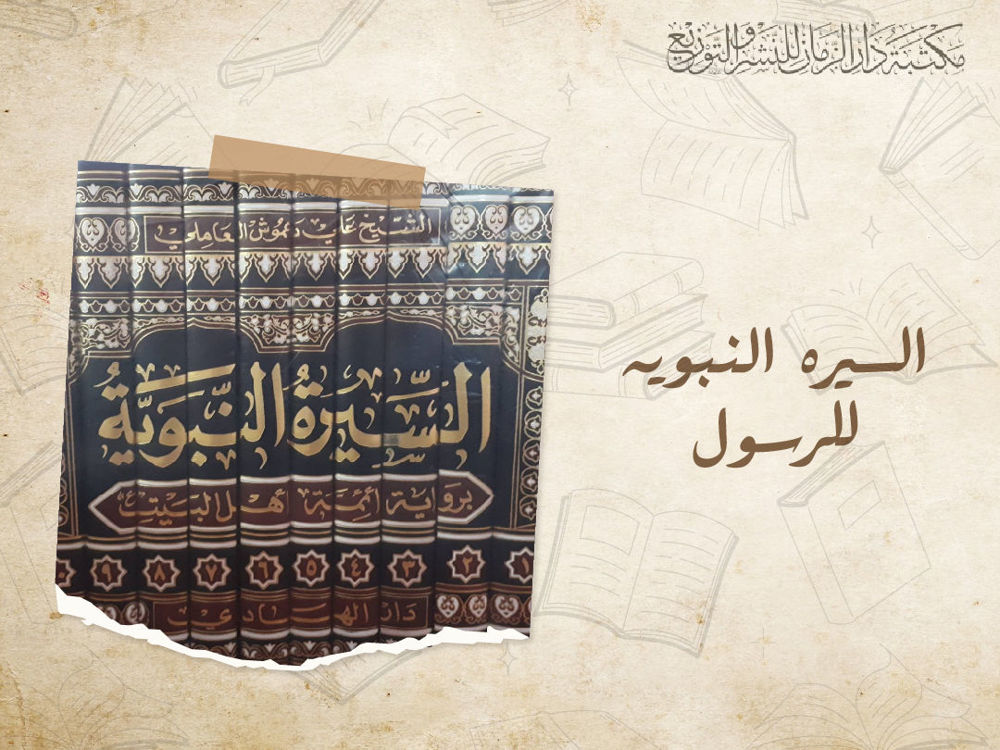
The Prophet Muhammad's biography is one of the most important sources from which we derive details of the life of the Prophet Muhammad and his profound impact on humanity. Through the Prophet's biography, we learn about his personal and social life, his noble morals, his noble qualities, his missionary journey, and his jihad in spreading the message of Islam. The biography gives us a deeper understanding of the dimensions of Islam and the Prophet's approach to facing challenges and spreading Islamic values. The Prophet's biography reflects a model of wise leadership and firm faith, and offers generations lessons in patience and fortitude, tolerance and justice, making it an important topic for anyone who seeks to understand the spirit and teachings of Islam through the life of the role model of mankind.
The Prophet's biography
The Prophet's birth and upbringing
The Messenger of the Ummah and the Seal of the Prophets, Muhammad, was born on Monday of the month of Rabi al-Awwal in the year of the elephant. During his birth, his mother saw a sight as if a light was emanating from her and illuminating the palaces of Sham. The Prophet grew up in the Quraysh community as an orphan, having lost his father before he was born. He stayed with his mother, who searched for a nurse for him from birth, and the first person to breastfeed him was Thweiba, Abi Lahab's mother-in-law.
He then moved to Diyar Bani Saad in search of a Bedouin nurse, where he spent part of his childhood. During his stay in Diyar Bani Saad, the incident of the chest incision took place. Gabriel, peace be upon him, came to the Prophet, cut open his chest, took out his heart, divided it in half, removed a black part that represented Satan's share, then washed his heart with Zamzam water and put it back in place. After this incident, his nurse took him back to his family.
The Prophet Muhammad lived with his mother until she passed away while visiting his uncles in Medina. After his mother's death, his grandfather Abdulmuttalib took him under his care, but soon afterward he accepted death, and the Prophet lived in his uncle's house. When the Prophet saw the poverty of his uncle, he decided to help him with household expenses. The Prophet began tending the sheep of the Quraysh, and then joined his uncle's business of trading to the Levant.
During one of their trading journeys, a monk noticed signs of a prophet in the caravan and told the people that Muhammad would be a future prophet and a mercy to the world. He told them the signs of his vision, such as trees and stones prostrating themselves to the prophet and a cloud shading him during his journey.
The Prophet's Youth
In his youth, the Prophet Muhammad (peace be upon him) was known for his honesty and integrity, and his reputation stood out among his peers. When his fame spread among the people, Mrs. Khadija trusted him to manage her money in trade, as she was a wise and wealthy woman. The Prophet (peace be upon him) succeeded in managing her money wisely and skillfully, resulting in great profits. Khadija asked for his hand in marriage because of his high position among the people and his good manners. The Prophet married Khadija when he was twenty-five years old, while she was forty years old, and remained faithful to her throughout her life until her death.
At the age of 35, the Prophet faced a difficult situation with the Quraysh tribes, as they were disputing the placement of the Black Stone during the rebuilding of the Kaaba. They directed the Prophet to resolve the dispute with his wisdom and peaceful behavior. The Prophet suggested that the Black Stone be placed in a robe and that each tribe hold one end of it, and they agreed to this solution and implemented it based on his advice.
The Prophet's Worship in the Cave of Hira
The Prophet (peace and blessings be upon him) loved solitude and worship in the Cave of Hira, where he meditated on God for many nights, and it was there that he had his first true vision. On one occasion, when he was forty years old in the Cave of Hira, Gabriel (peace be upon him) came down to him and ordered him to read. The Prophet said that he did not know how to read, and Gabriel repeated the order twice, and finally the first verse of the revelation was revealed to him, which is the reading of Allah: “Recite in the name of your Lord, who created you” (Al-Alaq: 1).
After this miraculous experience, the Prophet (peace be upon him) returned to his wife Khadija, terrified and trembling. Khadija calmed and reassured him, reminding him of his good manners, his compassion for the weak, and his help in difficult times. She then went with him to her cousin, Waraqa ibn Nawfal, who was a scholar of the Book, and explained to them that what happened with the Prophet was a kind of revelation similar to what was revealed to Moses (peace be upon him). This support and endorsement by Ruqa ibn Nawfal gave the Prophet greater steadfastness in his command.
Revelations to the Prophet
The beginning of the prophetic message was characterized by moments of preparation and education, as revelation first descended on Prophet Muhammad as preparation and education. Six months later, Gabriel - peace be upon him - returned with the revelation again, signaling the beginning of the phase of calling and mission after his readiness to receive the revelation.
This stage requires good preparation and equipping oneself to perform the task with sincerity and righteousness, as all meanings must be evoked that help in bearing the responsibilities of invitation and spreading the message in a correct and ideal way.
Secret Advocacy
After the revelation of the revelation and the command to call, which is mentioned in Almighty God's words: “O you who are exalted, arise and enlighten”, the Prophet Muhammad began to fulfill the duties of the call and bear its burdens. He began by calling those who were closest to him, namely his family and companions. This call was secret at first, to protect them from being exposed to dangers, especially with the Quraysh's hostility to Islam and Muslims. This secret call lasted for three years, and was a wise move to deepen the faith and establish the call firmly and quietly.
The Prophet's public proclamation
When the verse was revealed that says: “Warn your immediate family,” the Prophet (peace and blessings be upon him) began the public call to his tribe. He stood on Mount Safa and called his people to gather around him. Many people gathered, and the Prophet began his speech, testing his standing with his people and the extent of their faith in him. He asked them whether they would believe him if he warned them of a danger that threatened their lives, and they confirmed that they would believe him. The Prophet (peace and blessings be upon him) told them that he was warning them of God's punishment if they continued to disbelieve and disobey.
Harming Quraysh
From the beginning of his call, the Quraysh began to harm the Muslims, and did not stop for ten years. They insulted and defamed the believers, whether by word or deed. The Prophet (peace be upon him) was not spared from harm, and was even subjected to false accusations such as madness and witchcraft. His companions were subjected to injustice, mockery and insults. Despite all this, the Prophet and his companions did not abandon their religion, nor did they become discouraged.
Migration to Abyssinia and the boycott
When the suffering of the Muslims was aggravated by the escalating torture they were subjected to by Quraysh, the Prophet (peace and blessings be upon him) allowed them to emigrate to Abyssinia, which was a Christian country ruled by a just and compassionate king. The Muslims migrated to Abyssinia twice, the first time with twelve men and four women, and the second time with eighty-three men and eleven women. Afterward, Quraysh made a decision to boycott Banu Hashim in the streets of Mecca, refusing to deal with them, marry them, or ally with them, and this boycott lasted for three years. Afterward, God lifted the boycott through a compromise administered by a wise man. It should be noted that the event of migration to Medina occurred after the death of the Prophet's uncle, Abu Talib, and his wife, Khadija, in the tenth year of the Prophet's mission. The Prophet was greatly affected by the death of his uncle and his wife, as they had supported and defended him from the aggression of the Quraysh, which is why that year was called the Year of Sorrow.
The Prophet's Exodus to Taif
After the departure of his uncle Abu Talib, the Prophet decided to go to Taif, hoping that he would find support and victory there, but he only faced more torture and abuse. He was stoned and provoked by ignorant people and young men. The Prophet returned to Mecca to continue his call to God.
Then came the miracle of Isra and Mi'raj, a special experience and confirmation of his status. The Prophet's soul and body were taken from Mecca to Beit al-Maqdis, and then he was lifted into the sky. During this journey, he met all the prophets and witnessed the great signs of God. It was on that night that prayer was imposed on Muslims as a fundamental pillar of Islam, and prayer was made five times a day and night.
Migration to Medina
After his return from Taif, the Prophet continued his call to Islam, especially during the pilgrimage season, when he had the opportunity to meet people and offer them the religion. On one of these occasions, he met young men from Medina who had come to perform the pilgrimage. He offered them Islam and they accepted the invitation, returned to their city and invited their families to Islam and prepared the city to receive the Prophet and pledged to protect and defend his religion.
At first, the Prophet authorized his companions to emigrate, so they left Makkah for Medina in secret, and after them, the Prophet and his companion Abu Bakr al-Siddiq left. When the Quraysh learned of the Prophet's departure to Medina, they sent after them to kill him, but God protected him and facilitated his migration, and after they crossed Gor Thawr, the Prophet arrived in Medina safe and sound.
Construction of the mosque
After God authorized the Prophet to migrate to Medina, one of the first things he took care of was the construction of the mosque. This construction began with the blessing of his camel on land owned by two orphan boys, and the Prophet bought it from them as a site for the construction of the mosque.
The brotherhood between the Muhajireen and the Ansar
After the mosque was built, the Prophet took an action that carried with it the pillars of brotherhood among Muslims. He established a visible union between the Muhajireen and Ansar in the house of Anas ibn Malik, which made Muslims in Madinah cooperate and share their livelihoods. This brotherhood was a solution to the financial hardship that the immigrants faced after leaving their money in Mecca.
The Prophet's Invasions
After settling in Medina, God authorized his Prophet to fight the polytheists of the Arab tribes. These invasions began with the Battle of Badr, where the Muslims were victorious. The invasions continued until they amounted to about twenty-five invasions, including the invasions of Badr, Uhud, Khandaq, Bani Qurayzah, Bani al-Mustaslaq, Khaybar, the conquest of Mecca, the Day of Hunayn, and Taif. The conquest of Mecca was the most important of these battles, beginning on the tenth day of Ramadan in the eighth year of the Hijrah. The Prophet fought in nine of these battles, and Mecca was the most important conquest, as the Muslims entered it without fighting. The Prophet entered the Sacred House and smashed the idols, then called for prayer, and stood in front of the people, announcing his pardon and release.
The Death of the Prophet
The Prophet (peace and blessings be upon him) visited the Sacred House in Mecca to perform the rituals of his only pilgrimage in the tenth year of the Hijrah. This pilgrimage signaled the cleansing of the Sacred House from polytheism and straying, and the beginning of a new period of purity and faith. It was also a signal to the Prophet that his time was coming. The Prophet stood among the people as an orator, giving them timeless commandments. Complaints began to come to the Prophet at the end of the month of Safar in the eleventh year of the Hijrah. He gave his wives permission to fall ill in the house of the mother of the believers, Mrs. Aisha, and entrusted Abu Bakr al-Siddiq with leading the Muslims in their prayers. He passed away on Monday, the twelfth of the month of Rabi' al-Awwal in the eleventh year of the Hijrah.
At the conclusion of this article, which is the Prophet's biography of the Prophet, may Allah bless Muhammad and his family as you prayed for Abraham and the family of Abraham, as you prayed for Abraham and the family of Abraham, as you blessed Abraham and the family of Abraham, as you blessed Abraham and the family of Abraham, as you blessed Abraham and the family of Abraham, as you blessed Abraham and the family of Abraham, as you blessed Abraham.
Read more: