

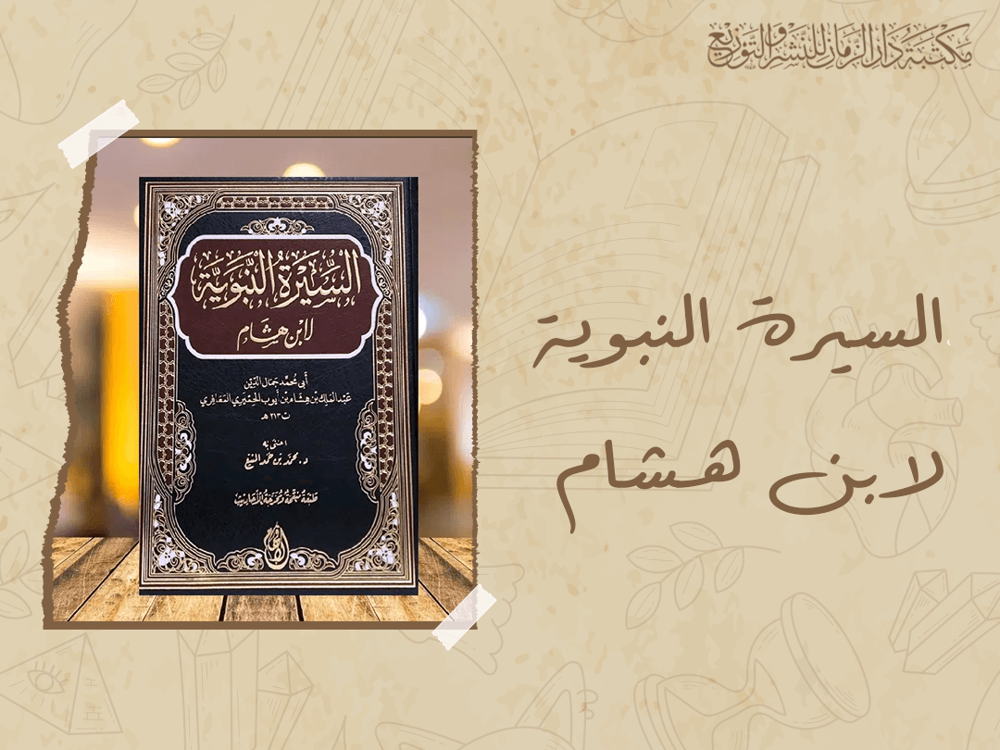
Ibn Hisham's Biography of the Prophet Muhammad is one of the most famous books that dealt with the life of the Prophet Muhammad in a detailed and comprehensive manner. This book is a key source for understanding the historical events that accompanied the mission of the Prophet Muhammad and the development of the Islamic call from its inception until the Prophet's death. Ibn Hisham, who lived in the third century AH, relied heavily on the writings of Ibn Ishaq, but made additions and edits that made his work more widely accepted and popular among scholars and researchers.
Ibn Hisham's biography
Origins and sources of the book
Ibn Hisham is Abdul Malik ibn Hisham ibn Ayyub al-Humayri al-Maafari, born in Basra and raised in Egypt. He based his biography on the writings of Muhammad ibn Ishaq ibn Yasar, one of the pioneers of biographical writing in Islam. Ibn Ishaq gathered his information from the companions and followers who lived in the early centuries of Islam, giving his writings great credibility. Ibn Hisham revised and edited this work, adding events and deleting what he deemed inappropriate or poorly documented.
Book content
Ibn Hisham's Biography of the Prophet covers a wide range of events that the Islamic call went through, and its content can be divided into several main sections:
Introduction
The biography of the Prophet Muhammad is the study of the life of the Prophet Muhammad from his birth to his death, including all the events, battles and challenges he faced in spreading Islam. This field of Islamic studies is considered one of the most important areas of interest to the Muslim nation, as it contains lessons, lessons and values that can be used in daily life and in understanding the Islamic religion more deeply.
The Prophet's lineage and birth
Prophet Muhammad ibn Abdullah ibn Abdul Muttalib ibn Hashim ibn Abdul Manaf, whose lineage goes back to Ishmael ibn Ibrahim, peace be upon him. The Prophet Muhammad was born in the year of the elephant, the year in which Abraha the Abyssinian tried to destroy the Kaaba with an army of elephants, but God thwarted his attempt with the miracle of the Ababil birds. He was born in Mecca, a city on the Arabian Peninsula that was an important commercial and religious center at the time.
Childhood and youth
After his birth, his grandfather Abdulmuttalib sent him to the desert to live with Halima al-Saadia, in accordance with Arab customs that saw the desert as a healthy environment for raising children. While he was in the desert, the miracle of the chest incision took place, as Gabriel, peace be upon him, came and incised his chest, took out his heart and washed it with Zamzam water.
When he was six years old, his mother Amina bint Wahab died, and he returned to Mecca to live with his grandfather Abdulmuttalib. After his grandfather's death, he moved in with his uncle Abu Talib, who played a major role in protecting and supporting him.
Marriage to Khadija
When the Prophet Muhammad was twenty-five years old, he worked in the business of Khadija bint Khuwaylid, a wealthy widow from Quraysh. Impressed by his honesty and sincerity, Khadija offered to marry him, and he agreed and married her. This marriage had a great impact in supporting the Prophet financially and morally.
Starting a revelation
When the Prophet Muhammad reached the age of 40, he retreated to the Cave of Hira for meditation and reflection. One night, Gabriel came to him with the first verses of the Quran: Read in the name of your Lord who created. This was the beginning of the revelation and the beginning of the Islamic call.
Covert and public advocacy
The Prophet (peace be upon him) began his call secretly, calling those closest to him, such as his wife Khadija, his friend Abu Bakr, Ali ibn Abi Talib, and Zayd ibn Haritha. After three years of secret dawah, Allah commanded the Prophet to make the call public, and he began calling the Quraysh and the Arabs to Islam.
Opposition and persecution
The Islamic call faced strong opposition from the Quraysh, who saw Islam as a threat to their influence and beliefs. The Prophet and his followers were persecuted and tortured, and the Quraysh imposed an economic and social siege on them in Abu Talib's people.
Migration to Madinah
After more than ten years of preaching in Mecca, God authorized the Prophet Muhammad and his followers to migrate to Medina (Yathrib). The migration was a major turning point in the history of the Islamic call, as the Prophet and his followers found a supportive and welcoming environment in the city.
Founding of the Islamic State
After arriving in Medina, the Prophet Muhammad established an Islamic society based on the principles of justice and equality. He made a treaty with the Jews and polytheists in the city, and a pact of brotherhood and solidarity between the Muhajireen and the Ansar.
Invasions and battles
The Prophet Muhammad fought many invasions and battles to defend and spread the Islamic call. Some of the most notable of these invasions are:
The Battle of Badr
It took place in the second year of the Hijrah, and was the first of the major invasions between Muslims and Quraysh. It ended with the victory of the Muslims and showed their military strength.
The Battle of Uhud
It took place in the third year of the Hijrah, and was a response by the Quraysh to their defeat at Badr. The battle ended with the victory of the Quraysh after the archers disobeyed the Prophet's orders and left their positions.
The Battle of the Trench
It took place in the fifth year of the Hijrah, when the Quraysh allied with some tribes to besiege the city. Thanks to the digging of the trench and good planning, the Muslims were able to repel the attack and end the siege.
Reconciliation of Hudaibiya
In the sixth year of the Hijrah, the Prophet Muhammad (peace be upon him) made a peace with the Quraysh known as the Peace of Hudaibiya, which gave Muslims a chance to spread the call in peace and free them to focus on other enemies.
Conquest of Mecca
In the eighth year of the Hijrah, the Quraysh broke the peace of Hudaybiyyah, and the Prophet Muhammad led an army of 10,000 fighters to Mecca. The Muslims entered Mecca without much fighting, and the Prophet declared amnesty for its inhabitants, which led to the rapid spread of Islam.
Farewell argument
In the tenth year of the Hijrah, the Prophet Muhammad performed the Farewell Hajj and gave a comprehensive sermon that included many Islamic principles and values. In his sermon, the Prophet emphasized human rights, equality, and brotherhood among Muslims.
Death of the Prophet
In the eleventh year of the Hijrah, the Prophet Muhammad fell gravely ill and died at the home of his wife Aisha bint Abu Bakr. His death was a great tragedy for Muslims, but he left them with an integrated religion and a strong state that was able to continue and grow.
Importance of the book
Ibn Hisham's Biography of the Prophet Muhammad is one of the most important references that researchers and scholars rely on to study the life of the Prophet Muhammad and the history of Islam. The book is characterized by accuracy in recounting events and good documentation of information, making it a reliable source. The book is not only a historical account, but also includes lessons and principles that can benefit Muslims in their daily lives.
Critical analysis
Despite the importance of Ibn Hisham's biography, it is not free from criticism. Some scholars argue that Ibn Hisham omitted some narratives that he deemed inappropriate, which could affect the comprehensiveness of the historical account. The book also relies heavily on oral accounts, which can be prone to distortion or forgetfulness. Nonetheless, Ibn Hisham's Biography of the Prophet remains an indispensable work for any student of Islamic history.
In the end, it can be said that Ibn Hisham's Biography of the Prophet is a pioneering work in the field of Islamic biography and history. The book provides a comprehensive and accurate picture of the life of the Prophet Muhammad and the events of the Islamic call, making it an important reference for researchers and those interested in studying this important period of history. Thanks to this work, Ibn Hisham remains one of the most prominent historians in Islamic history.