

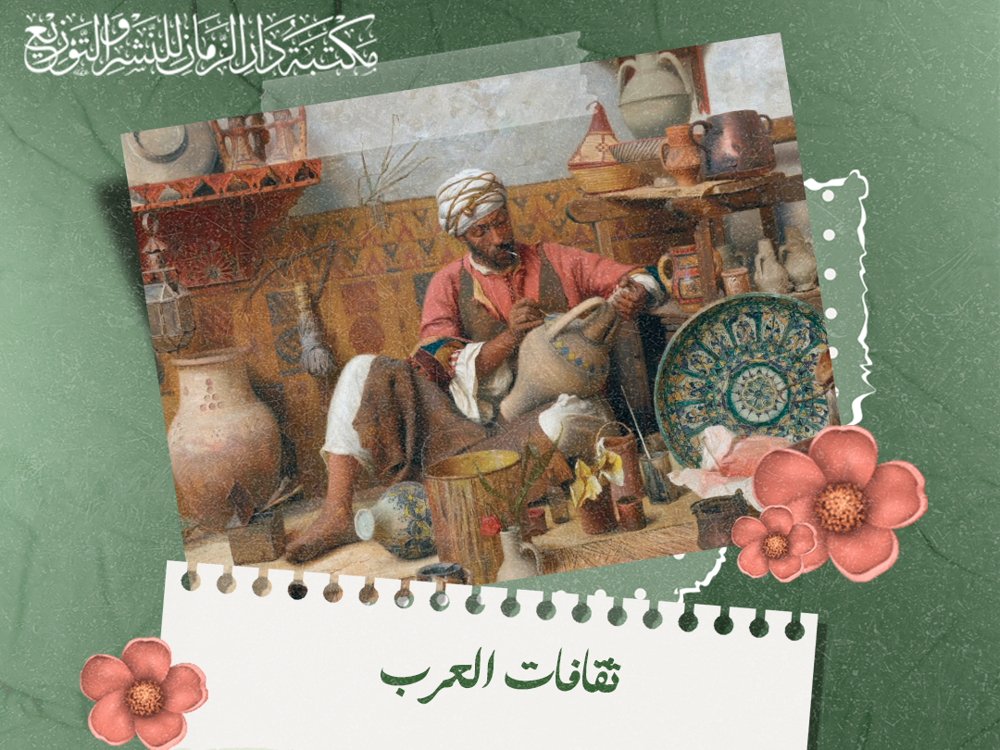
Arab culture is one of the most diverse and rich cultures in the world. Arab cultures are a deeply historical culture that blends multiple components that represent a rich geographical and cultural diversity. The influence of Arab cultures can be seen in a variety of fields, from literature and the arts to science and faith, and is characterized as a blend of ancient traditions and modernity, with unique expressions of hospitality, gratitude, and generosity. The rich history of the Arabs embodies the genius of Arab civilization and its intellectual flourishing. For more on Arab cultures, read on:
Learn about Arab cultures
Arab cultures are also characterized by depth and diversity in the field of literature and poetry, with a wealth of stories and poems that reflect wisdom and beauty. These stories and poems have become part of the Arab identity and a source of inspiration for subsequent generations.
Science and philosophy also have a prominent place in Arab heritage. Ancient Arab scientists made significant contributions in fields such as mathematics, astronomy, medicine, and philosophy, which greatly influenced global scientific progress.
Understanding Arab cultures opens the door to new opportunities for cross-border interaction and cooperation and contributes to the preservation of the rich and diverse Arab cultural heritage.
Culture: Symbols and legacies that create identity
In order to know what Arab cultures are, you need to know what culture is. Culture is not just a word that describes a human lifestyle. It is much more than that. It is a complex social system that includes historical customs and beliefs, upbringing and education, and heritage symbols. Culture is a legacy passed down from ancestor to descendant, a way to preserve and pass on our heritage to future generations.
When we talk about culture, we mean the social fabric that characterizes different peoples and societies. It encompasses values, practices and concepts that shape who we are and how we think. Culture is not just how we eat or dress, it is our way of life in general.
This well-established social order is woven into history and heritage, and manifests itself in art, literature, science, and customs. It is a mirror of a people and society, and a source of expression and creativity. Culture is a rich human experience that renews and evolves over time.
If we seek to understand a society or a people, we have to think about their culture. It is the key to understanding the hearts, minds and values that guide their lives. Thus, culture is the soul, mind and heart that unites and distinguishes human beings.
Culture in the modern sense
Culture, a word that has a variety of definitions and interpretations, is a term with comprehensive dimensions that are difficult to define precisely. Larousse of France saw it as a set of social systems and religious, artistic and intellectual elements that distinguish and define the identity of a society in relation to others. While Dr. Abdulaziz Al-Tuwaijri saw it as the sum total of human activities in the fields of literary, intellectual and artistic creativity.
Culture is the manifestation of a society's civilization and mentality. It is made up of the beliefs, customs, and values that peoples and nations rely on to shape their lives. It is the mirror that reflects the identity and nature of a society, and represents its heritage, history, and lifestyle.
Culture is the language of peoples and the key to human understanding. It includes language, religion, traditions, ideas and the arts. It is an expression of our identity, history and way of thinking. For Arabs, culture represents a large part of their identity, heritage and values. The Arabic language, Islam, customs and traditions embody part of this rich and diverse culture.
Arab culture
Arabic culture has its roots in the pre-Islamic period and was a prominent manifestation of Arab civilization. The ancient Arabs offered cultural bounty in the form of speeches, wisdom, poetry, and proverbs. Their linguistic genius was reflected in these works and became a mirror that clearly reflected their thoughts, feelings, and imagination.
With the advent of Islam, the Arabs set out to transfer and develop ancient sciences. They embarked on new exploration and innovation, actively contributing to the scientific renaissance. They also excelled in the fields of literature, jurisprudence, philosophy, and the arts in all their forms.
Despite the difficulties that Arab culture has faced through the ages, it has survived and thrived. Arabs have suffered from attempts to overthrow it, including attempts to exclude it from the fields of education and life. It has also been exposed to misconceptions and the culture of globalization that could threaten its uniqueness. However, the legacy of Arab culture continues to live and thrive in the 21st century, forming an important part of the human heritage.
Components of Arab culture
Arab culture consists of two main components that form its foundation:
-
Arabic: The Arabic language is the main means of expression and communication in the Arab world. It is a language rich in vocabulary, historical and literary texts that carry an enormous cultural heritage. The Arabic language is an important element of Arab cultural identity and a means of preserving heritage and transmitting knowledge.
-
Islam: Islam has played a major role in shaping Arab culture. It is not just a religion, but a comprehensive civilizational system that covers laws, ethics, science, and the arts. Islam is a major source of values and guidelines in the lives of Arab individuals and societies.
Based on these two components, the concept of Arabic culture can be expanded to include everything related to language and Islam. The Arabic language is the medium of transmission and expression of the teachings of Islam, and contributes to the transmission of values, knowledge, and arts. It is an essential element in shaping Arab cultural thinking and identity.
In conclusion, the Cultures of the Arabs is a key factor in shaping human life and building society. It is an essential means of transferring knowledge and experiences between generations and accumulating and storing them for the development of societies. Culture contributes to shaping the human being through learning language, values, customs and traditions.
No society can progress and succeed without a diverse cultural policy that encompasses multiple aspects of life such as social, political, media, environmental, economic, and educational aspects. Culture forms the core of national identity and plays a crucial role in the development of nations.
Intermingling and interaction between different cultures promotes the advancement of societies. Cross-culturalism can contribute to the exchange of ideas, traditions and values between different cultures, enriching human civilization. National culture should have its own role in this process without losing sight of the origins and principles of each society.
Education and knowledge are key elements in building and developing culture and developing societies. This shows the importance of investing in education and research and encouraging innovation and creativity to elevate culture and promote social and economic progress.