Description
Book description:
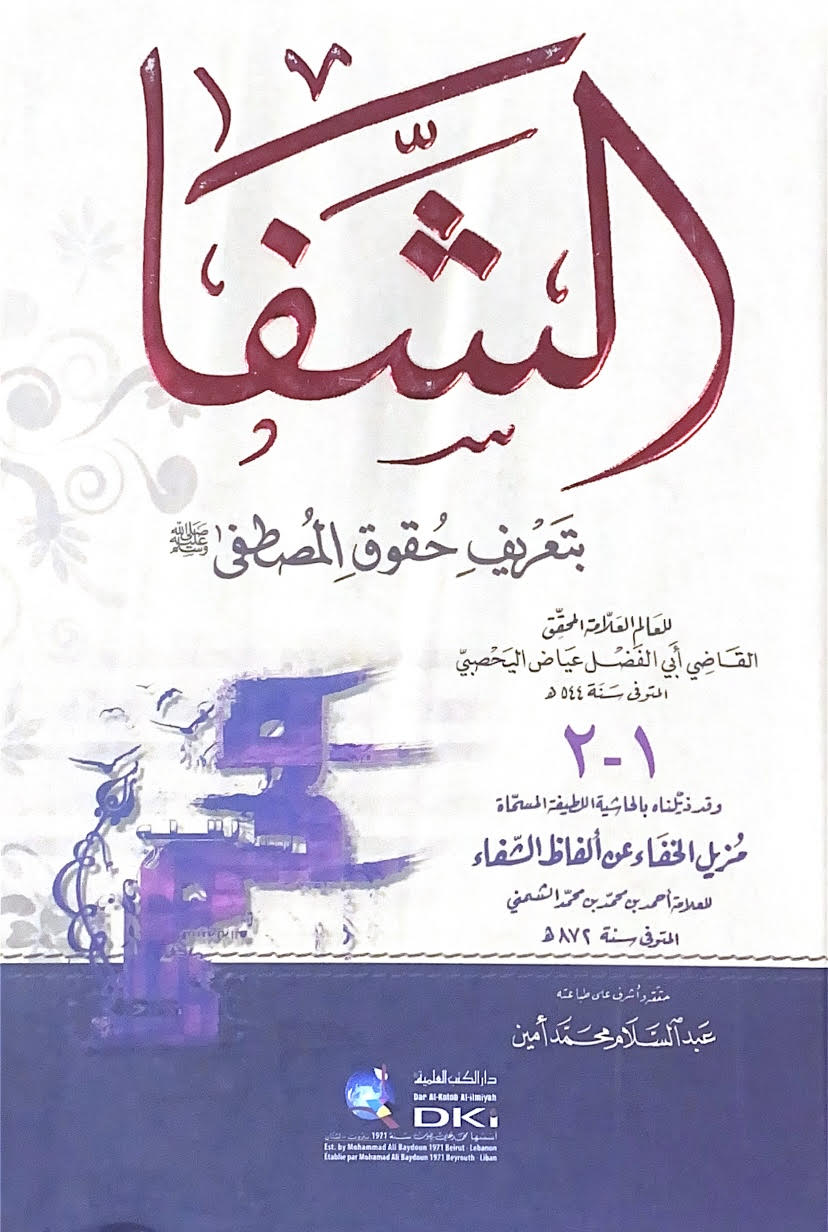
- Author's name: Judge Abu al-Fadl Ayyad al-Yahsabi
- Number of parts: 2
- Number of pages: 350 pages
- The subject of the book: Al-Shafa with the definition of the rights of al-Mustafa
The contents of the book:
- Introductions
- Publisher's word:
- Translation of Qadi Ayyad
- Translation of Allama al-Shamni, the author of the footnote
- The first section is on how the Most High glorifies the Prophet (peace and blessings of Allah be upon him) in word and deed.
- The first chapter is about Allah's praise for him and the greatness of his value to Him
- Chapter One: Praise, praise, and enumerating virtues
- Chapter Two: The Almighty's description of him as a witness and the praise and dignity associated with it.
- Chapter Two: The Almighty's description of him as a witness and the praise and dignity associated with it
- Chapter Three: What he said to him in the form of kindness and compassion
- Chapter Four: The Greatness of the Almighty's Oath
- The fifth chapter is about his grandfather's oath to his grandfather to realize his status with him
- The sixth chapter of what the Almighty has said about him, may Allah bless him and grant him peace, is a source of compassion and honor
- The seventh chapter of what Allah Almighty has told us in His dear book about his greatness and the honor of his rank over the prophets and his rank over them.
- Chapter Eight on God's declaration of His creation by praying for him and lifting the torment because of him.
- Chapter Nine: Surah al-Fatah's description of the honors of the Prophet (peace and blessings of Allaah be upon him)
- The tenth chapter is about what Allah, the Almighty, has shown in His dear Book about His honor and status with Him and what He has singled out for Him in addition to what has been organized in what we have mentioned before
- The second chapter is about how God Almighty perfected his virtues, both creatively and morally, and coupled all religious and worldly virtues in him in a coordinated manner.
- (chapter)
- (Chapter) As for the cleanliness of his body, the pleasantness of his odor and sweat, and his purity from filth and bodily shame
- (Chapter) As for the abundance of his intellect, the intelligence of his mind, the strength of his senses, the fluency of his tongue, the moderation of his movements, and his good manners
- (Chapter) As for being articulate and eloquent
- (Chapter) As for the honor of his lineage and the generosity of his country and origin, there is no need to establish evidence for it, nor is it hidden
- (Chapter) As for what the necessity of life calls for from what we have described, there are three types
- (Chapter) The second type is that which is praised for its abundance and pride in its abundance, such as marriage and jah
- (Chapter) The third type of praise is that in which cases differ in praise
- (Chapter) As for the acquired qualities of good morals and honorable manners, which all rational people agree to favor their owner
- (Chapter) As for the origin of its branches, the element of its springs, and the point of its circle, the mind
- (Chapter) As for dreaming, forbearance, pardon with ability, and patience with what is disliked
- (Chapter) As for generosity, generosity, generosity and tolerance
- (Chapter) As for bravery and valor
- (Chapter) As for modesty and forgiveness
- (Chapter) As for his good manners, politeness, and simplicity with all kinds of people, the Prophet (peace and blessings of Allaah be upon him)
- (Chapter) As for pity, compassion and mercy for all creatures
- (Chapter) As for his morality in terms of fidelity, good covenant, and the linking of the womb
- (Chapter) As for the humility of the Prophet (peace and blessings of Allah be upon him) despite his high position and elevation
- (Chapter) As for his justice, honesty, chastity, chastity, and truthfulness of tone
- (Chapter) As for his reverence, silence, modesty, sobriety and good manners
- (Chapter) As for his asceticism in the world
- (Chapter) As for his fear of his Lord, his obedience to Him, and the intensity of his worship
- (chapter)
- (chapter)
- (Chapter on interpreting the strangeness and complexity of this hadith)
- The third chapter is the authentic and well-known reports of the greatness of his status with his Lord and his position and the dignity he has been accorded in both worlds, may Allah bless him and grant him peace.
- The first chapter is about his status with his Lord, the Almighty, the selection, the elevation, the preference, the supremacy of the son of Adam, the advantages of the ranks, and the blessing of his good name:
- (Chapter) On His Preference for the Dignity of the Isra'
- (Chapter) Then the predecessors and scholars differed as to whether he was sent away with his soul or his body
- (Chapter) On invalidating the arguments of those who say it is sleep
- (Chapter) As for his (the Prophet's) vision of his Lord
- (Chapter) As for what is mentioned in this story about his pleading and talking to God Almighty
- (Chapter) As for what is mentioned in the hadith of Isra'
- (Chapter) On the mention of his preference in the Resurrection in terms of dignity
- (Chapter) On his preference for love and affection
- A chapter on his preference for intercession and the exalted position
- A chapter on the preference of the Prophet (peace and blessings of Allah be upon him) in Paradise by way of wasila, high degree, Kawthar, and virtue
- (chapter)
- A chapter on the names of the Prophet (peace and blessings of Allah be upon him) and his virtue
- A chapter on honoring God with His beautiful names and high attributes
- (chapter)
- The fourth chapter is about the miracles that Allah Almighty showed at his hands and honored him with characteristics and honors
- (Chapter) Know that Allah is able to create knowledge in the hearts of His servants
- (Chapter) Know that the meaning of calling what the prophets came with a miracle
- Chapter on the miracle of the Qur'an
- (Chapter) The second aspect of its miraculousness is the image of its wondrous organization and strange style
- (Chapter) The third aspect of miraculousness is the news of the unseen
- (Chapter) The fourth aspect is the news of the past centuries
- (Chapter) These four aspects of its miraculousness
- (Chapter), including the splendor that engulfs the hearts of its listeners
- (Chapter) One of the many aspects of its miraculousness is that it is an everlasting sign
- (Chapter) A group of imams and imitators of the Ummah have enumerated many aspects of its miraculousness
- Moon Splitting and Sun Confinement Chapter
- Chapter on water flowing from his fingers and multiplying by his blessing
- (Chapter) Similar to this are his miracles of blowing up water with his blessing and resurrecting him by touching him and calling him
- Chapter One of his miracles is the multiplication of food with his blessing and prayers
- Chapter (On Trees Talking and Testifying to His Prophethood and Answering His Call)
- A chapter in the story of the bending of the log
- Chapter and the same for other inanimate objects
- A chapter on verses in animal species
- Chapter on the resurrection of the dead and their speech (and the speech of babies and infants and their testimony to his prophethood)
- Chapter on Discharging the Sick and Disabled
- A chapter on answering his prayers, peace be upon him
- A chapter on his dignity and blessings and the reversal of objects for him in what he touched or handled, may Allah bless him and grant him peace
- Chapter (including what he has learned about the unseen and what will be)
- A chapter on Allah's protection from people and His sufficiency for those who harm Him
- Chapter One of his remarkable miracles is the knowledge and sciences that God gave him.
- Chapter One of the characteristics of the Prophet (peace and blessings of Allah be upon him) is that he prophesied with the angels and the jinns.
- Chapter Among the signs of his prophethood and signs of his message are the reports of the monks and rabbis
- The chapter includes the signs that appeared at his birth and the wonders recounted by his mother and those present at his birth
- Qadi Abu al-Fadl, may Allah have mercy on him, said that in this chapter we have come across some clear signs of his miracles.
- The second section (on the rights of the Prophet (peace and blessings of Allah be upon him).
- The first chapter is about the obligation to believe in him and the obligation to obey him and follow his Sunnah
- Chapter As for the obligation to obey him
- Chapter As for the obligation to follow him, obey his Sunnah, and follow his guidance
- (Chapter) As for what the Salaf and the Imams said about following his sunnah and following his guidance and biography
- Chapter: Disobeying his command and altering his Sunnah is an error and heresy, for which Allah promises failure and punishment.
- Chapter Two: The Obligation to Love the Prophet (peace be upon him)
- Chapter on the Rewards of Loving the Prophet (peace be upon him)
- A chapter on what was narrated from the Salaf and Imams (regarding their love and longing for the Prophet (peace and blessings be upon him)
- Chapter on the sign of love for the Prophet (peace and blessings of Allah be upon him)
- A chapter on the meaning and reality of love for the Prophet (peace be upon him)
- A chapter on the obligation to support him (peace and blessings of Allah be upon him)
- The third chapter on the importance of honoring his command and the duty of reverence and righteousness
- Chapter on the habit of the Companions in honoring, reverence and reverence for the Prophet (peace and blessings of Allah be upon him)
- After his death, the Prophet's sanctity, reverence, and honor are as necessary as they were during his life.
- A chapter on the Salaf's practice of maximizing the narration of the Prophet's hadith and Sunnah
- A chapter on the importance of honoring the Prophet (peace be upon him) and his progeny and the mothers of the believers.
- Chapter One of the ways to honor him and his righteousness is to honor his companions.
- The chapter also includes honoring all his causes and honoring the sight and places of Mecca, Medina, his treaties, and what he touched or was known by.
- Chapter Four: The Ruling of Praying to Him and Salaam, the Requirement and Virtue of Praying to Him and Salaam
- Chapter Know that praying for the Prophet (peace and blessings of Allah be upon him) is obligatory for all
- Chapter on the places where it is desirable to pray to the Prophet (peace and blessings of Allah be upon him)
- Chapter on How to Pray to Him and Salaam
- Chapter on the virtue of praying for the Prophet, greeting him, and supplicating for him
- A chapter on the slander and sinfulness of those who do not pray for the Prophet (peace and blessings of Allah be upon him)
- A chapter on his specialization in communicating the prayers of the people who prayed to him or peace be upon him.
- A chapter on the difference in praying for those other than the Prophet (peace be upon him) and the other prophets, peace be upon them.
- A chapter on the ruling on visiting his grave and the virtue of those who visit his grave, how to greet him and how to pray
- A chapter on the etiquette required of those who enter the mosque of the Prophet (peace be upon him) in addition to what we have mentioned, the virtue of praying in it and in the mosque of Mecca, the mention of his tomb and his pulpit, and the separation of living in Madinah and Mecca.
- The third section on what is obligatory for the Prophet (peace be upon him) and what is impossible for him
- The first chapter deals with religious matters and talks about the infallibility of our Prophet (peace be upon him) and the other prophets (peace be upon them).
- A chapter on the ruling on holding the Prophet's heart from the time of his prophethood
- Chapter As for their infallibility from this art before prophethood
- Separate
- Chapter Know that the Ummah is unanimous on the infallibility of the Prophet (peace and blessings of Allah be upon him) from the devil
- As for his words, there is clear evidence of his truthfulness through miracles.
- Chapter Some of the appellants have asked questions here
- Separating this argument from the method of communication
- If you ask, what is the meaning of his saying in the hadith of omission?
- Chapter As for what relates to the wings of the body
- A chapter on their infallibility from sins before prophethood
- Chapter This is the verdict on what constitutes an intentional act of transgression
- Chapter on the Hadiths in which the Prophet (peace and blessings of Allaah be upon him) is reported to have omitted
- A chapter on responding to those who allow them to commit minor offenses
- If you say, "If you deny that they are not guilty of sins and transgressions
- A chapter that is clear to you, the observer, from what we have decided
- Chapter on the Infallibility of Angels
- Part Two: What concerns them in worldly matters and human affairs
- If you say that it is true that the Prophet (peace be upon him) was bewitched
- Chapter This is how he is in his body
- Chapter As for what he believes in matters of human judgments in his hands
- Chapter As for his worldly statements about his own and other people's conditions
- Chapter If you say that his infallibility has been established
- Chapter If it is said, what is the face of his words?
- Chapter As for his worldly deeds, the Prophet (peace and blessings of Allah be upon him)
- Chapter If it is said, what is the wisdom of making the diseases and their severity on him?
- The fourth section on the behavior of those who defame or insult him, may Allah bless him and grant him peace.
- The first chapter is a description of what is insulting or defamatory against the Prophet (peace be upon him), whether it be by innuendo or text.
- A chapter on the argument for killing those who insult or slander the Prophet (peace and blessings of Allah be upon him)
- If you ask why the Prophet (peace be upon him) did not kill the Jew who told him to poison you.
- The Qadi said that the killing of a person who intends to insult and slander him has already been discussed in the previous chapter.
- The third aspect is that he intends to disbelieve him in what he has said
- The fourth facet is that the words are ambiguous and the statement is ambiguous
- Chapter The fifth aspect is that he does not intend a shortcoming and does not mention a defect
- Chapter Six: The sixth way to say this is to say it about someone else
- The seventh aspect is to mention what is permissible for the Prophet (peace and blessings of Allah be upon him)
- A chapter on what is permissible and what is not permissible for the Prophet (peace be upon him)
- Chapter Two: The judgment and punishment of the slanderer, the slanderer, the defamer, the detractor, and the inheritor of the slanderer
- Chapter If we say that there is no repentance
- Chapter This is the verdict of those who are found guilty of this
- Chapter This is the rule for Muslims, but not for Dhimmis
- Chapter on the inheritance of those killed for insulting the Prophet (peace and blessings of Allah be upon him), washing him and praying for him
- The third chapter is the ruling on those who insult Allah, His angels, His prophets, His books, the family of the Prophet (peace and blessings be upon him) and his wives and companions.
- Chapter As for those who add to Allah the Almighty what is not befitting Him
- A chapter on realizing the disbelief of those who disbelieve
- A chapter on what constitutes blasphemy
- Chapter This is the verdict of the Muslim who curses Allah, but not the Dhimmi
- Chapter This is the verdict of those who declare insults against him
- Chapter As for those who speak out of turn and speak out of turn
- (Chapter) and the verdict of those who insult other prophets and angels of Allah
- (Chapter) Know that anyone who disparages the Qur'an or the Qur'an
- (Chapter) Insulting His Household, Wives and Companions
Also browse:
- A special collection of books The Prophet's Biography
- 40 Majlis in the company of the Beloved, may Allah bless him and grant him peace