
Description
Book description:
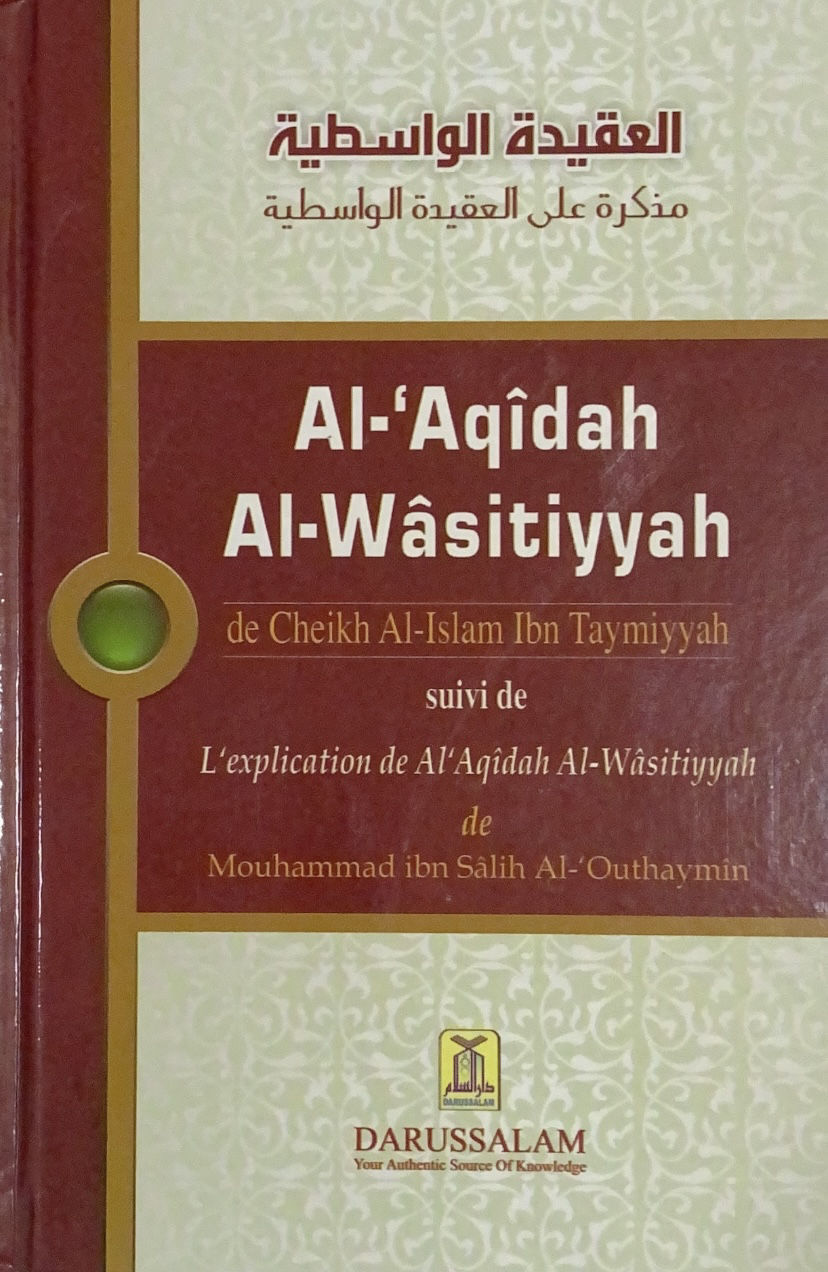
- Author's name: Muhammad bin Saleh al-Uthaymeen
- Number of pages: 480 pages
- The subject of the book: Shaykh al-Islam Ibn Taymiyyah's Wastiya creed
The contents of the book:
- Introduction
- Author's translation
- Introduction to the second edition
- Explainer's introduction
- Divisions of monotheism
- First section: Tawhid al-Rububiyyah
- Second section: Monotheism of divinity
- Third section: Unification of Names and Attributes
- Explanation of Ibn Taymiyyah's Introduction
- Talking about the Bismillah
- Interpretation of praise
- Meaning of the messenger
- The meaning of guidance and the religion of truth
- What is meant by the appearance
- Suffice it to say: {To show it over all religion}
- The meaning of the certificate of no god but God
- The meaning of the testimony of Muhammad's servant and messenger
- Meaning of Family and Companions
- saying: “And peace be upon him”
- Pronunciation of the word after
- The meaning of belief: In language and terminology
- Defining the Survival Squad
- Meaning of Ahl al-Sunnah wal-Jama'ah
- Pillars of faith
- Belief in God involves four things
- Belief and Evidence of God's Existence
- Significance of the mind
- Sensory connotation
- Innate connotation
- Significance of the law
- Belief in angels
- Definition of angels: Language and terminology
- Belief in books
- Belief in messengers
- Noah is the first prophet
- Adam is the first of the prophets
- Muhammad (peace be upon him) is the last of them
- The descent of Jesus and his rule of Muhammad's law
- The answer to those who questioned Abu Bakr's preference for Jesus, son of Maryam
- Belief in and evidence for resurrection after death
- Believing in good and bad fate
- Calling fate evil and the answer to it
- Believing in what God has described Himself in His Book and what His Messenger has described Himself as
- Exhibit I: Believing in what he has described himself as
- Research II: God's attributes are unseen
- Third article: We do not describe God as something He has not described Himself as
- Research Paper IV: The obligation to take texts as they appear
- Fifth article: Speech includes both subjective and objective attributes
- Subjective qualities are of two types: moral and informative
- Why scholars call it subjective and objective
- Research VI: The mind has no role in names and attributes
- The mind recognizes what is obligatory and forbidden for Allah (SWT) as a whole, not in detail; the mind recognizes what is obligatory and forbidden for Allah (SWT) as a whole
- Not every perfection of the creature is a perfection of the Creator
- His saying: “and what he described his messenger as” is divided into three sections
- Saying
- verb
- Declaration
- saying: “without distortion or disruption...”
- Misrepresentation is either verbal or semantic
- Why the author chose the word misrepresentation over interpretation
- Meanings of hermeneutics
- The difference between disruption and distortion
- Delegation is one of the most evil of the heresy
- The false statement that the way of the predecessors is safer and the way of the successors is more knowledgeable and wiser was said by some idiots
- The Confusion and Doubt of the People of Kalam
- The meaning of adaptation
- Ahl al-Sunnah wal-Jama'ah do not adapt God's attributes and their evidence for this
- Meaning of representation
- Representation is denied by hearing, reason, and instinct
- Why the Creator and the created are not the same from the mind
- Fungal guide
- Q: Are these hadiths representative?
- Hadith: “You will see your Lord as you see the moon”
- The answer to this hadith is twofold: Total and detailed
- Hadith: “God created Adam in his own image”
- The answer to this hadith can be summarized in two ways
- Representation is more important than simile
- Saying: “Rather, they believe that Allah {is not like anything}“
- Say: {Nothing like him}
- saying: “They do not deny him what he has described himself as”
- saying: “And they do not distort...”
- saying: “And they do not challenge...”
- Types of atheism
- Types of Name Semantics
- Atheism in God's Verses
- Signs are better than miracles in a number of ways
- God's verses are divided into two parts
- Section I: Cosmic
- The Meaning of Atheism in God's Cosmic Verses
- Section II: Legitimate
- The meaning of blasphemy in God's verses
- Saying: “They do not adapt, nor do they act...”
- saying: “Because he is the Almighty”
- Saying: “There is no equal, no equal, no equal”
- saying: “He is not compared to his creation.”
- Measurement sections
- saying: “He knows himself”
- It is obligatory to accept what the news indicates, if it meets four descriptions and the evidence for this
- Saying: “Then his messengers are truthful...”
- God's confirmation of His messengers by word and deed
- saying: “Unlike those who say...”
- saying: “That's why the Almighty said: {Sabhan your Lord is the Lord of Glory}“
- saying: “He praised Himself for what the offenders described Him as...”
- saying: “He has combined in what He has described...”
- Adjectives are twofold: Positive attributes and negative attributes
- The fallacy of those who claim that proven attributes require representation
- Adjectives fall into three categories
- The Way to Prove Attributes
- The negation of God's attributes can only be general or specific for a reason
- Saying: “The people of Sunnah and Jama'ah do not deviate from what the messengers came with.”
- The meaning of adulthood
- All that the messengers reported about God Almighty is acceptable and truthful and must be believed.
- The rulings of previous prophets on which scholars differ
- The way to know the laws of the previous prophets
- saying: “It is the Straight Path...”
- saying: “The path of those upon whom God has bestowed His blessings.”
- God's blessings are public and private
- Those on whom God has bestowed blessings are of four kinds
- Definition of a friend
- Definition of martyrs
- Definition of the righteous
- saying: “This sentence is included in this sentence...”
- Talking about Surat al-Ikhlas
- The reason it is equal to one-third of the Qur'an
- The reason for its descent
- The meaning of God
- The meaning of Samad
- Meaning of Unborn and Born
- Surat al-Ikhlas includes both positive and negative attributes
- saying: “And what he described himself as in the greatest verse”
- Evidence that the Verse of the Chair is the greatest verse
- Interpretation of the Kursi verse
- Conditions and benefits of intercession
- The chair is the seat of God's feet.
- Ayat al-Kursi includes five names of God and twenty-six attributes
- God's self-exaltation
- Responding to those who disagree with the Sunnis on God's transcendence
- Interpretation of the saying: {He is the first and the last.}
- Say: {Trust in the Living One who does not die}
- Anyone who relies on someone other than God can be divided into three categories
- And his saying: {He is the All-Knowing and Wise}
- God's judgment is either cosmic or legal
- Types of wisdom
- Meaning: {Knowing and Knowledgeable}
- The quality of science and the evidence for it
- First verse
- Second verse
- The Five Keys of the Unseen
- Third verse
- Fourth verse
- Debating the author of Tafsir al-Jalalayn
- Strength and Evidence of Strength
- Livelihoods are twofold: public and private
- The Behavioral Benefits of Believing in Power and sustenance
- Say: {Nothing like him}
- Divisions of Hearing which means perceiving sound
- The behavioral benefit of this verse
- Different grammarians have different phrases for this verse
- Verse: {Allah is exhorting you.}
- Proving God's Hearing and Sight
- Verses about the attributes of will and volition
- First verse
- Second verse
- Third verse
- Fourth verse
- Interpretation of the verse: {No one will believe until they judge you. }
- Divisions of the will
- The difference between the two wills
- Verses about the quality of love
- First verse
- Second verse
- Islam is a religion of justice, not equality
- Third verse
- Fourth verse
- Terms of repentance
- Fifth verse
- Sixth verse
- Seventh verse
- Eighth verse
- The commentator added a ninth verse on love: {And Allah took Ibrahim as a boyfriend}
- How to Win God's Love
- Behavioral effects
- Responding to Those Who Deny Love
- Verses about the attribute of mercy
- First verse
- Second verse
- The difference between public and private mercy
- Third verse
- Fourth verse
- Fifth verse
- Sixth verse
- Seventh verse
- Mental Evidence for the Attribute of Mercy
- What we take away from the behavioral aspect of these verses
- The quality of satisfaction
- Verses about the qualities of anger, indignation, hatred, and loathing
- First verse
- Does a murderer spend eternity in hell?
- If the murderer repents, does he deserve the punishment?
- Can a murderer repent?
- Second verse
- Third verse
- Is God described as sad and regretful?
- Fourth verse
- Fifth verse
- Verses about the coming and going
- First verse
- Second verse
- Third verse
- Fourth verse
- The opponents of Ahl al-Sunnah wa al-Jama'ah and the response to them
- Behavioral Ethics Learned from Believing in the Coming and Going of God Almighty
- Verses about the face of Allah (swt)
- First verse
- Second verse
- The opponents of Ahl al-Sunnah wa al-Jama'ah and the response to them
- Verses about the attributes of God's hands
- First verse
- Second verse
- The Jews, God forbid, describe the Almighty as flawed
- God's punishment of the Jews
- God's invalidation of the Jews' claim
- The hand comes singly, doubly, and plurally and how to combine them
- The opponents of Ahl al-Sunnah wa al-Jama'ah and the response to them
- Verses that describe the eyes of God
- The first verse: Patience for the judgment of your Lord.
- The hadith indicates that God has only two eyes
- The second verse: {And we bore him upon the same tablets.}
- The third verse: "And I have cast upon you my love from me.
- The opponents of Ahl al-Sunnah and the response to them
- Verses about God's Hearing and Sight
- The first verse: "God has heard..."}
- Hearing added to God Almighty is divided into two parts
- Hearing, which is the perception of sound, is divided into three parts
- Verse Two: "God has heard the saying of those who..."}
- The third verse: "Or do they think that we do not hear them?
- The fourth verse: "I am with you, I hear and see..."}
- Fifth verse: "Did he not know that God sees?
- The sixth verse: The One who sees you when you get up.
- The seventh verse: Say: {Say: "Do your work, and Allah will see it.}
- Summarizing the qualities of hearing and seeing
- What we gain from the behavioral aspect
- Verses describing God's cunning, deception, and impossibility
- The first verse: {He is the one who can do no wrong}
- Verse Two: {They cunningly deceive and God cunningly deceives.}
- The third verse: Say: {They cunningly cunning and we cunningly cunning.}
- Fourth verse: {They are scheming...}
- Definition of cunning, malice, and impossibility
- The opponents of Ahl al-Sunnah wa al-Jama'ah and the response to them
- What we gain from the behavioral aspect
- Verses about the attributes of forgiveness, pardon, mercy, glory, and power
- The first verse: "If you show a good deed, hide it, or forgive
- Verse 2: "And let them pardon and forgive..."}
- The third verse: "God has the glory, His Messenger and the believers.
- Izza sections
- Fourth verse: He says: "By Your Excellency, I will seduce all of them.
- What we take away from the behavioral aspect
- Establishing the name of God: {Blessed be the name of your Lord, the Majesty}
- The verses about the negated attributes of Allah and the negation of His likeness
- The first verse: "Worship Him and be patient in His service..."}
- Verse Two: "He had no equal.
- The third verse: Say: "Do not make God an idol.
- The fourth verse: The fourth verse: {And there are those who take an idol without God.}
- What we can learn about behavior from the verses
- Fifth verse: Say: "Praise be to God, who has not taken a son.
- What we take away from the behavioral aspect of this verse
- The sixth verse: "Praise be to Allah for what is in the heavens.
- The seventh and eighth verses: "Blessed is He who revealed the Furqan
- What we can learn from these verses from a behavioral point of view
- The ninth and tenth verses: "God did not take a son..."}
- What we take away from the behavioral aspect
- Verse eleven: The verse: {Do not strike at God.}
- The twelfth verse: Say: {Say: "I only forbid my Lord..."}
- The behavioral benefit of this verse
- The Leveling of God on His Throne
- First position: In Surat al-A'raf
- Definition of throne in language
- Explanation of Istiwaa among the Salaf
- Explanation of Istiwaa among the ta'wil people
- The reasoning of the disruptionists
- Reply to them
- Meaning of the body
- The meaning of the limit
- Summary of the Response of the People of Sunnah and Jama'ah to the People of Disruption
- Second position: In Surah Yunus
- Third position: In Surat al-Ra'd
- Fourth position: In Surah Taha
- Fifth position: In Surat al-Furqan
- Sixth position: In Surah Alam al-Sajda
- Seventh position: In iron
- Origin of (S and O)
- Aspects of this article
- Proving God's superiority over His creatures
- The first verse: "O Jesus, I will raise you up to me.
- Scientists have three opinions on this issue
- Height is divided into two parts: Moral superiority and subjective superiority
- Ahl al-Sunnah's Evidence of God's Self-exaltation
- First: The book
- II: Year
- III: Consensus
- IV: Mind
- V: Innate
- The opponents of Ahl al-Sunnah wa al-Jama'ah and the response to them
- The second verse: {But God raised him up}
- The third verse: "To Him ascends the good word..."}
- The fourth verse: Say: {Yahman, build me an edifice.}
- The fifth and sixth verses: "Do you believe who is in the sky?
- A query about {in} and the scholars' answer to it
- The combination of the words: {He who is in the heavens is God and in the earth is God} and the words: {He is God in the heavens and in the earth}
- Behavioral benefits from these verses
- Proof of God's familiarity with His creation
- First look: In its sections
- Topic Two: Is Mu'awiyah real or metaphorical?
- Third: Whether Mu'awiyah is an intrinsic or extrinsic attribute
- Topic 4: Is Mu'awiyah real or not?
- Fifth research question: Is there a contradiction between it and the top of the world?
- First face
- Second face
- Third face
- Research VI: The argument of those who say that God is with us and the response
- Familiarity verses
- The first verse: He is with you wherever you are.
- The second verse: {Whatever is the result of a three-way conversation.}
- The third verse: "Do not grieve, God is with us
- Fourth verse: "I am with you, I hear and see.
- Fifth verse: God is with those who are pious.
- The sixth verse: "Be patient, for God is with the patient.
- The seventh verse: He said: {How many small groups are there?}
- The benefits of knowing that God is with us
- Proving God's Speech
- The first and second verses: {And who is truer than God is the truthful narrator} {And who is truer than God is the truthful saying}
- The third verse: "When God said, 'Jesus, son of Mary,'
- Fourth verse: The word of your Lord is fulfilled.
- Fifth verse: {And God spoke to Moses}
- The sixth verse: "Some of them are those who spoke to God.
- The seventh verse: When Moses came to Makkatna and his Lord spoke to him
- The eighth verse: "We called him from the side of the cliff
- The ninth verse: "When your Lord called Moses
- The tenth verse: Verse: {And their Lord called them}
- Verse eleven: "And on the day he calls them..."}
- Proving that the Qur'an is the word of God
- The plight of Ahmad ibn Hanbal
- The first verse: "If any of the polytheists take refuge with you
- Ahl al-Sunnah wa al-Jama'ah's belief in the Qur'an and its evidence
- Auditory evidence
- Mental evidence
- They say: “To Him it returns” has two meanings
- The Mu'tazilites contradict Ahl al-Sunnah wa al-Jama'ah, their evidence, and the response
- The second verse: {And there was a group of them who heard the words of God}
- The third verse: "They want to change the word of God
- The fourth verse: Recite what has been revealed to you.
- Fifth verse: Saying: And {This is the Qur'an}
- Proving that the Qur'an is a house
- The first verse: {This is a book that we have sent down blessed}
- Verse Two: "If we had sent down this Qur'an..."}
- Responding to the metaphorists
- The third, fourth and fifth verses: "And if we substitute a verse for a verse..."}
- What we can take away from these verses in terms of behavior
- Proof that believers will see their Lord on the Day of Judgment
- The first verse: Verse: {Faces on that day are looking (22) at their Lord}
- Verse 2: {On the couches looking on}
- The third verse: For those who have done well, good and more.
- The fourth verse: "They have whatever they want therein, and we have more.
- The commentator's addition of a fifth verse cited by al-Shafi'i
- The opponents of Ahl al-Sunnah wa al-Jama'ah and their evidence
- The first evidence and response to it is as follows
- Second Evidence and Response
- The Evidence and Response of the Deniers of Mental Vision
- What we can take away from these verses in terms of behavior
- The author's statement: “This chapter in the Book of Allah is many...”
- Chapter: In the Sunnah of the Messenger of Allah, may Allah bless him and grant him peace
- The Sunnah interprets and clarifies the Qur'an
- Believing in the Hadiths of Attributes
- Chapter: On the Hadiths of Attributes
- The first hadith: Proof of Allah's descent to the lower heavens
- The opponents of Ahl al-Sunnah wa al-Jama'ah and the response to them
- Statements of the scholars of Ahl al-Sunnah on the emptiness of God from the throne
- Benefits of talk
- Behavioral benefits from this hadith
- Second hadith: On proving joy
- Benefits of talk
- Behavioral benefits from this hadith
- Terms of repentance
- Is it necessary to repent of all sins for repentance to be valid?
- The third hadith: Proof of laughter
- The opponents of Ahl al-Sunnah and the response to them
- Behavioral benefits from this hadith
- Fourth hadith: Proof of wonder and other attributes
- Causes of wonder
- The qualities included in this hadith
- The behavioral benefit of this hadith
- The Fifth Hadith: On the Proof of the Leg or Foot
- The qualities included in this hadith
- The opponents of Ahl al-Sunnah wa al-Jama'ah and the response to them
- The behavioral benefit of this hadith
- Sixth hadith: Proof of speech and sound
- Seventh hadith: In the proof of speech as well
- Behavioral benefits from these two hadiths
- The eighth hadith: On proving God's height and other attributes
- Hadith IX: In the proof of the top as well
- Tenth hadith: In the proof of the top as well
- The behavioral benefit of this hadith
- Hadith XI: In the proof of the top as well
- Hadith XII: Proof of Mu'awiyah
- Hadith XIII: On proving that Allah is before the face of the praying person
- What can be learned from this hadith
- The combination of being in heaven and being in front of the face of the worshipper
- Hadith XIV: Proof of Highness and other attributes
- Names and attributes included in this hadith
- Behavioral benefits from this hadith
- Hadith XV: Proof of God's proximity
- What can be learned from this hadith
- Behavioral benefits from this hadith
- Hadith XVI: Proof of believers seeing their Lord
- The qualities included in this hadith
- Chapter: The position of Ahl al-Sunnah wal-Jama'ah among the Ummah's sects and their characterization of moderation
- The first asset: Names and Attributes Chapter
- The second asset: God's actions
- Third asset: Promise
- Fourth asset: Names of Faith and Religion
- Fifth asset: The Companions (May Allah be pleased with them)
- Chapter: On the highness of God and His ascension on His throne.
- Evidence of God's transcendence
- Believing in God's help for His creation
- The combination of high and low
- A report by Sheikh Muhammad ibn Ibrahim showing that Mu'awiyah is real
- Emphasizing that God is above His throne and that He is with us
- Disassociating God from False Beliefs
- Chapter: On the proximity of God and His answers and how this does not contradict His superiority and superiority
- Evidence of the proximity of the Almighty to His servants
- Some scholars divide God's proximity to His servants into two parts, such as proximity and discussion of this statement
- Chapter: Believing that the Qur'an is the true word of God
- Detailing the issue of pronunciation
- Imam Ahmad's pronunciation
- Ruling on saying that the Qur'an is the word of God
- The Qur'an is the word of the one who first spoke it, not the one who passed it on
- The Qur'an is the word of God, its letters and meanings
- Chapter: Believing that believers will see their Lord on the Day of Judgment and the locations of the vision
- The Races of the People in the Areas of Resurrection
- Chapter: Believing in the Last Day
- Human beings have five stages and the evidence for them
- The meaning of the grave and the evidence from the Book and the Sunnah
- The details of the issue of the general temptation of people in the grave
- First: Prophets
- II: Friends
- III: Martyrs
- IV: Almoravids
- V: Young and insane
- A reminder about the affliction of believers, hypocrites, and infidels
- Are previous nations being asked in their graves?
- Sedition is not until the dead are buried
- The name of the two kings
- Questions to ask the deceased
- God confirms believers in this world and in the next with a firm saying
- What does a believer say
- What the skeptic says
- He struck the one who did not answer with an iron halberd
- The wisdom of not hearing the torment of the grave
- Attention
- Suffering and bliss are on the soul and the body is subordinate to it.
- Evidence of bliss and torment in the grave from the Book, Sunnah, and consensus
- Evidence from God's Book
- Evidence from the Sunnah
- Consensus
- Is torment or bliss permanent in the grave?
- How is the torment for those who are torn apart, eaten by beasts, or blown away by the wind?
- How can the deceased be stretched as far as the eye can see when he is buried in a narrow grave?
- How do the ribs of the dead infidel differ when we don't see it?
- The philosophers' denial that angels sit with the dead
- Chapter: The Great Resurrection
- The first thing: One of the things that will happen in the Resurrection is the “restoration of souls to bodies”
- The Resurrection of the Hour: Evidence from the Book, Sunnah, Ijma' and Reason
- The second thing: The Resurrection of People from their Graves“
- The third thing: One of the things that will happen on the Day of Judgment is “the sun will go down by a mile”
- Fourth thing: “People drowned in sweat according to their deeds” on the Day of Judgment”
- The fifth thing: “Setting the Scales” on the Day of Judgment”
- Weighing People's Actions
- Combining the texts on weighing the work, the worker and the sheets
- A person whose good deeds outweigh his bad deeds
- Whoever's bad deeds outweigh his good deeds loses
- Sixth command: One of the things that will happen on the Day of Judgment is the “publication of books”
- God is divided into two parts
- People take their books in three ways
- The seventh thing: On the Day of Resurrection, “God will judge the creatures”
- A disbeliever is not held accountable by weighing his good deeds and bad deeds
- The eighth command: The Basin on the Day of Resurrection“
- There are several ways to talk about the basin
- The ninth command: What will be on the Day of Judgment “The Path”
- Scientists differ on the nature of the path
- People pass on the path according to their deeds
- People standing on a bridge between heaven and hell
- The tenth command: “Entering Paradise” on the Day of Judgment”
- The first of the nations to enter is the Ummah of Muhammad (peace be upon him)
- Sequel “Gates of Paradise”
- The eleventh thing: “Intercession” on the Day of Judgment”
- Intercession sections
- Intercession conditions
- Intercessions of the Prophet (peace be upon him)
- The first: Great Intercession
- Second: Intercession in the entry of the people of Paradise
- Third: Intercession for those who deserved to go to hell and those who entered it to come out of it.
- The twelfth thing: On the Day of Resurrection, there will be more people left in Paradise than those who entered it from the world
- Belief in the existence and eternity of heaven and hell
- Categories of prophetic knowledge and its authority
- Scholars differ on the permissibility of using weak hadiths in the virtues of deeds
- Chapter: Belief in Destiny
- The Benefits of Believing in Fate
- Good and Evil in Fate
- Fate is divided into cosmic and legal
- Chapter: Degrees of Belief in Destiny
- The first degree: Believing that God knows what creation will do
- Evidence from the Book, Sunnah, and Reason
- Believing that God wrote the destinies of creation in the Tablet
- Believing that the first thing God created was the pen and that He wrote what will be until the Day of Judgment
- Believing that what's right is not wrong and what's wrong is not right
- Places of discretion in his knowledge
- The Qadiriyah Zealots' Denial of Science and Writing
- Second Degree: Willingness and Ability
- There is nothing in God's kingdom that He does not want
- God is omnipotent and omniscient
- There is no creature on earth or in heaven except God, its creator.
- God's creation of the actions of servants
- The combination of the author's statement “There is no God but Him” and the saying: “Until the Ummah gives birth to its Lord”
- Allah commanded them to obey Him and His Messenger and forbade them from disobeying Him
- God's love for the pious and the benevolent
- God does not love unbelievers
- God is not pleased with ungodly people.
- God does not command obscenity
- He does not allow his people to disbelieve
- God does not like corruption
- God is the creator of their actions.
- The opponents of Ahl al-Sunnah wa al-Jama'ah on this principle
- Public and Private Slavery
- God is their creator and the creator of their ability and will.
- Ahl al-Sunnah wal-Jama'ah's opponents of the degree of will and creation and their response
- Chapter: On faith
- Definition of faith in language and law
- Dissenters of Ahl al-Sunnah wa al-Jama'ah
- Faith increases with obedience and decreases with disobedience
- Reasons to Increase Faith
- Causes of lack of faith
- Ahl al-Sunnah wal-Jama'ah's opponents on the increase and decrease of faith Ahl al-Sunnah wal-Jama'ah do not disbelieve the people of the tribe for all sins and transgressions
- Evidence of the People of Sunnah and Jama'ah
- Ahl al-Sunnah wa al-Jama'ah do not completely take away Islam from the lascivious
- Faith may refer to absolute faith and may refer to absolute belief
- The Difference Between Absolute and Absolute Faith
- Dissenters of Ahl al-Sunnah wa al-Jama'ah
- Chapter: The position of Ahl al-Sunnah wa al-Jama'ah on the companions of the Messenger of Allah, may Allah bless him and grant him peace
- The integrity of their hearts and tongues for the companions of the Messenger of Allah, may Allah bless him and grant him peace
- The reasons for their love for the Companions of the Messenger of Allah, may Allah bless him and grant him peace
- Evidence of the People of Sunnah and Jama'ah
- The prohibition against insulting the Companions of the Messenger of Allah, may Allah bless him and grant him peace
- The virtues and ranks of the Companions of the Messenger of Allah, may Allah bless him and grant him peace
- Preference for those who spent before the conquest and fought over those who spent afterward and fought
- The Preference of the Muhajireen over the Ansar
- The virtues of the people of Badr
- The virtues of the companions of the tree
- The combination of the saying: “No one who pledged allegiance under the tree will enter the Fire" with the Almighty saying: {And there is no one among you who will not enter the Fire.}
- To whom the Prophet (peace and blessings of Allah be upon him) testified of paradise
- Types of testimony
- The best of this Ummah after its prophet, Abu Bakr and then Umar
- Evidence for this order
- Ahl al-Sunnah wa al-Jama'ah's difference between Uthman and Ali
- One of the fundamentals of Ahl al-Sunnah wa al-Jama'ah is that they love the family of the Messenger of Allah, may Allah bless him and grant him peace.
- His wives are members of his household
- Believers who are related to him from his household
- The selection of the Prophet (peace be upon him) from Banu Hashim
- Loyalty to the Mothers of the Believers
- The virtues of Khadija (may Allah be pleased with her)
- The virtues of Aisha (may Allah be pleased with her)
- Favoritism between Khadija and Aisha (may Allah be pleased with them both)
- Innocence from the way of the Rawafis and Nawasibs
- Abstaining from the dispute between the Companions
- The position of Ahl al-Sunnah wa al-Jama'ah on the verses narrated against the Companions
- The Companions are not infallible
- The Companions are the best of the centuries
- Reasons that raise the slander of the Companions
- The Virtues and Virtues of the Companions
- Chapter: On the Karamat of the Awliya
- One of the fundamentals of Ahl al-Sunnah wa al-Jama'ah is to believe in the miracles of the saints
- Definition of dignity
- Karamat is proven by the Qur'an and Sunnah
- The Mu'tazilites violate the doctrine of Ahl al-Sunnah wa al-Jama'ah on Karamat
- The difference between a guardian and a prophet
- The verses that were for the previous prophets were of the same kind for the Prophet (peace be upon him) or his Ummah
- Karamat has four connotations
- Dignity sections
- Karamat existed in previous nations and in this nation until the Day of Judgment
- Chapter: The Practical Way of the People of Sunnah
- Following the Prophet's footsteps, both outwardly and inwardly
- The relics of the Prophet (peace be upon him) are divided into three or more sections
- Following the path of the first predecessors
- Following the Sunnah of the Rightly Guided Caliphs
- Warning against innovating in religion
- The evils of heresy
- The error of dividing heresy into categories
- The guidance of 'Umar (may Allah be pleased with him): This is a good heresy
- The guidance of the Prophet's saying: “Whoever enacts a good deed in Islam”
- People of Sunnah believe that the best words are the words of Allah, and the best guidance is the guidance of Muhammad (peace be upon him)
- The words of Allah and the words of His Messenger, may Allah bless him and grant him peace.
- Why they are called Ahl al-Kitab, Sunnah, and Jama'ah
- Third asset: Consensus
- Does consensus exist or doesn't exist
- Evidence for the authority of consensus
- Ahl al-Sunnah wa al-Jama'ah weigh what people say or do, whether inwardly or outwardly, according to the Book, Sunnah, and consensus
- The disciplined consensus is what the righteous Salaf were
- Chapter: Ahl al-Sunnah wa al-Jama'ah's approach to enjoining good and forbidding evil and other virtues
- Definition of known and unknown
- Evidence of the obligation to enjoin good and forbid evil
- Conditions for enjoining good and forbidding evil
- Performing Hajj, Jihad, Jumu'ah and Eid with righteous or unrighteous princes
- The prince's act of denial entails two major pitfalls
- Keeping the congregational prayers
- Advice to the nation
- A believer to a believer is like a building block
- Patience in times of affliction
- Giving thanks in times of prosperity
- Satisfaction with the judiciary
- The injured have four different attitudes toward calamities
- Judiciary has two meanings
- Advocating for Good Morals
- The command to honor one's parents
- The command to be related to one's relatives
- The command to be a good neighbor
- The command to be charitable to orphans, the poor, and the son of the way
- The command to be kind to the owner
- The prohibition against pride, arrogance, arrogance, and arrogance over others, whether rightly or wrongly
- They command high morals and forbid low morals.
- Ahl al-Sunnah wal-Jama'ah follow the Book and the Sunnah
- The Prophet (peace be upon him) said that his Ummah would split into seventy-three groups
- Survivor band
- Ash'arites and Maturidis are not from Ahl al-Sunnah wa al-Jama'ah
- Ahl al-Sunnah wal-Jama'ah, including the righteous, the martyrs, the righteous, the flags of guidance, the lamps of Dajjah, the idols, and the imams of religion.
- Ahl al-Sunnah wal-Jama'ah are the victorious sect
- Victory for this sect until the end of time
- Conclusion
Also browse:
- A special collection of Translated Islamic books
- INTERPRETATION of DREAMS