

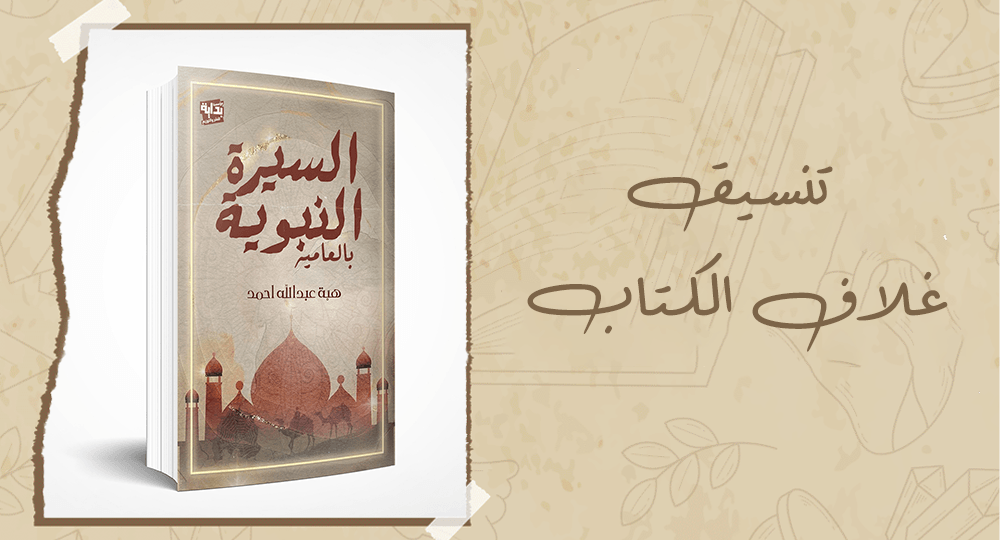
In a world where bookstore shelves and digital storefronts are crowded with hundreds of titles, the cover is the gateway that determines the fate of a book between success and popularity or staying in the shadows. The first impression that is formed upon seeing the cover is often decisive; it not only expresses the content of the work, but also paints a preliminary picture in the mind of the recipient before reading a single word of the book's pages.
In this article, you will discover how to professionally format a book cover, step by step, to masterfully combine visual appeal and functionality, ensuring that you capture the attention of your target audience in a way that suits the Arab cultural environment.
Book cover formatting steps
When you start to design a book cover, you need to be aware of the basic steps to ensure that the cover reflects the personality of the work and captures the reader's attention from the very first moment. The journey begins with defining the cover's theme and visual identity depending on the genre and subject matter of the book, and it's important that this is clearly reflected in the final design. Then, the focus shifts to choosing the right Arabic font - each type of font, such as Naskh, Thuluth, or Diwani, gives the cover its own spirit and fits the atmosphere of the book, whether it's historical, cultural, or even contemporary literature.
It's also important to plan the layout of the key elements: Where will the title stand out? Where will the author's name be placed? Will they be accompanied by an expressive image or a decorative pattern? This will help make the cover organized and easy to read. Choosing the color palette is an equally important step, as the colors of the cover should reflect the mood of the literary work and match its content.
Do not forget that the elements should be arranged in a harmonious way, taking into account the reading direction from right to left in Arabic books, and it is preferable to highlight the title in a size or color that is more visible than the rest of the details, followed by the author's name, then the secondary details or the logo. If there are Islamic motifs or inscriptions that support the book's cultural or religious identity, their dimensions should be adjusted so that they do not steal the spotlight from the title or text. For the front cover, you can add a short review or summary that attracts the reader, while the back cover is left for extended data such as reader testimonials or an introduction to the author.
Why is it important to choose Arabic calligraphy?
The choice of Arabic calligraphy is not just an aesthetic decision; it carries a cultural and thematic dimension that reflects the tone of the book to the audience. Each font conveys an implicit message about the type of work - naskh gives the cover a formal and modern feel, while thuluth or diwani adds a touch of heritage and luxury, reinforcing the reader's connection to the identity and subject matter from the very first glance.
How do you determine the right colors?
The choice of colors is essential in book cover formatting, it sets the mood and sends a clear visual message, and you will find that choosing a color palette that is consistent with the content of the book increases the appeal of the work.
- Literary books have different colors than children's books or science books, so the colors should reflect the type of content.
- Warm colors like red or orange evoke enthusiasm or strength, while blue or green gives a sense of calm or depth.
- You can use a contrasting title color to stand out from the background and from the author's name or other details.
- Avoid too much color so the reader doesn't get distracted or the cover becomes cluttered and unbalanced.
How do you balance visual elements?
Achieving balance between visual elements is an essential element in cover formatting, as creativity is not in filling spaces but in the harmony between texts, images, and decorations. Distribute the title, author's name, and details of the work clearly, while keeping the spaces evenly spaced to suit the Arabic reading direction from right to left.
For example: If the cover features an Islamic motif or inscription, place it in the back corner or reduce its size so it doesn't cover the main title. You can also place the title at the top center of the cover, followed by the author's name in a smaller size, and allocate a side or bottom space to place photos or additional details; this creates a visual balance that gives the cover order and elegance, without crowding or interfering with each other.
What are the principles of effective packaging design?
When you start formatting a book cover, you should pay attention to the visual distribution of the elements. How do you achieve the desired visual balance? It's all about distributing the textual and decorative blocks in a way that prevents one side of the cover from appearing visually heavier than the other. For example, the main headline can be placed in the center of the cover as the visual focus, with a side decoration or a small logo in the corner of the cover to create a balance. This way, no areas appear annoyingly crowded or overly empty, and the cover remains both pleasing to the eye and visually appealing.
How does the hierarchy of elements play a role in the formatting of a book cover?
- The headline should be the most visible and present, as it is the reader's first gateway to the content of the book.
- The subtitle follows, with slightly less emphasis, to add dimension and set the stage for the main idea.
- They are followed by the author's name, often in a clear font but in a smaller size, so as not to overshadow the titles.
- Decorative elements or logos are present to support the cover without distracting from the main texts and should not overwhelm the visual sequence of the titles.
As for color consistency, it is the cornerstone of a reader's first impression. The right colors reflect the book's identity and take into account cultural dimensions, such as green and gold for authenticity, blue for purity, and white for simplicity. Most importantly, there should be enough contrast between the color of the text and the background, ensuring that the Arabic script is clear and easy to read without effort.
How do you choose the right decorations and images?
The choice of motifs and images in a book cover format requires a deep understanding of the book's subject matter and the culture of its target audience. Have you ever experienced standing in front of a book cover that made you immediately feel the spirit of its content? The secret is often in the visual choices that match the book's content and messages. For example, decorative arabesque patterns or classic geometric designs are suitable for religious and historical books, as they convey a sense of heritage and reverence. In contemporary novels or self-improvement books, sleek modern designs or abstractions create a more open and flexible impression.
How does the design reflect the book's identity?
The format of a book's cover creates a first impression on the reader about its content and identity before he or she even sets eyes on the title or author's name. Have you ever wondered why academic book covers look different from dreamy novels or Qurans? It starts from the simplest elements of the cover, from the choice of fonts, to the colors, to the details of the decoration.
What is the role of calligraphy in expression?
The font is an essential element in communicating the nature of the book and its content to the reader from the very first moment. The Thuluth font can give the cover a sense of authenticity and grandeur, often suited to religious or historical books, while the Naskh font, with its calmness, tends to add a dreamy and delicate touch. On the other hand, the diwani font adds a dreamy and delicate touch to the covers of romantic or literary novels, while the naskh font, with its calmness and clarity, tends to books of research and academic studies, reflecting the seriousness and accuracy of the subject matter.
How do you use color to suggest?
The colors chosen for the book's cover immediately put the reader in the intended mood. Green suggests holiness or spirituality, while blue evokes a sense of serenity and peace, and gold enhances a sense of luxury and sophistication. A vivid example of this symbolism is the book “The Story of Noah, peace be upon him,” for which blue and gray tones were chosen to represent the theme of the flood and inner peace, while soft arabesque details were added to give the cover a contemplative aura that suits the spirit of the story.
What are the best books with a distinctive cover format?
in Dar Al-Zaman Publishing and Distribution LibraryYou will find yourself in front of a variety of books that not only stop at the content, but also address your visual taste through the unique and innovative book cover format. This bookstore stands out with modern cover designs that are enveloped in the spirit of Arabic and Islamic culture, making each edition special and memorable, available in the Islamic Books:
The story of Noah, peace be upon him
If you are looking for a book for children and young adults that combines valuable content with an eye-catching cover, “The story of Noah, peace be upon him” is a living example of an elaborate book cover format. The cover features authentic Arabic calligraphy that dances on top of wave motifs, and the colors blue and silver that give a sense of the deluge and the hope of survival. The visual design intertwines with the story to give the reader an impression of the spirit of faith and the depth of the Islamic tale from the very first glance.
English translation of Sunan Ibn Majah
If you're looking for titles that combine originality and globalization, the cover of “English translation of Sunan Ibn Majah” is an eye-catcher. Here, ancient Arabic calligraphy meets Latin letters to create a visual and cultural bridge between Arab and Western readers. The designer chose a heritage-inspired color palette of classic greens and blues, with touches of gilding and handmade decorations inspired by Islamic manuscripts, giving the cover a scientific prestige befitting the book's religious and cognitive status.
What are the tips from book cover formatting experts?
How can you create a unique visual experience when formatting a book cover? Experts recommend the following steps:
- Opt for simplicity that makes an artistic impact and doesn't take away from the aesthetics of the cover.
- Make sure there is a clear consistency between all elements of the cover such as the title, image, and colors so that they support each other visually.
- Don't be tempted to favor form over substance; the cover should be clear and easy to read.
Why is it important to consult design professionals? When it comes to books with a religious or historical theme, turning to expert designers is crucial to ensure that the correct design conventions and references are adhered to. These specialists have the ability to read different symbolism and use it to reflect the essence of the book without making cultural or visual mistakes.
- Professional designers contribute to the credibility of the work with the reader.
- Experts adhere to the technical aspects associated with the target audience and stay away from clichéd design practices.
- Their expertise saves a lot of time in testing ideas and developing solutions that fit the content of the book.
How do you match the cover to your audience? It is essential to adjust the cover design to suit the target group of readers; for example, bright colors and soft motifs suit young children, while adults prefer traditional colors and formal designs that give the book a more dignified and serious feel.
Frequently Asked Questions About Book Cover Formatting
What is the standard book cover size?
The standard book cover size varies depending on the type of book you're working on. For example, paperback books often come in 21 x 14 cm, while the sizes vary for novels, children's books, or reference books. Always make sure to leave safety lines around the edges to avoid cutting off any important elements during printing.
Does the author's name have to be written in a special font?
It's not necessary to choose a fancy font for the author's name, but it's best to keep it simple, clear, and less decorative than the headline. This way, the identity of the book is clearly visible, and the title retains its essential glamor without competition from the author's name.
Can ready-made images be used?
You can use ready-made images when formatting your book cover, but pay close attention to the issue of usage rights and licenses. It is also important that the chosen image reflects the idea of the book and the identity of its target audience in order for the cover to achieve the desired visual impact and message.
Coordinating the book cover according to the principles of Arabic design and cultural identity gives your book a double appeal in the eyes of readers and increases its chances of spreading and success. The details of the cover are not just decorative elements but reflect the professionalism of the author and the quality of the work itself, and choosing each detail carefully makes a big difference in the image and spirit of the book.
Read more: